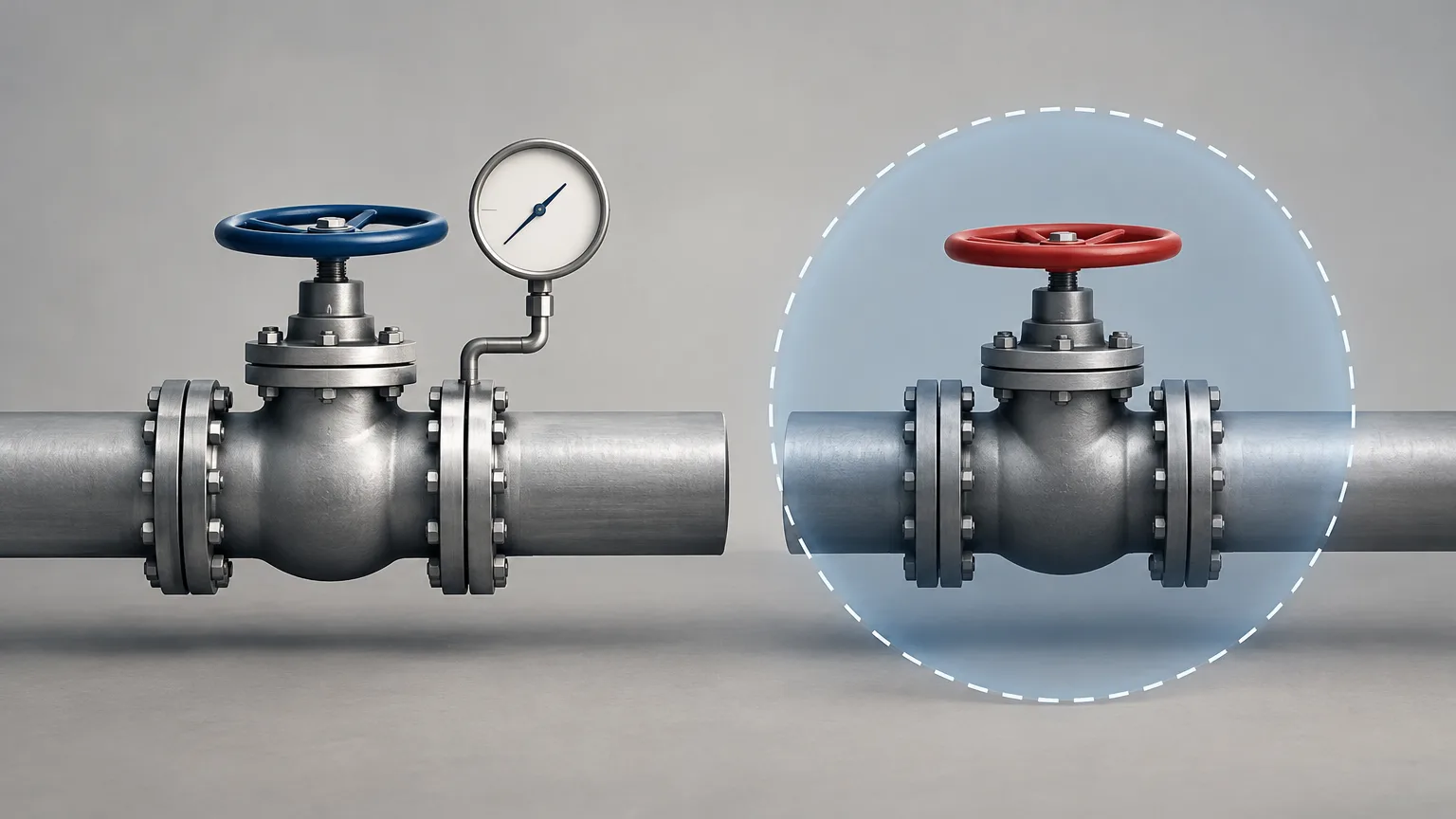
The Canada Energy Regulator has lowered the approved pressure ceiling for an operating section of Trans-Northern’s Montreal Feeder System and removed it from a longstanding safety order, while refusing the same exemption for a neighbouring section that was out of service.
In its July 10, 2026 decision, File 4668651, and Orders AO-004-OC-3 and AO-017-SO-T217-03-2010, the Commission approved a maximum operating pressure of 3,475 kilopascals for the Valero (Ultramar) Station-to-Montreal Station section. The Shell Station-to-Valero section remained subject to the safety order because Trans-Northern had not shown it could safely operate at its approved pressure if reactivated.
A lower permanent limit rather than a return to higher pressure
Trans-Northern applied in August 2025 to change the pipeline’s certificate and remove it from Schedule B of a 2016 safety order. It later clarified that it wanted the certificate’s pressure limit reduced only for the section actively delivering product, although it sought removal of both sections from the safety order.
The certificate had authorized a maximum pressure of 1,200 pounds per square inch, equivalent to 8,274 kilopascals. The safety order had restricted operation to 70 per cent of the approved maximum, approximately 5,792 kilopascals at the time of the application.
Rather than seeking permission to resume operation at the higher certified pressure, Trans-Northern said changed throughput requirements meant it would operate the active section at or below 3,475 kilopascals. The Commission accepted that change as a reason to revise the certificate.
It also accepted the safety case for operating that section at the lower pressure. Trans-Northern relied on its annual engineering assessment, an updated fitness-for-service and standards-compliance assessment, and responses to the regulator’s requests for further information.
Two changes justified removal from the safety order
The Commission explained that reviewing an earlier decision is discretionary, not an automatic right. Its two-stage approach first asks whether an applicant has raised doubt about the earlier decision, including through changed circumstances or new facts. If that threshold is met, it decides whether to confirm, amend or overturn the decision.
That review framework applies to orders under section 69 of the Canadian Energy Regulator Act. The certificate amendment instead fell under section 190, but the Commission used a similar analysis because changed circumstances prompted both requests.
For the active section, two changes supported removal from the safety order: the new, lower certified pressure ceiling and Trans-Northern’s demonstrated compliance with requirements applying across its pipeline system. Together, they resolved the safety concerns that had led to that section’s inclusion in the order.
Temporary shutdown did not settle the other section’s future safety
The Commission reached a different conclusion for the Shell-to-Valero section. That section was deactivated under a separate order and maintained with nitrogen at 200 kilopascals. But deactivation was only a temporary removal from service, not a permanent change to the certificate’s authorized pressure.
Trans-Northern had not applied to lower that section’s certified maximum. Upon reactivation, the certificate’s existing pressure authorization would again apply unless the company sought a change. Because the company had not demonstrated safe operation at that approved maximum, the Commission refused to remove the section from the safety order.
The ruling therefore did not release the entire Montreal Feeder System from safety restrictions or authorize reactivation of the inactive section. It varied the certificate and safety order only for the operating Valero-to-Montreal section.
The Commission also reminded Trans-Northern to address previously identified application deficiencies before seeking future removals from the safety order. It noted that deficiencies in this application had required correction before it could decide the request.