The Yukon Utilities Board has approved a new multiple-dwellings rule for ATCO Electric Yukon and Yukon Energy Corporation, effective January 1, 2027, that places qualifying residential-only common areas on the Residential rate. Board Order 2026-16, dated October 26, 2026, replaces section 4.13 of the utilities’ Terms and Conditions of Service while preserving different treatment for mixed-use properties and existing investment commitments.
The decision arises from the utilities’ December 20, 2024 joint application under the Public Utilities Act and Order-in-Council 1995/90 to update their service terms, maximum investment levels, fees and service charges.
Rates depend on use and metering
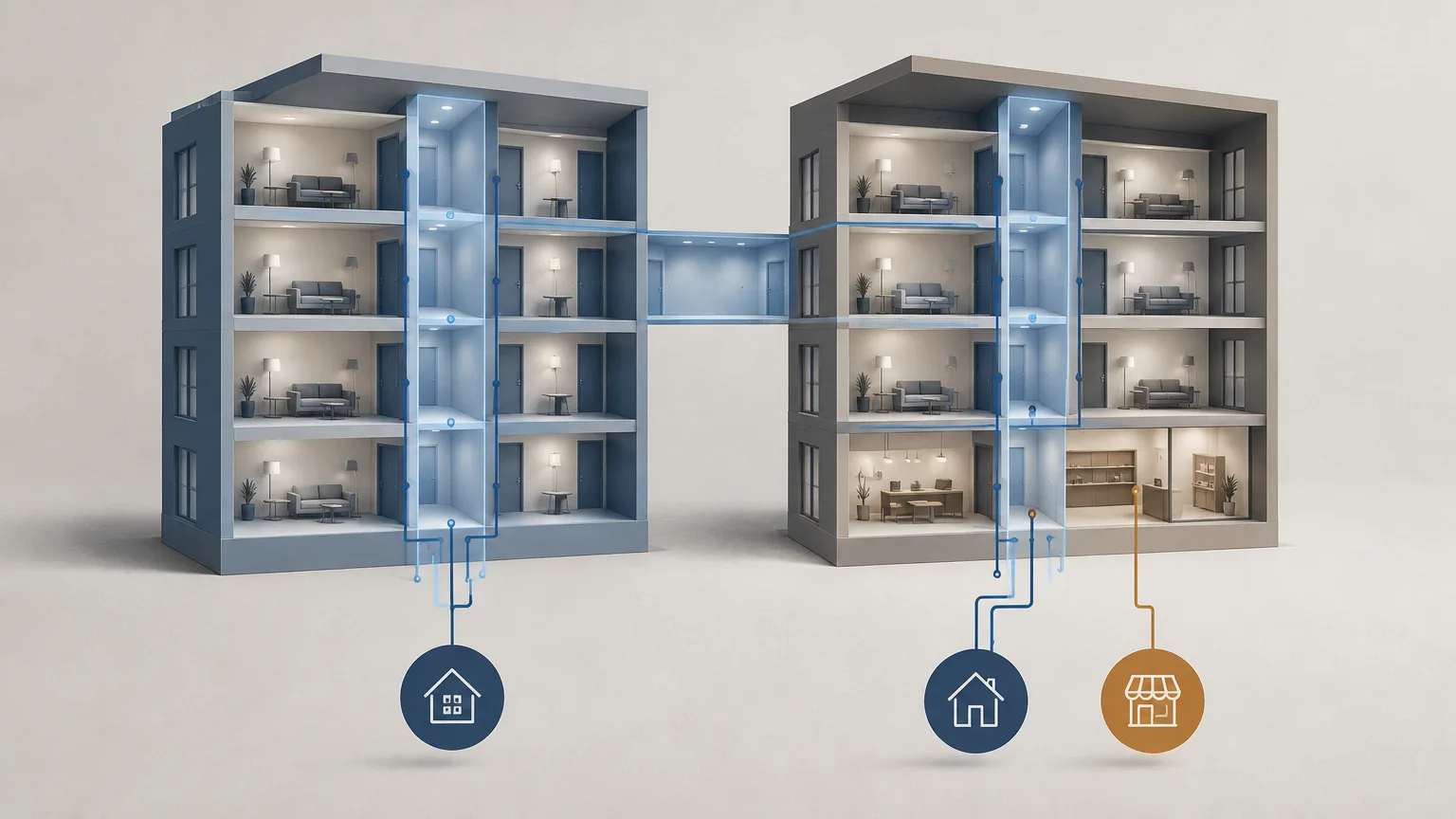
In residential-only multiple dwellings, each unit must have a separate point of service and be billed individually at the applicable residential rate. Common areas, including hallways, lobbies, laundry rooms, elevators and parkades, also receive the Residential rate when electricity is used exclusively for habitation. However, common areas previously receiving investment under a utility’s General Service offering remain on the General Service rate until the investment term expires, subject to the transition directions below.
Each unit in a mixed-use multiple dwelling must have a separate point of service, with residential units billed at residential rates and commercial units at General Service rates. Common areas remain on General Service rates, whether an investment term remains or has expired.
Existing single-meter multiple dwellings remain on General Service rates unless the Board has approved an exclusion for the specific customer. The Board’s accepted table preserves existing modified pricing schemes, but does not allow a single-point-of-service configuration for new extensions.
For new individually metered extensions, residential multiple-dwelling maximum investment levels apply to residential-only properties. Both residential multiple-dwelling and General Service investment levels apply to mixed-use properties.
Two schedules govern common area conversions
The order directs the utilities to convert common-area services for residential-only multiple dwellings to the Residential rate on these schedules:
- For investment terms that have expired or will expire during 2026, conversion is effective on the first billing period in January 2027.
- For investment terms expiring in future years, conversion is effective on the first billing cycle in July of the year the investment expires.
Why the Board adopted a fourth option
The reasons for decision describe implementation concerns following Board Order 2026-02, issued January 29, 2026. After the utilities sought more time, the Board repeatedly said section 4.13 was not in force and barred conversions pending final approval. It also asked the utilities not to make related customer agreements while it sought information on metering, property use, investment buy-downs and billing impacts.
The Board’s earlier reasoning, reproduced in the appendix, noted that Yukon multiple dwellings were smaller than those elsewhere. The utilities had not demonstrated that amenities such as elevators or central heating and ventilation systems were common, or regularly exceeded 10 kW in individual or aggregate demand. The Board was therefore unpersuaded that common areas should attract General Service rather than Residential rates.
The utilities proposed three alternatives aimed at preserving customer choice and limiting confusion and unintended consequences:
- Option 1 would retain General Service billing for common areas and single-point buildings, with residential billing for individual units. It proposed studying a separate multiple-dwelling rate in the next Phase II and allowing residential-rate agreements for single-point buildings subject to a buy-down.
- Option 2 would apply the common-area change only to new residential-only buildings. Existing common areas would stay on General Service rates, with individual units classified by residential or commercial use.
- Option 3 would also apply changes prospectively, while letting existing customers opt in for common areas by contributing the difference between the General Service investment received and the residential investment level at installation.
The Board rejected all three as inconsistent with its earlier decisions. It also found that Option 1’s modified pricing scheme infringed its rate-setting mandate, although it saw merit in Option 2’s prospective approach and Option 3’s customer choice. The utilities subsequently supported the Board’s Option 4, while raising administrative cost and transition-error concerns.
Those practical concerns shaped the timing. The utilities said classifying existing properties required intensive manual work because they had not previously tracked the necessary information. Tracking expiring investment terms was also manual. The Board accepted the conversion schedules to support efficient administration, consistent treatment and clear communication, allowing time to confirm whether properties remained exclusively residential or had become mixed-use and to explain potential bill impacts.
Revised terms are due November 15
The utilities must file a clean version of the complete Terms and Conditions of Service by November 15, 2026, for the Board’s acknowledgement. Other terms approved through Board Orders 2025-13 and 2026-02 remain in force; the replacement section 4.13 takes effect January 1, 2027, with the common-area conversions governed by the order’s specified schedules.