Newfoundland and Labrador Hydro has lost its appeal over a proposed southern Labrador power project whose estimated cost rose to $110.9 million. The province’s appeal court rejected the utility’s argument that a lowest-cost proposal must be approved once it clears fixed environmental and reliability thresholds.
In Newfoundland and Labrador Hydro v. Board of Commissioners of Public Utilities, 2026 NLCA 36, decided October 19, 2026, the Court of Appeal of Newfoundland and Labrador held that the regulator must be able to balance cost, environmental responsibility and reliability together.
The ruling leaves the Board’s refusal of this application in place. It does not prohibit diesel generation, require construction of a particular renewable-energy alternative or prevent Hydro from returning with an updated proposal.
A regional power plan grew more expensive
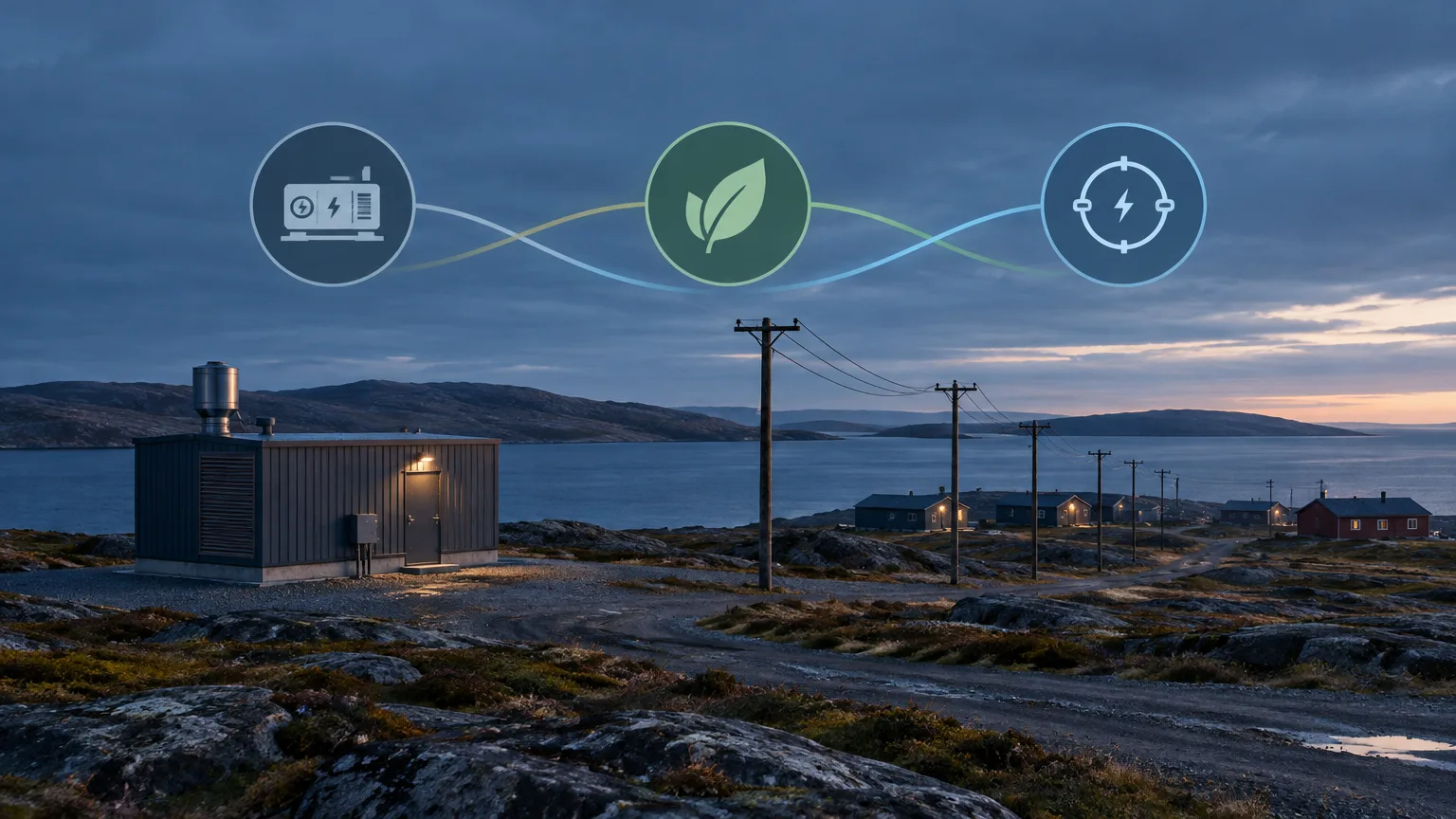
The dispute concerns a long-term plan to replace separate diesel-powered systems serving six southern Labrador communities with a regional generating station and transmission grid. Existing stations in Charlottetown, Port Hope Simpson, St. Lewis and Mary’s Harbour also serve Lodge Bay and Pinsent’s Arm.
Hydro applied in July 2021 for approval of $49.9 million in capital spending on a regional diesel station at Port Hope Simpson and a 50-kilometre line connecting its system with Charlottetown. Further connections were contemplated in later phases.
The application changed during a lengthy regulatory process. An independent expert’s work informed a revised proposal, and the projected project cost eventually reached $110.9 million. That figure is an estimate for the proposed project, not a damages award or a finding that Hydro had already spent that amount.
The Board rejected the application on March 31, 2025, and refused reconsideration on October 24, 2025. Its concerns included insufficient support for the updated cost estimate, unjustified assumptions about replacing existing diesel stations, inadequate prioritization of renewable generation and insufficient study of a connection to the Labrador Interconnected System.
Cost was not the only variable
Hydro’s central legal argument concerned the province’s electrical-power policy. The relevant provision calls for power to be delivered at the lowest possible cost, in an environmentally responsible manner and consistently with reliable service. Environmental responsibility was expressly added in 2023.
Hydro argued that the Board should first compare costs. Once the cheapest proposal met acceptable environmental and reliability standards, Hydro said, the legislation required approval even if other options offered improvements in those areas.
The court disagreed. Read in the context of the broader regulatory scheme, the provision gives the Board room to balance competing interests rather than apply a rigid sequence of pass-or-fail tests.
Under Hydro’s approach, cost would become the only genuinely variable consideration. The Board could not weigh a substantial environmental or reliability improvement against a small additional cost, or consider a significant saving against a modest adjustment in another factor.
The court also rejected the idea that environmental responsibility has a single absolute threshold. Electricity generation and distribution have environmental effects; the legislation requires the regulator to assess their degree alongside cost and reliability.
This does not mean the Board must always select the greenest or most reliable option regardless of price. The point is that the factors must be considered together. Hydro had not shown that the Board misunderstood its statutory mandate.
Other challenges did not clear the appeal threshold
Appeals from the Board require the court’s permission and must raise a question of law or jurisdiction. The court allowed Hydro to argue the statutory-interpretation issue but refused permission on its procedural-fairness and standard-of-proof grounds.
Hydro said the Board should have identified gaps in its evidence and offered another opportunity to address them before refusing approval. The court found that costs and the projected life of existing stations had been live issues throughout an extensive process involving information requests, expert analysis and revisions.
The obligation to support the application rested with Hydro. It could not reasonably expect the process to continue indefinitely, particularly after asking the Board to decide on the existing record so construction could begin.
The court also found no arguable basis for saying the Board used an improper standard of proof. The Board had expressly applied the balance of probabilities. Its references to insufficient evidence concerned the evidence’s weight, not a different legal standard.
The appeal was dismissed, with no costs awarded. The court emphasized that Hydro remains free to submit an updated or revised application addressing the regulator’s concerns.