DECO Windshield Repair has been refused permission to take another appeal in its dispute with Manitoba Public Insurance over accreditation rules that excluded temporary repair kiosks.
In Deco Windshield Repair Inc v Manitoba Public Insurance Corporation, 2026 MBCA 85, decided October 15, 2026, Justice Edmond of the Manitoba Court of Appeal held that DECO could not use a further leave motion to reargue issues already considered by the Court of King’s Bench.
The ruling was a chambers decision about the availability of a further appeal, not a new trial of the accreditation dispute. The underlying arbitrator had upheld the disputed contract provision and found MPI justified in imposing a three-month accreditation suspension in 2020.
Dispute over parking-lot repair kiosks
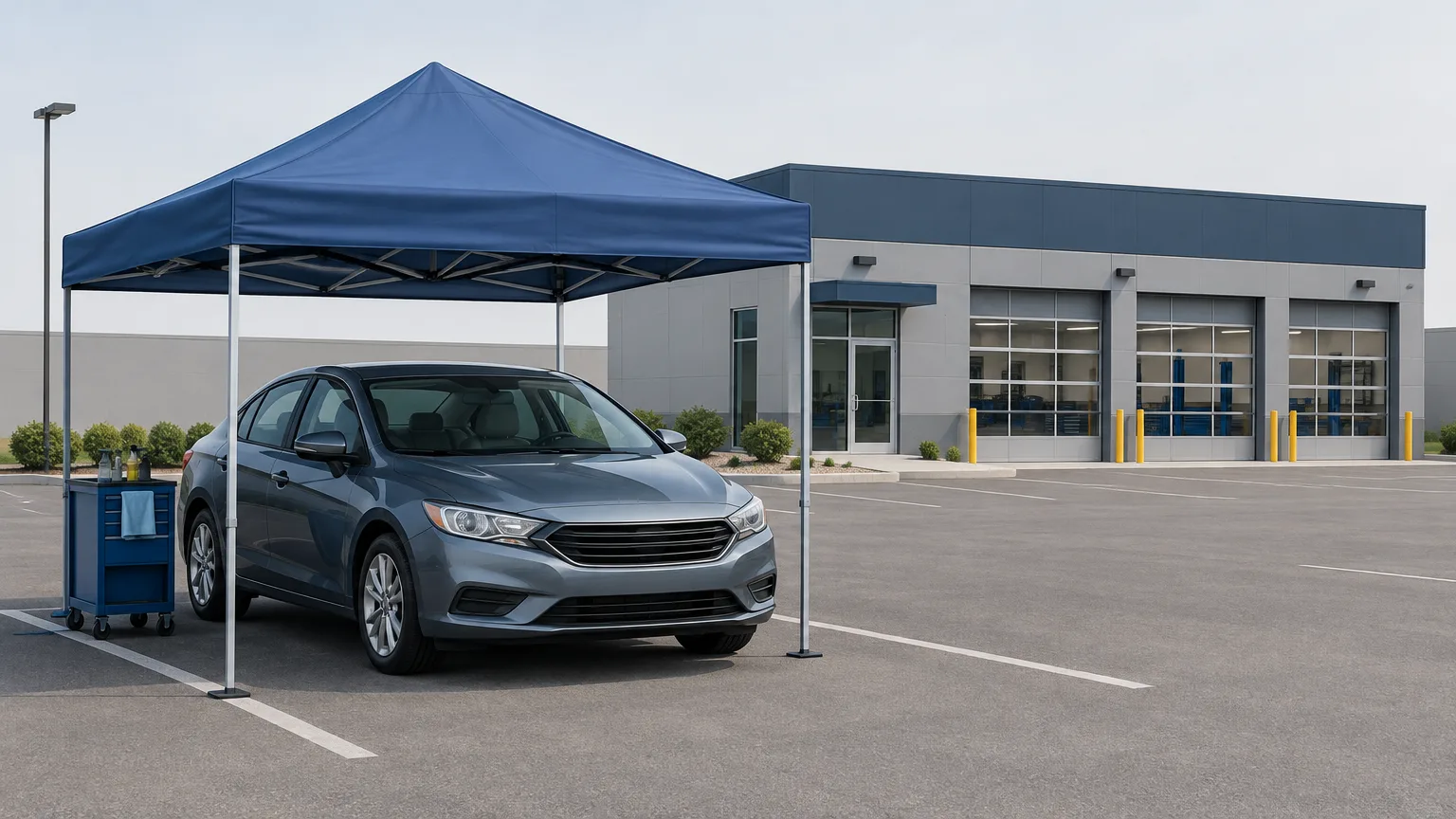
DECO developed a business model offering windshield repairs from tents in commercial parking lots. MPI accreditation allowed repair businesses to bill the public insurer directly at accredited rates. Accreditation was not mandatory: shops could operate without it.
The accreditation agreement was negotiated between MPI and two industry associations. In March 2019, DECO received notice of a new provision requiring accredited glass shops to have permanent premises and both repair and replacement capabilities by December 31, 2019. Temporary facilities, including tents, would no longer qualify.
DECO disputed the provision and tried unsuccessfully to negotiate continued use of its kiosks. It signed the new agreement on December 1, 2019, for a permanent repair-and-replacement shop in Winnipeg, but continued operating kiosks after the deadline.
In March 2020, MPI learned that DECO was still doing insured repairs at kiosks and billing MPI directly. It notified DECO that accreditation would be suspended for three months beginning April 20, 2020, for breaching the agreement.
DECO sued to challenge the suspension. That court proceeding was stayed, and the dispute went to arbitration under the contract.
Arbitrator rejected contract challenge
Two arbitration awards followed. In a preliminary award dated January 28, 2025, the arbitrator excluded evidence about negotiations between MPI and the industry associations. DECO maintained that the kiosk restriction had been imposed rather than negotiated and that this mattered to its claim that the agreement was unconscionable.
The arbitrator found the negotiations, or absence of negotiations, irrelevant and inadmissible. In a final award dated June 11, 2025, the arbitrator rejected DECO’s challenge to the restriction, finding it valid and binding and the suspension justified.
The final award also rejected DECO’s good-faith argument. As the Court of Appeal summarized it, the arbitrator distinguished good faith in performing a contract from a claimed duty governing contract formation or the inclusion of a term one party disliked.
DECO then sought leave to appeal the awards under section 44(2) of Manitoba’s Arbitration Act. The Court of King’s Bench considered its proposed grounds, including the exclusion of negotiation evidence, bargaining inequality and good faith, but refused leave.
A narrow route to another appeal
Justice Edmond explained that Manitoba law generally does not permit a further appeal from a decision granting or refusing leave to appeal an arbitration award. The narrow exception is where the judge mistakenly declines jurisdiction rather than deciding the leave application on its merits.
That distinction mattered here. The application judge had considered each proposed ground and decided whether it met the statutory test. DECO was effectively asking to challenge the arbitration awards again, not demonstrating that the judge had refused to exercise the court’s jurisdiction.
The court linked the limit to arbitration’s purpose: resolving disputes efficiently with limited judicial intervention. Permitting another appeal merely because leave had been refused would undermine the statutory restriction.
Justice Edmond also rejected DECO’s reliance on cases involving different routes under section 48 of the Act. That provision permits further appeals, with leave, from court decisions on an actual appeal of an award, an application to set an award aside, or an application declaring it invalid. DECO’s case concerned a refusal to allow an appeal in the first place.
Arguments about exceptional circumstances and injustice did not change the outcome. Even assuming a further exception could apply, the judge found no error of essential principle or decision so wrong that it amounted to an injustice.
DECO also argued that the application judge had failed to conduct a reasonableness review. Justice Edmond rejected that submission, finding that the judge had assessed whether the proposed questions of law had arguable merit when judged on a reasonableness standard. The motion was not a second chance to argue the same leave application.
Ordinary costs, not the higher amount requested
The court denied DECO’s motion and awarded MPI $1,000 in costs, plus reasonable disbursements and applicable taxes. MPI had sought $3,000, arguing that the motion undermined arbitration’s efficiency and finality, but Justice Edmond declined to depart from the ordinary tariff.
The decision reinforces a procedural limit rather than announcing a general rule that temporary windshield-repair businesses are unlawful. The dispute concerned contractual MPI accreditation and direct billing, and the appeal judge’s central conclusion was that this further challenge could not proceed.