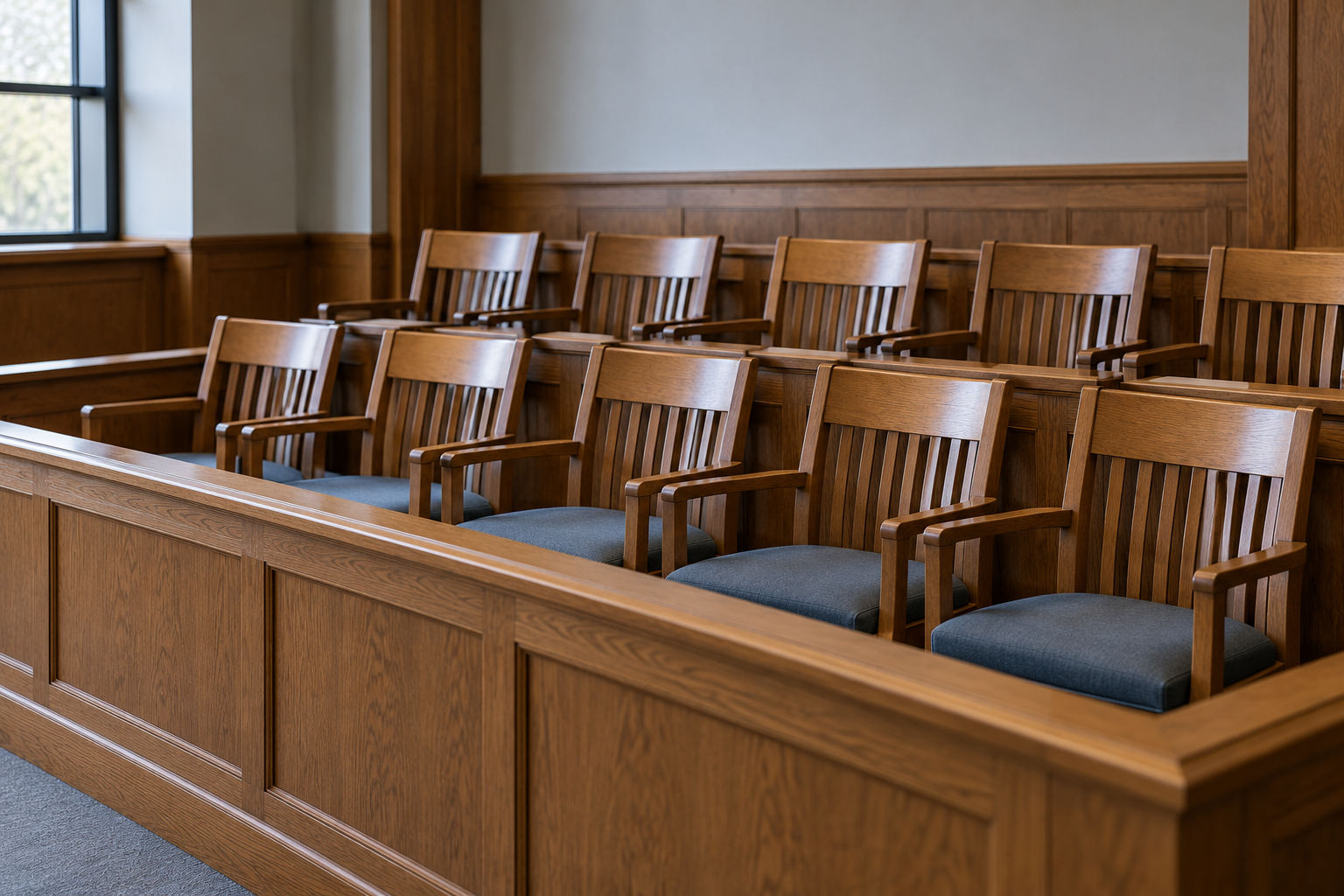
The Nunavut Court of Justice directed that an accused be tried by a judge without a jury after finding that his explanation for missing the second day of a jury trial did not meet the statutory test for a legitimate excuse.
Justice M. Mossey announced the decision in R. v. Audlakiak, 2026 NUCJ 27, on October 6, 2026, and issued written reasons dated October 15. The ruling determined the mode of trial, not whether Ronald Audlakiak was guilty of the charges. It did not impose a sentence.
The reasons concerned a four-day trial scheduled in Qikiqtarjuaq in September. Audlakiak faced four charges, including sexual assault, assault and uttering threats. After he failed to appear for the second morning, the judge declared a mistrial and dismissed the jury. The court later heard his evidence and legal submissions on whether his right to another jury trial should be preserved.
A legitimate excuse can preserve the jury election
Section 598 of the Criminal Code provides a route for an accused who has failed to appear or remain in attendance to retain trial by judge and jury: the accused must satisfy the court that there was a legitimate excuse. The reasons stressed that the resulting waiver is presumptive rather than absolute. Failure to meet the test results in a deemed election to be tried by a judge alone.
Mossey treated the threshold for a legitimate excuse as low. He adopted appellate reasoning distinguishing intentional avoidance or a mistake caused by wilful blindness from an honest mistake. The reasons discussed cases in which a mistaken trial date or unsuccessful last-minute travel arrangements did not justify depriving an accused of a jury. The ruling therefore did not establish that every instance of lateness or inadequate planning automatically forfeits that right.
The court also addressed the constitutional importance of jury trials. It relied on an earlier Supreme Court of Canada decision concerning the predecessor provision, rather than deciding a new constitutional challenge. Audlakiak had not brought such a challenge in this proceeding.
The judge assessed the two days together
On the first morning, the court and prospective jurors were assembled, but Audlakiak did not present himself to the judge or his lawyer. The start was adjourned until the afternoon, when jury selection proceeded. Mossey accepted Audlakiak’s evidence that he had actually been in the room that morning; the unexplained problem was his failure to identify himself so the trial could begin.
The next morning, court was scheduled to resume at 9:30 a.m. The judge waited until 10 a.m., by which point all jurors had checked in but Audlakiak had not appeared. His lawyer could not reach him and did not know where he was. Mossey issued an arrest warrant, declared the mistrial and refused the Crown’s request to continue the trial in his absence.
Police found Audlakiak asleep at home before lunch. At the subsequent hearing, he said he had gone to bed around midnight and had no alarm. He had not asked members of his household to wake him for court. The judge considered those omissions alongside the first day’s disruption, his awareness of the trial and his participation in jury selection.
Mossey found that, at a minimum, Audlakiak had been wilfully blind in failing to take even basic precautions to attend. The judge also identified intentional avoidance as the more serious possible explanation, but the lesser finding was sufficient to reject the excuse. The reasons did not reduce the decision to the mere fact that he had slept in.
Community participation remained central
The defence emphasized the constitutional and cultural importance of a local jury, particularly in a community affected by colonialism. It argued that sleeping in did not show a clear and unequivocal waiver and that the court could have waited longer rather than discharging the jury. Mossey acknowledged the importance of those concerns but held that they did not replace the statutory requirement to establish a legitimate excuse.
The judge expressly said the financial expense of holding another trial was not the basis of his analysis. Courts routinely bear substantial travel and scheduling costs to deliver justice in Nunavut’s communities, and a legitimate excuse would have required accepting that expense again. His concern instead was disruption to potential jurors’ work, hunting and childcare, and the effect on confidence in the justice system.
The reasons recorded that roughly 60 community members had attended for jury selection. Mossey also rejected the suggestion that the possibility of waiting until Audlakiak’s arrest answered the statutory question: when the mistrial was declared, his whereabouts were unknown, and the available trial window was limited.
The final direction was for the matter to be set for a judge-alone trial on the next Qikiqtarjuaq circuit. That was the direction in the October ruling, not verification of a later trial date or result. The underlying charges remained allegations; the decision resolved only whether this trial would proceed with a jury.
Source: R. v. Audlakiak, 2026 NUCJ 27, decision October 6, 2026; written reasons October 15, 2026.