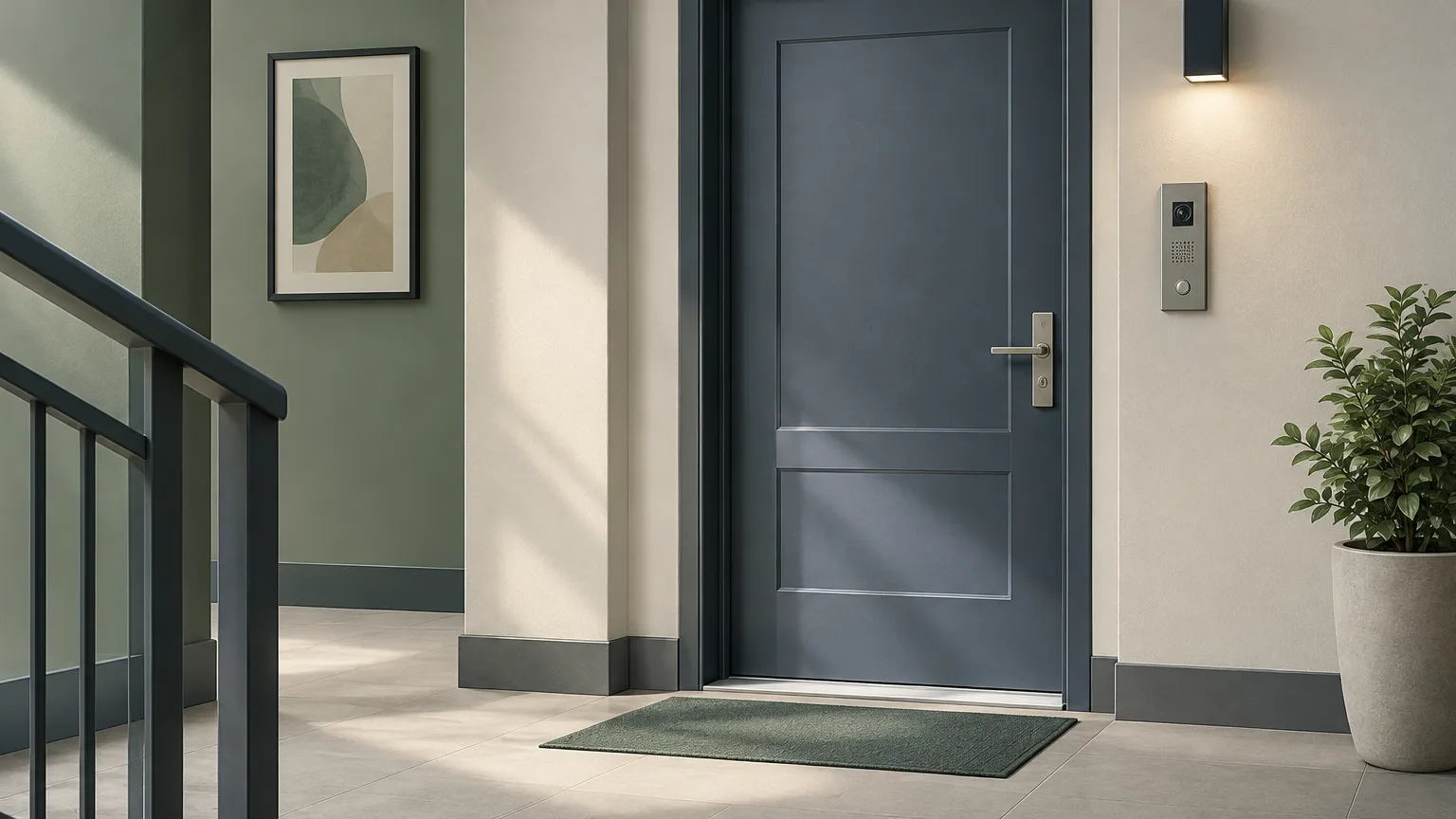
Two Charlottetown tenants have won $700 each after Prince Edward Island’s rental appeal tribunal found that recurring security problems, delayed repairs and inadequate communication materially interfered with their use of their homes.
In a Sept. 16, 2026 decision, the Island Regulatory and Appeals Commission partly allowed appeals by Stephanie White and Lisa Paquet against Vida Living (PEI), doing business as Vida Communities Inc. The Rental Office had ordered corrective work but denied compensation.
The commission found that later repairs did not erase the tenants’ loss of quiet enjoyment while the problems persisted. It ordered payment and completion of any outstanding requirements of the earlier repair order by Sept. 30, 2026. The decision does not establish whether those obligations were subsequently fulfilled.
A pattern rather than an isolated incident
White and Paquet lived in separate units in a 12-unit apartment building. Their applications, filed in late December 2025 and January 2026, sought repairs and compensation equal to a month’s rent; Paquet also requested another $25.
The Rental Office heard the claims together. Its June 10 order rejected compensation but required the landlord to finish identifying and labelling utility rooms and building systems. Both tenants appealed, and the commission heard their cases together on July 7.
The tenants described unauthorized people entering the building, difficulties with locks and entry controls, and concerns about the security of keys. They said they repeatedly had to pursue the landlord and contact police, fire services and the commission to obtain responses.
They also testified about deficiencies identified during a fire inspection, including an outdated fire-safety plan, problems accessing fire-panel keys and missing door labels. They said the combined problems disrupted sleep, caused stress and required them to take on monitoring and follow-up responsibilities beyond those normally expected of tenants.
The tenants acknowledged that many repairs had been completed. Their position was that the delays and continuing uncertainty about security still warranted compensation, and that some problems remained after the Rental Office’s order.
The landlord’s representatives acknowledged an incident involving people who were not tenants entering the building. They said it had been addressed by replacing or rekeying locks, resetting passwords and installing anti-pry plates. They also pointed to a new intercom and other repair efforts, and maintained that the required work had been completed.
The representatives explained that the property was managed from outside P.E.I., with building ambassadors assisting in daily operations. They acknowledged that staff changes may have affected response times.
Quiet enjoyment includes security and usable common areas
The commission considered the landlord’s obligations under three connected provisions of the Residential Tenancy Act.
Section 27 requires security devices needed to make residential property reasonably secure against unauthorized entry. Section 28 requires repairs and maintenance that meet legally required health, safety and housing standards and make a unit suitable for occupation, taking its age, character and location into account.
Those duties also informed the tenants’ right to quiet enjoyment under section 22. That right includes reasonable privacy, freedom from unreasonable disturbance and use of common areas without significant interference.
The commission did not treat every inconvenience, isolated security incident or repair delay as a breach. It assessed whether the landlord’s conduct, considered as a whole, interfered with the ordinary use and enjoyment of the units.
Here, the evidence established a related series of problems over approximately seven months. The commission relied on the tenants’ photographs, videos, timelines, correspondence and testimony as support for both the persistence of the problems and the time they spent seeking solutions.
It accepted that out-of-province management and staffing changes explained some delays. But those circumstances did not relieve the landlord of its obligations to provide reasonably secure, habitable premises or respond appropriately to safety concerns.
The commission was particularly concerned that the landlord had not contacted fire services to determine emergency-access requirements. It also found that unresolved issues and delays continued after the Rental Office’s order, imposing a further burden on the tenants.
Repairs did not eliminate the compensation claim
Although many deficiencies were eventually corrected, the commission found that the cumulative problems went beyond the inconvenience of ordinary maintenance. The period of uncertainty about security and the inadequate responses materially interfered with the tenants’ quiet enjoyment.
The award was not intended to compensate for every inconvenience. In setting the amount, the commission considered the duration and combined effect of the problems, their impact on the tenants, the time spent pursuing them and the landlord’s eventual corrective steps.
It specified compensation of $100 a month per tenant for the period from Dec. 25, 2025 to July 7, 2026, expressly fixing the total at $700 each, including out-of-pocket expenses.
The operative order also required compliance with all outstanding parts of the Rental Office’s order, including utility-room and building-system labelling. The commission stressed the need for landlords to keep records showing what ordered work had been done and what remained. Its separate suggestion that the landlord reconsider having a master key available for emergency services was an encouragement, not an additional express term of the operative order.
The ruling is a fact-specific compensation decision, not a fixed tariff for security complaints. It is reported as Stephanie White and Lisa Paquet v. Vida Living (PEI) dba Vida Communities Inc., 2026 PEIRAC 58, Order LR26-46.