A Manitoba judge has ordered B/E Aerospace Limited to manufacture a cargo-door conversion kit promised to Air Inuit, finding that money could not replace a product available from only one supplier.
In Air Inuit Ltd. v. B/E Aerospace Limited, 2026 MBKB 104, released July 30, 2026, the Court of King’s Bench of Manitoba granted Air Inuit summary judgment for breach of contract and ordered specific performance: completion of the outstanding manufacturing obligation.
Justice Lanchbery required B/E Aerospace to provide a production schedule within 90 days of the judgment. That was a deadline for the schedule, rather than for delivery of the finished kit. The reasons directed manufacture at the earliest opportunity and continued support for Air Inuit’s existing conversion program.
A third door that went to another customer
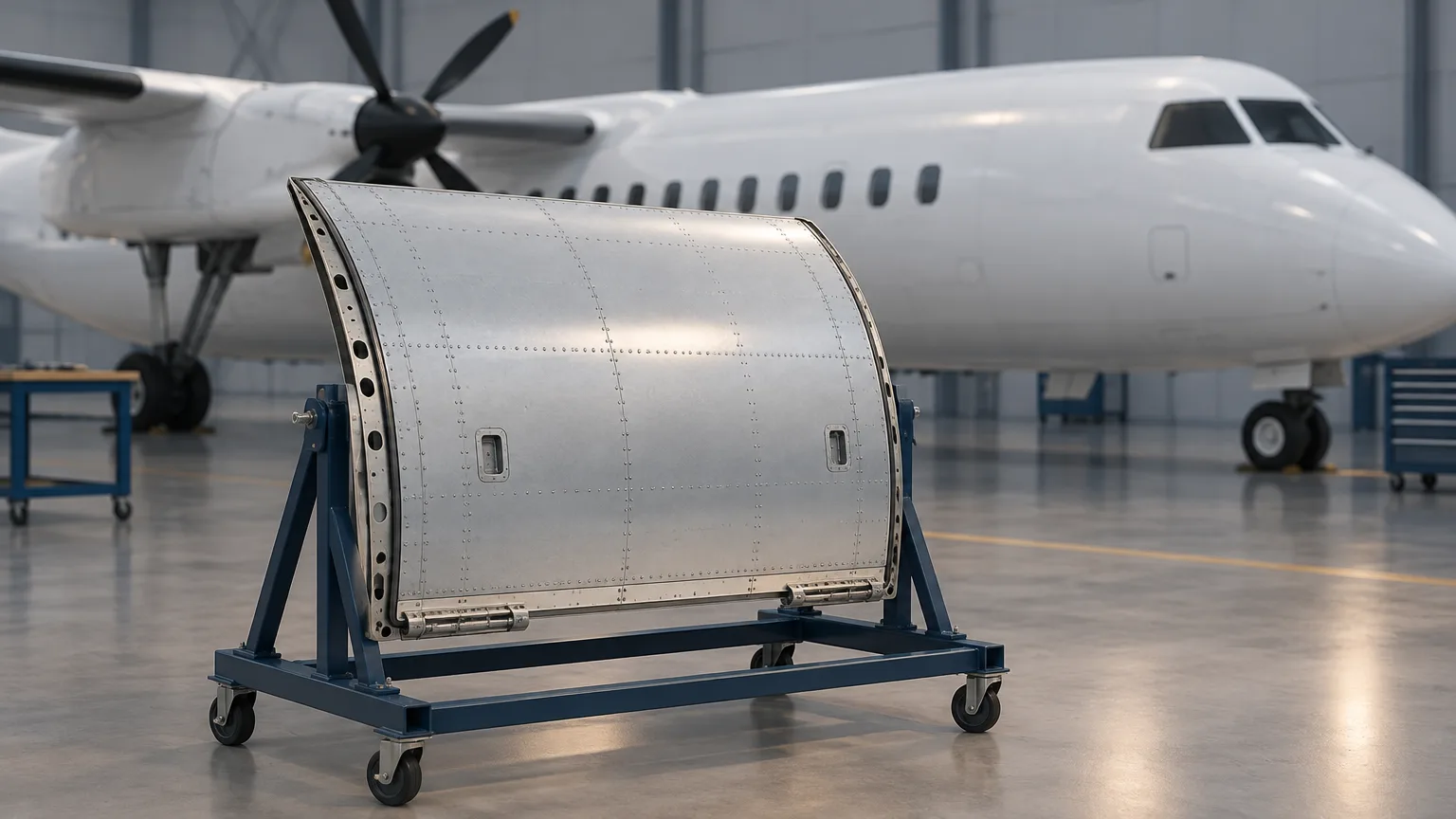
The dispute concerned a 2016 agreement to design, certify and manufacture enlarged cargo-door installations for three Dash 8 aircraft. According to the judgment, Air Inuit served 14 coastal villages in northern Quebec whose residents relied on the airline for goods, medical transport and passenger service.
The total contract price was US$4.6 million. Air Inuit funded engineering and licensing work, while B/E Aerospace retained the resulting intellectual-property rights. The judge found that no other company produced this particular conversion kit for Dash 8-300 aircraft.
Air Inuit received two kits. Although it no longer operated its third aircraft when the dispute arose, it wanted the remaining kit as a replacement or source of parts if an existing door failed. The contract did not require the airline to keep all three aircraft operating indefinitely.
With Air Inuit’s approval, B/E Aerospace supplied another kit to Field Aviation. The manufacturer argued that producing three kits fulfilled its obligation, and that the agreement did not contemplate an additional kit to be kept for replacement parts.
The judge rejected that interpretation. Air Inuit had agreed to the other customer’s purchase without giving up its own third kit. The commission Air Inuit received on that sale helped persuade the judge that the parties treated Field Aviation’s kit as additional to Air Inuit’s three contracted units.
Business reasons did not end the obligation
The court also relied on correspondence in which B/E Aerospace continued discussing delivery of Air Inuit’s remaining kit after the third-party sale. The judge accepted evidence of an oral agreement preserving that obligation and found that Air Inuit had never abandoned its order.
B/E Aerospace relied on a clause addressing delays beyond its reasonable control, including medical crises and unforeseen shortages. The parties accepted that the pandemic and supply-chain problems had caused delays. Those earlier delays, however, did not explain away the outstanding obligation on the evidence before the court.
The manufacturer had cited difficulty finding a production partner and financial viability when explaining its decision to stop. The judge found insufficient evidence supporting those positions, including no financial information establishing the claimed difficulty and no evidence that the required materials could not be obtained. B/E Aerospace’s offer to keep supplying parts for the existing doors also undermined its position that it could not make another complete kit.
The court rejected B/E Aerospace’s reliance on the agreement’s liability limitation as an answer to its unilateral cancellation. It found no genuine issue requiring a trial, granted Air Inuit’s motion and dismissed the manufacturer’s competing summary judgment motion.
Why damages were inadequate
Specific performance requires a party to carry out its contractual promise instead of simply paying damages. B/E Aerospace argued that the remedy was associated mainly with unique real estate and would require prolonged judicial supervision here.
The judge treated the circumstances as exceptional. Air Inuit had paid to develop the kit, but B/E Aerospace controlled the intellectual property needed to make it. The airline could not simply take a damages payment to another supplier. The kit’s intended role serving northern Indigenous communities reinforced the court’s conclusion.
The judge also rejected undue-hardship and supervision objections. The order concerned one outstanding kit, to the standard of those already made. Air Inuit was not asking the court to retrieve the kit sold to Field Aviation.
B/E Aerospace must manufacture or arrange manufacture of the remaining kit. If the parties cannot agree on a production schedule, Air Inuit is to arrange a further hearing. The court awarded Air Inuit Tariff IV costs, with the amount to be addressed if necessary.
The ruling is a case-specific application of an extraordinary remedy, grounded in the sole-supplier evidence and the contract. The reasons do not establish that the kit has since been delivered.