Waterfront owners in Quebec’s Laurentians also own the submerged land immediately in front of their properties, the Supreme Court of Canada has ruled in a dispute over vacation-home lots sold decades ago.
The 8–1 decision in Zardev Inc. v. Dydzak, 2026 SCC 27, released July 24, dismissed the developer’s appeal with costs. The majority upheld a declaration that the underwater parcels passed to the buyers with their shoreline properties, even though the sale documents did not expressly identify them.
Justice Nicholas Kasirer’s reasons turn on Quebec’s rule that a sale includes the property’s accessories unless the parties exclude them. Justice Suzanne Côté dissented, finding both that the underwater parcels were not accessories and that the contracts excluded their transfer in any event.
The result does not establish that buying a waterfront lot normally includes ownership of the lake bed. The majority stressed the unusual private ownership of the submerged strip and the intended use of these particular properties. Boundaries between the successful owners’ underwater parcels remain to be determined through the applicable legal procedures.
A nineteenth-century dam created the disputed strip
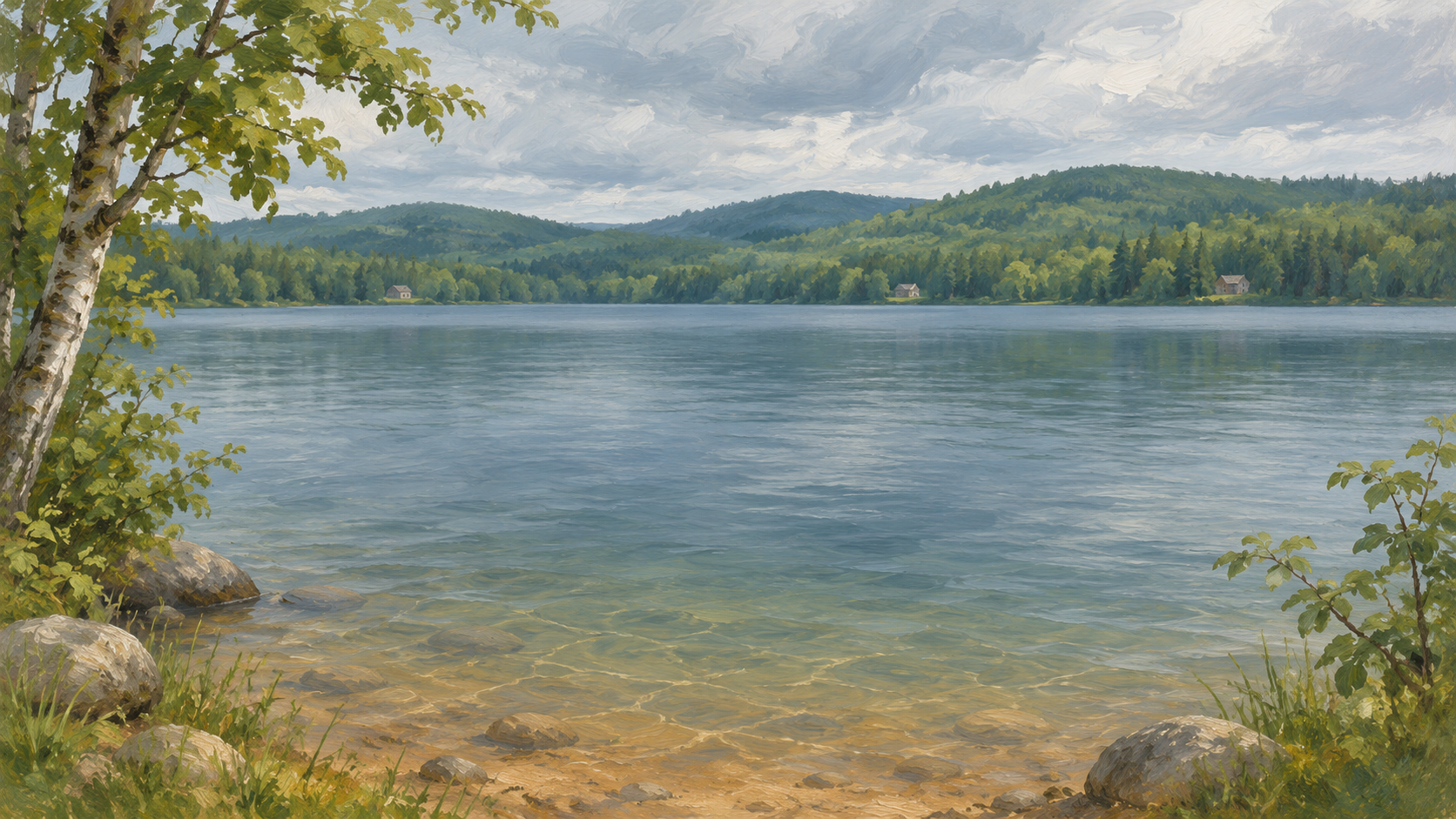
In 1881, a dam raised the water level of Lac Masson and two adjoining lakes by about 1.5 metres. Land that had previously bordered the water was submerged. The parties accepted that this flooded strip remained privately owned, rather than becoming state property with the rest of the navigable lake bed.
Zardev’s predecessor acquired the development in 1957. Between 1959 and 1971, it sold waterfront lots through approximately 50 transactions. Most deeds described the properties as bounded by the lake, specified their dimensions and required the construction of single-family homes. They did not expressly mention the underwater land.
The dispute emerged during cadastral renewal in 2016, when owners discovered that the proposed property plans attributed the submerged strip to Zardev. They sought a declaration of ownership and cancellation of registrations in the land register.
The Superior Court rejected their claim. The Quebec Court of Appeal reversed that result and declared the owners entitled to the adjacent submerged parcels. The Supreme Court upheld that declaration, although its majority followed a different route from the appeal court’s broader reliance on rules concerning watercourses.
What the deeds described was only the starting point
The Supreme Court agreed with Zardev that the trial judge had correctly interpreted the express descriptions of the properties sold. Their boundaries ran to the raised lake visible when the transactions occurred, rather than to the original shoreline now underwater.
But that finding did not answer whether other property passed with those lots as an accessory. Article 1718 of the Civil Code of Québec requires a seller to deliver property with its accessories. The rule supplies an implied part of a sale, so an accessory need not appear in the express description to be included.
Kasirer explained that the inquiry concerns the use the parties intended for the main property. An accessory must serve that property and be necessary for its agreed use. Mere usefulness is insufficient, but necessity must be assessed in context rather than as an abstract requirement for the property’s physical existence.
The assessment takes place when the sale is made. The fact that a parcel might later be altered or put to another use does not retroactively undo its transfer as an accessory.
Why ownership mattered beyond access to the water
Here, the majority found that the lots were intended as private waterfront vacation-home sites. The deeds’ restrictions on construction and rights of passage supported that purpose, alongside evidence about the value attached to being on the lake.
Ordinary rights to access and use the water did not provide everything the buyers were entitled to expect. A private owner of the underwater strip could interfere with their peaceful enjoyment. The majority noted Zardev’s use of a servitude to limit the number of boats at a dock and the possibility that falling water levels could leave the homeowners separated from the lake by someone else’s exposed land.
The submerged parcels also lacked a demonstrated independent use in their existing condition. They were underwater, unbuildable without major filling work and served the adjoining waterfront lots. Taken together, those circumstances made their ownership necessary to the agreed use of the properties sold.
Kasirer rejected a categorical rule that land can never be an accessory to other land. He also declined to adopt the owners’ proposed general rule that all private underwater land necessarily follows the adjoining shoreline property. The result depended on the contracts and circumstances.
The contracts did not exclude the accessories
Zardev argued that the precise boundaries and description of each lot excluded the submerged land even if it otherwise qualified as an accessory.
The majority disagreed. Describing the main property was not the same as clearly excluding its accessories. Otherwise, the rule supplying unmentioned accessories would lose its function. The deeds expressly excluded the seller’s obligation to provide certain title documents, but contained no comparable exclusion for the underwater parcels.
The majority also found that the buyers could not freely consent to excluding property whose existence as separately owned private land they did not know about. It expressly declined to find bad faith by Zardev: there was no formal allegation of bad faith, and the presumption that the developer acted in good faith remained applicable.
Côté would have left ownership with the developer
Côté viewed land as independent property whose use could change, rather than as an accessory to another parcel absent an applicable legal rule. In her view, historical rules concerning the beds of non-navigable waterways did not govern this navigable-lake dispute. The submerged strip served public navigation, a function distinct from the vacation-home lots.
She also considered the owners’ existing rights to access and use the lake sufficient. The evidence did not establish that Zardev had actually disturbed their enjoyment, she said, and the risk of permanent changes to the water level or infilling was too speculative. She regarded the majority’s disagreement over the sufficiency of access rights as factual, rather than a legal error permitting it to substitute its assessment for the lower courts’ findings.
Côté separately concluded that the contracts excluded the underwater land even if it was an accessory. The boundaries, areas and lot numbers were clear, and ordinary contractual interpretation did not require a special form of exclusion. The developer’s later dealings with submerged parcels and the buyers’ belief that the state was their neighbour supported her conclusion.
She questioned drawing conclusions about all the original buyers’ knowledge from the limited evidence and warned that the majority’s approach weakened the predictability of property descriptions and land records.
The majority answered that cadastral accuracy is a rebuttable presumption and practical survey difficulties cannot change ownership rights. Its ruling confirms the respondents’ ownership; it does not settle every parcel boundary or eliminate the public right to navigate the lake.
Source: Supreme Court of Canada judgment.