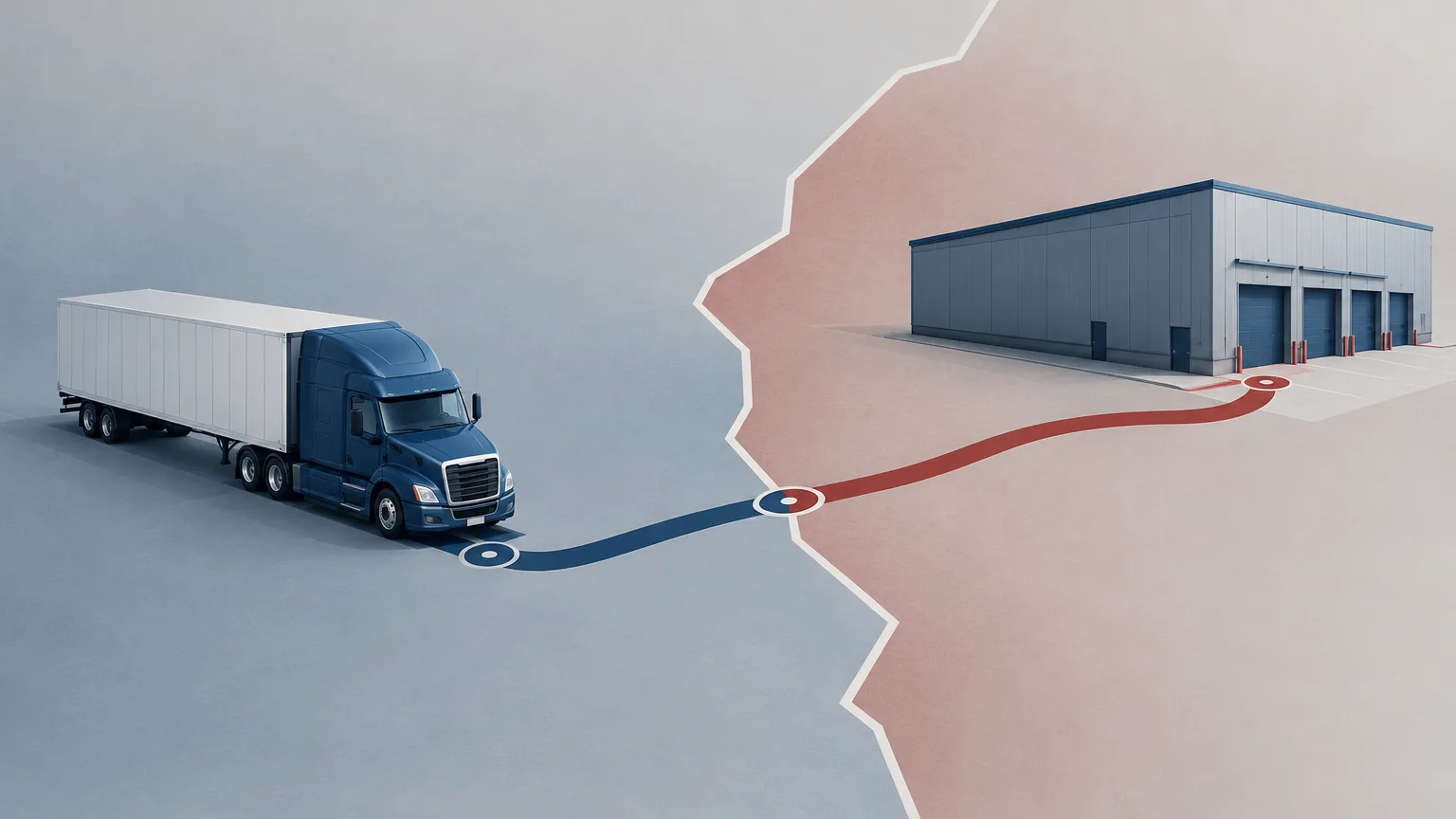
The Manitoba Labour Board allowed Arctic Beverages’ appeal after finding that its integrated trucking and warehousing operations formed a single federally regulated undertaking. In a decision dated July 9, 2026, published as a corrected copy, the board concluded that it lacked jurisdiction to hear three appeals under Manitoba’s Employment Standards Code.
The proceeding involved Arctic Beverages (2014) Ltd., as general partner of Arctic Beverages LP, and employees identified as T.X., M.Y. and C.L. The consolidated cases were 6/26/ESC, 7/26/ESC and 8/26/ESC. Chairperson K. Pelletier and board members P. Wightman and P. McKie signed the order.
The result turned on which level of government regulates the undertaking, not whether the employees’ underlying claims were justified. It was not a finding that the employer owed nothing or was exempt from employment standards altogether.
Actual freight operations drove the result
The hearing evidence described a food and beverage distributor with a network of warehouses and delivery routes. Its operations director testified that the company employed about 170 people and that at least six drivers regularly transported goods across provincial boundaries. The business also carried third-party freight, rather than only delivering products it owned.
The witness described three third-party freight arrangements operating weekly, including a route from Winnipeg to Red Lake, Ontario. The arrangements were reflected through invoicing rather than formal written agreements. The company used its own employees and equipment for interprovincial transportation and held the licences and permits needed to provide the service.
The distribution system linked long-haul trucking with local delivery. Semi-trailers brought goods to warehouses, where products could be transferred to smaller refrigerated trucks for customers. Warehouse staff received shipments and loaded vehicles, while merchandisers stocked products at customer locations.
Provincial jurisdiction was the starting point
The board began with the presumption that labour relations are provincially regulated. Its constitutional analysis examined the business’s normal activities and operational nature, rather than exceptional or incidental work. Under section 92(10)(a) of the Constitution Act, 1867, regular and continuous interprovincial transportation can bring an undertaking within federal jurisdiction even if it represents a comparatively small part of its overall transportation activity.
The distinction was not simply that Arctic Beverages sold or moved its own goods across borders. In distinguishing an earlier propane-distribution case, the board emphasized Arctic’s freight service for third parties. Its actual, ongoing transportation work supported the finding that interprovincial trucking was a usual part of the business.
Licences and readiness to accept interprovincial work supported that picture, but the decision also relied on the company actually providing the service. The analysis was qualitative: the share of trips or kilometres outside Manitoba was not a stand-alone jurisdictional threshold.
Director challenged the evidence and proposed a local carve-out
The Director of Employment Standards argued that the company was principally distributing its own merchandise between warehouses and then to customers. The Director pointed to the Manitoba-based workforce and the local duties of the three workers involved, arguing that these features supported provincial jurisdiction.
The Director also challenged the limited documentary record and asked the board to draw an adverse inference because the employer had not produced stronger supporting documents. The board nevertheless accepted the operations director’s testimony. He had been cross-examined, his evidence had not been meaningfully challenged, and the board found no reason to doubt his credibility. Although limited, the record was sufficient to understand the operations and make the jurisdictional findings.
Alternatively, the Director asked the board to separate the Manitoba work from the interprovincial undertaking. The board rejected that approach on the evidence before it. The trucking and related warehouses operated together under common direction and control, performing similar work across the distribution centres.
The board explained that common ownership alone would not establish one federal undertaking; the operations also had to be functionally integrated. Here, there was no evidentiary basis to sever trucking from the use and management of the warehouses, and no identified warehousing activity disconnected from the primary transportation function.
It therefore found Arctic Beverages to be one indivisible federal undertaking and allowed the employer’s appeal. The decision resolved the provincial board’s jurisdiction over the three employment standards appeals; it did not adjudicate the employees’ substantive entitlements.