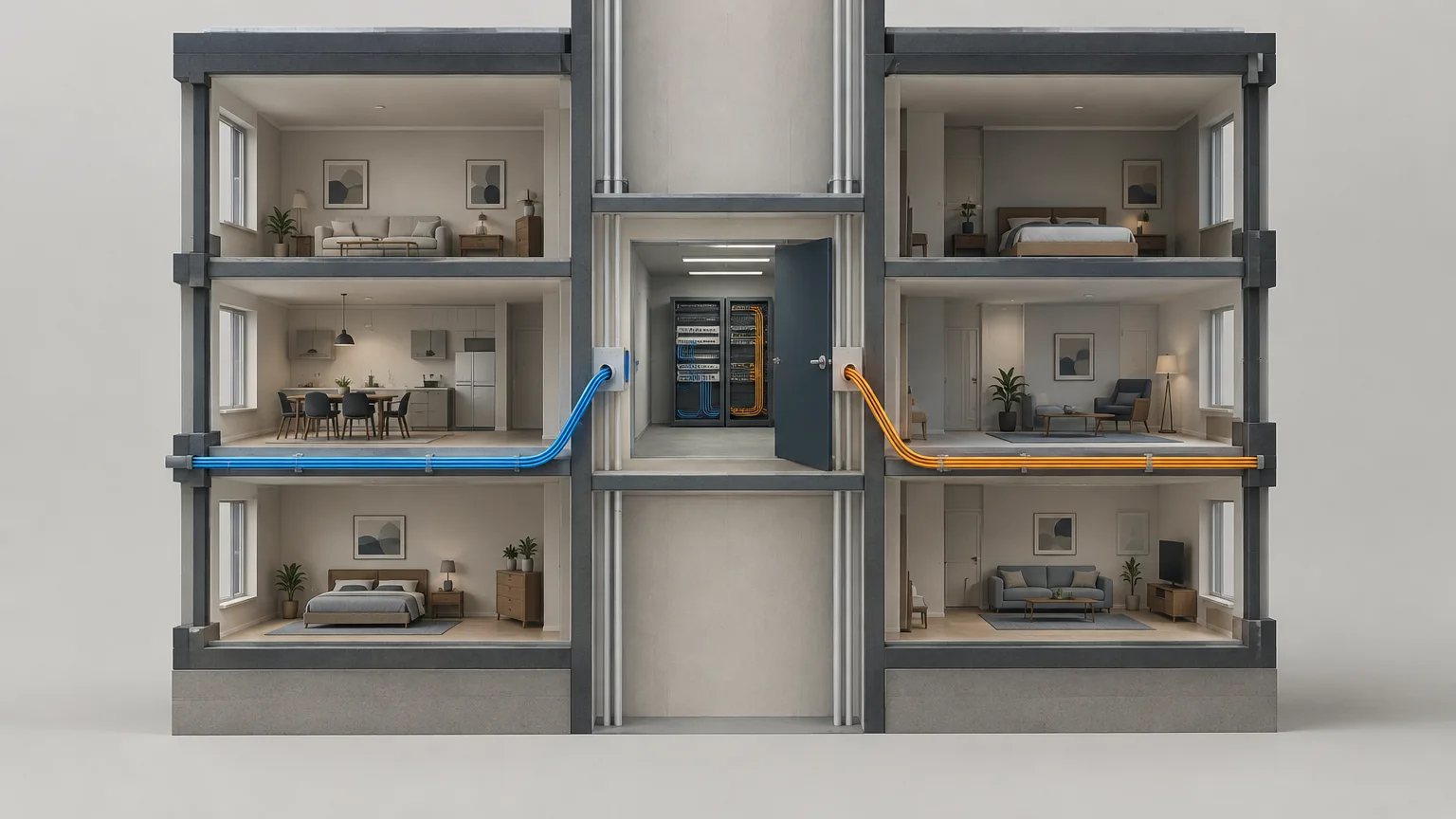
The CRTC has ordered a Richmond, B.C., strata corporation to negotiate access for CIK Telecom after finding that the company had been denied a timely opportunity to bring its network into the building.
In Telecom Decision CRTC 2026-116, issued June 5, 2026, the regulator directed strata corporation LMS 818 and CIK to reach access terms within 30 days and sign an agreement within 60 days. It backed those deadlines with conditional restrictions on the services other providers could offer in the building.
The decision did not order an immediate disconnection of residents. Instead, it established two escalating schedules, depending on whether the parties reached terms but failed to sign, or failed to report an agreement at all.
Requests dating back to 2022
CIK told the commission that it had sought access since October 2022 to supply services over its own fibre facilities. According to CIK, the strata responded through Dwell Property Management in January 2023 that it was not interested in granting access. CIK described further unsuccessful approaches before filing its June 2023 application.
The commission received no answer to that application from the strata or Dwell. After staff sought a negotiation update in January 2026, CIK said it had proposed revised terms based on an agreement reached in another strata dispute, but had received no communication about the revised agreement. Dwell did not respond to the commission's update request.
Rogers and TELUS, identified in the decision as providers already serving the building, responded to the regulator. Neither opposed using an incremental approach to enforce access.
The CRTC found that the record showed repeated access requests without access being granted. Its framework requires timely entry on reasonable terms for providers seeking to serve apartment and condominium residents, with the aim of preserving consumer choice. Negotiable terms can cover installation, liability and reasonable costs incurred by the building owner; the ruling did not dispense with an access agreement.
Two routes to escalating restrictions
The commission gave the parties 30 days from its decision to conclude an agreement and 60 days to sign it. The additional signing period allowed the strata to arrange a vote by unit owners. Those deadlines followed the approach taken in an earlier CIK strata case, rather than CIK's request for restrictions beginning after 15 days.
If the commission was not told by the end of day 30 that an agreement had been reached, Rogers, TELUS and other local exchange carriers or carrier Internet service providers in the building would be barred from serving new customers from that point. This covered new customers who already lived in the building as well as new residents.
Under that schedule, providers would be barred from modifying or upgrading existing customers' services after 45 days. If CIK still lacked access after 60 days, the commission would consider further regulatory action, potentially including a subsequent decision prohibiting all service. That last step was not an automatic shutdown imposed by the June ruling.
A different schedule applied if the parties reached terms within 30 days but did not file a signed agreement within 60 days. In that event, the new-customer restriction would begin at day 60, the restriction on modifications and upgrades at day 75, and consideration of further action at day 90 if access remained unavailable.
The parties were also directed to report on negotiations after 30, 45 and 60 days, then every two weeks until CIK obtained access. The decision provided that the restrictions would lift immediately once both parties filed a signed agreement and CIK was granted access to install its equipment and serve residents.