The Supreme Court of Yukon has rejected a builder's proposal to fix a defective sewer system with a lift pump, finding that Whitehorse homeowners were entitled to damages based on extensive repairs that would restore the gravity-fed system they should have received in their new home.
In Yap v Wiebe, 2026 YKSC 41, decided June 3, 2026, Chief Justice S.M. Duncan assessed total damages of $286,315.64. Some damage categories must be apportioned between the builders and a subcontractor that had already settled with the homeowners. The total is therefore not simply an amount ordered payable entirely by the remaining defendants.
Four backups in a new home
Ian Yap and Charmaine Cheung contracted with Joshua and Jennifer Wiebe to buy a custom-built Whitehorse home for $702,500 in 2017. Wiebe Design and Construction Inc. was responsible for its design and construction. The homeowners took possession in early 2018.
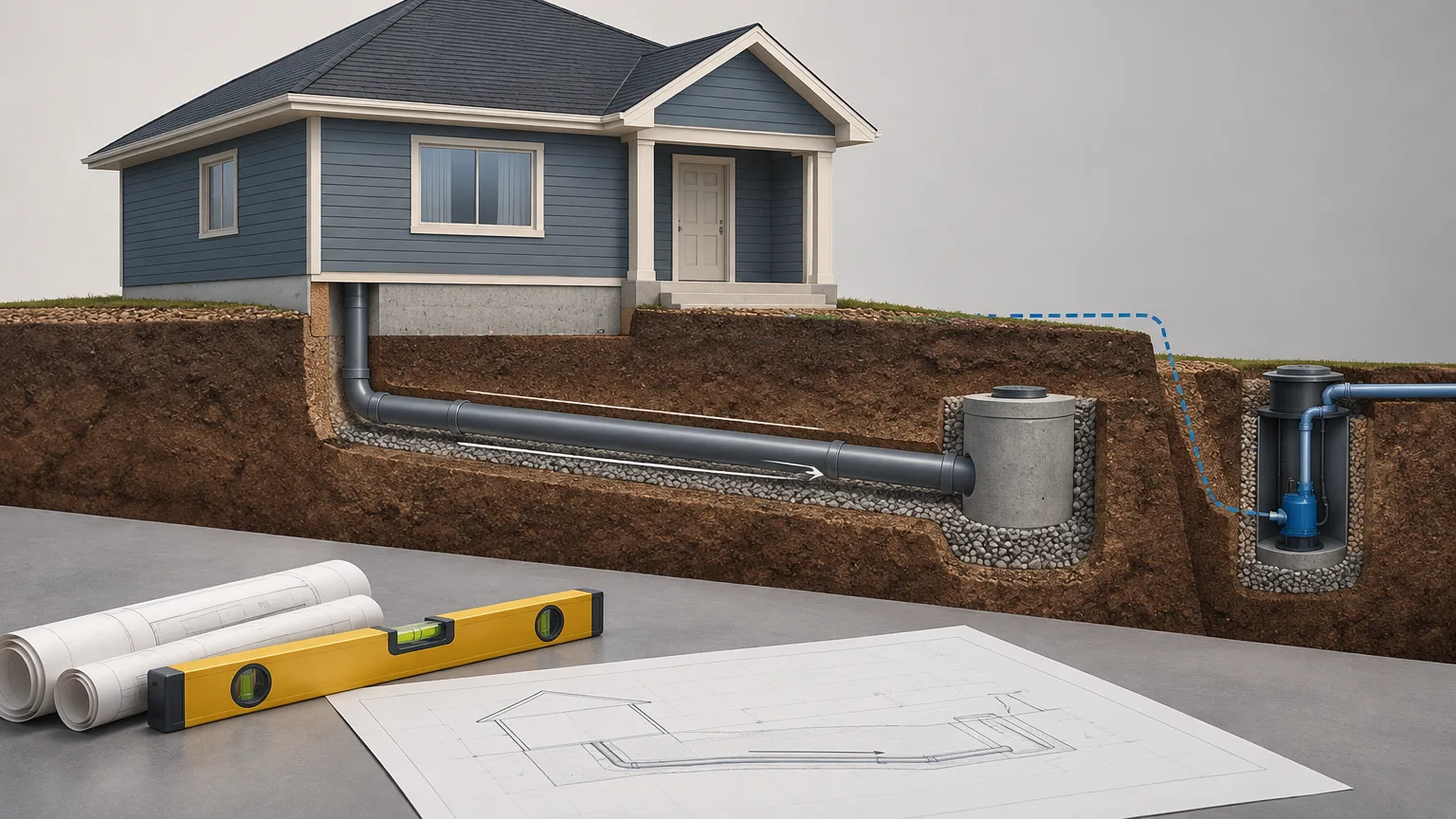
Four sewer backups followed between June 2019 and July 2020. The court identified two defects: a wooden stake driven through the sewer pipe near the foundation by a construction worker, and a slump in the pipe together with insufficient slope for the gravity-fed system to function properly.
The Wiebes and their company admitted liability in contract and negligence. The trial concerned the appropriate repairs, the division of responsibility for the grading defect, and compensation for the homeowners' loss of use and enjoyment. Annie Lake Trucking, which installed the sewer line, had settled with the homeowners and did not participate in the trial.
A liner installed inside the damaged pipe did not end the difficulties: another backup occurred after that repair. The homeowners later paid for excavation to address the slump, but that work did not establish the required two-per-cent slope.
A pump was not an equivalent repair
The builders relied on a provision in the construction specifications saying a lift pump might be needed if the required grade could not be established. They argued that installing one would fulfil their obligations and proposed an estimate of $8,167.95.
The court disagreed. The contract contemplated a gravity-fed system, with a pump as a possible alternative during construction if the necessary grade could not be achieved. Expert evidence established that the slope could have been achieved originally and could still be achieved through further work. Failing to attain it was not the same as showing it was impossible.
Even apart from that interpretation of the contract, a pump would not restore the homeowners to the position they should have occupied. It would introduce ongoing maintenance, dependence on electricity and a risk of flooding if it failed. The court also found the builders' estimate unreliable: it omitted important work, the supplier who calculated it was unidentified, and neither that supplier nor the person who prepared the estimate testified.
The damages analysis was not simply a choice of the cheapest available fix. The court considered whether the proposed repair costs were reasonable in light of the contract, the condition and value of the home, and the owners' intention to carry out the work.
It accepted excavation and replacement of the damaged pipe section, with support for the foundation, and work to establish a properly graded connection to the municipal sewer. The evidence supported the owners' commitment to a permanent repair. A ten-per-cent contingency was allowed for price increases and unforeseen underground work.
Builders bear most of the grading responsibility
The court assigned 65 per cent of responsibility for the grading defect to the Wiebes and their company and 35 per cent to Annie Lake Trucking. That division did not apply to the separate stake-damage repair.
The builders' combined roles as designers, builders and general contractors carried broader responsibilities. They knew the margin for achieving the required slope was tight, yet did not adequately supervise or verify the installation. Relying on a subcontractor's expertise did not remove their duty to ensure that the work met the applicable requirements.
Annie Lake Trucking also knew the installation would be difficult. It performed the faulty work and failed to verify the completed grade properly. The allocation reflected the particular duties and conduct of the parties, not a general rule fixing how responsibility must be divided on every construction project.
Repair costs and disruption assessed separately
The court allowed $235,037 for the prospective repairs, including the contingency. It also awarded compensation for emergency plumbing, investigation, engineering work and the homeowners' earlier excavation, as well as $6,000 for loss of use and enjoyment.
The latter award recognized four episodes of sewage cleanup, temporary loss of plumbing facilities and continuing anxiety about another backup. The court did not find a prolonged loss of use of the property comparable to some of the other cases cited by the homeowners.
In its final calculation, the court placed $139,479.51, including the applicable contingency, in non-apportioned damages and $146,836.13 in apportioned damages. Litigation costs were left for agreement or further consideration in case management.
The ruling turns on the construction contract and the evidence about a workable permanent repair. It does not hold that a sewage pump is always an unacceptable system; it holds that this proposed remedy did not give these homeowners the performance and position to which they were entitled.