A Manitoba homeowner who had long used part of his neighbour’s driveway failed to establish a legal right to keep using it after accepting the neighbour’s assertion of control for more than a year.
In Schenker v. Martin, 2026 MBKB 73, delivered May 26, 2026, the Court of King’s Bench dismissed an application for a prescriptive easement over a narrow triangular strip in Stony Mountain. The ruling turned on interrupted use, not a finding that the applicant had failed every requirement for an easement.
A survey exposed a mistaken boundary
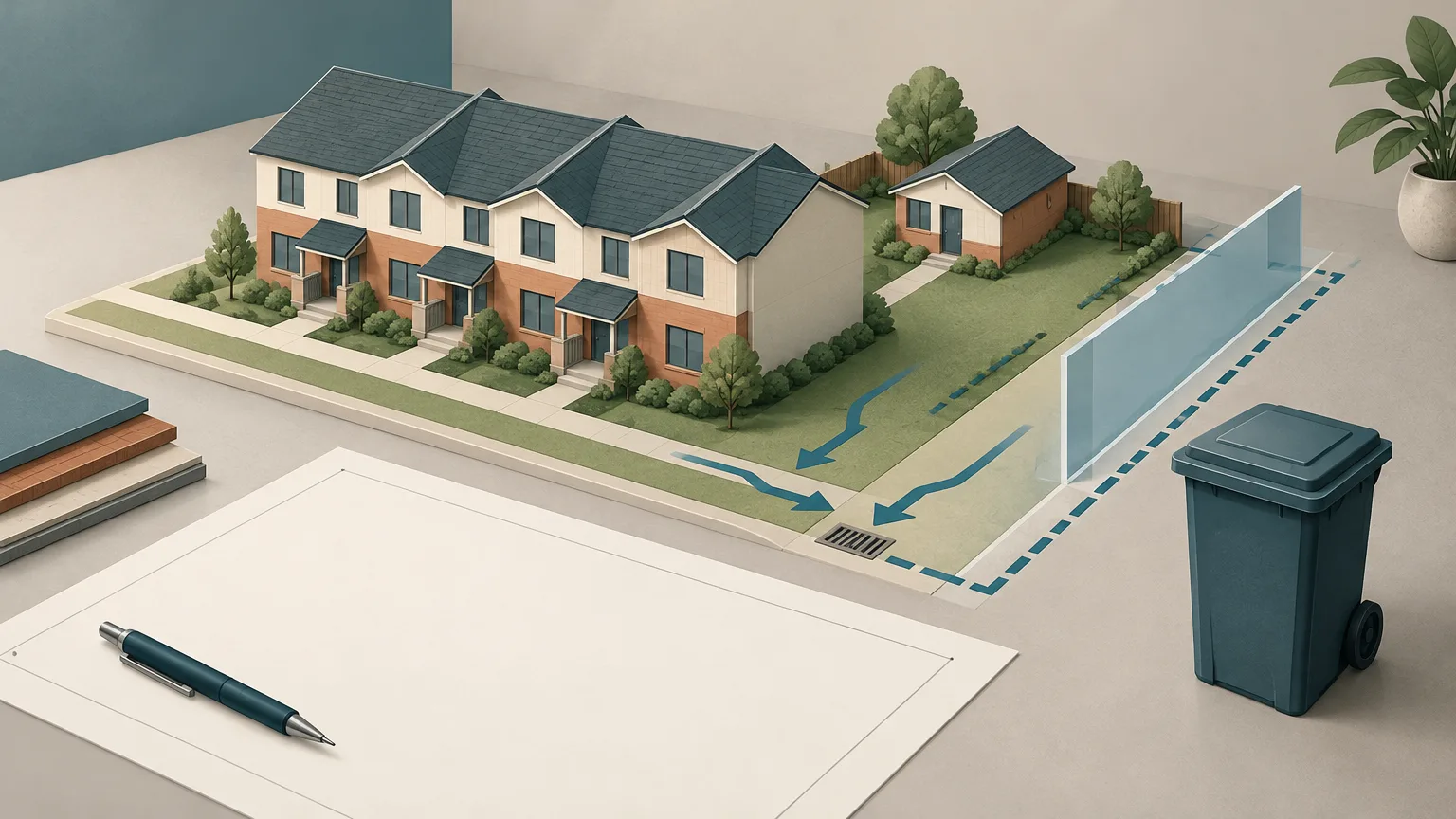
Schenker bought his home in 2002 and believed the disputed part of the adjoining gravel driveways belonged to him. He drove and parked there, as the previous owner said he had done since 1997. Martin bought the neighbouring property in 2018 without a survey certificate and initially did not know the exact boundary.
A March 2022 survey established that the disputed strip belonged to Martin. The neighbours disagreed about some conversations and earlier events, but both accepted that the survey results had been communicated that month. Martin then parked on one part of the strip where Schenker had previously parked, while Schenker continued driving across another part to reach his driveway.
In 2024, Schenker asked through counsel for an easement agreement. Martin refused, and Schenker applied to court on December 20, 2024, for a declaration recognizing a prescriptive right. Both parties broadly accepted the governing law but disputed whether the facts satisfied it.
Twenty years had to lead up to the lawsuit
A prescriptive easement is a right to use another owner’s land established through qualifying long use. The court identified both common-law requirements for an easement and additional statutory requirements under the Prescription Act 1832, an English statute that continues to operate in Manitoba.
The ordinary easement requirements were met: there were separately owned properties, the claimed right benefited Schenker’s property by facilitating access, and the right was capable of being granted legally. The strip was useful, but not necessary; Schenker could still reach his driveway without it.
For the statutory claim, use had to be continuous, open, peaceful and without permission for at least 20 years immediately before the court proceeding began. The owner’s passive acceptance matters. Permission, neighbourly accommodation or objections are inconsistent with the qualifying use the law describes as being as of right.
The statute also requires use without interruption. Its one-year qualification means that an interruption does not count unless the person claiming the easement submits to or accepts it for a year. The court’s task was therefore not simply to total up every year in which Schenker or a previous owner had used the strip.
Continued driving did not answer the interruption
The judge found that Schenker had established qualifying use for most of the 20 years before filing. But his own evidence showed that, from approximately March 25, 2022 until the December 2024 application, he understood Martin to be asserting ownership and control inconsistent with his claimed right.
Several facts supported that conclusion. Schenker accepted that Martin’s parking on part of the strip seemed reasonable because it was Martin’s property. He acknowledged uncertainty about access and the possibility of a fence. His later request for a formal easement agreement also showed that he understood the precarious nature of his position.
The court did not need to resolve the neighbours’ conflicting accounts to reach its decision. On Schenker’s evidence alone, he had yielded use of part of the strip and had not challenged the assertions of control. His continued driving over another part did not establish the neighbour’s passive acceptance of an easement.
The judge found an interruption lasting well over one year and Schenker’s acceptance of that interruption. Because every common-law and statutory element had to be established, failure on uninterrupted use defeated the application despite the long earlier history of driving and parking there.
The application was dismissed. Costs were left for agreement or further submissions, not fixed in the judgment. The decision does not establish that a survey or any single objection automatically defeats an easement: the court relied on the combined words, conduct and response over the relevant period.