A Manitoba trucking company cannot use the province’s garage-lien payment procedure to force a fabricator to hand over a custom truck box that was built but never installed, the Court of King’s Bench has ruled.
In Yellowhead Industries Ltd. v. Minty’s Moving Ltd., 2026 MBKB 68, released May 19, 2026, Justice Leven dismissed Minty’s application under The Garage Keeper’s Act. The judge held that the disputed box never became part of the truck for the purposes of the Act and that, in any event, the relevant lien had been discharged before Minty’s paid money into court.
The ruling did not settle the parties’ disagreement about the agreed price. Minty’s remained able to pursue its contractual rights, while Yellowhead was entitled to ordinary tariff costs rather than the higher costs both sides had sought.
Two truck boxes and a disputed bill
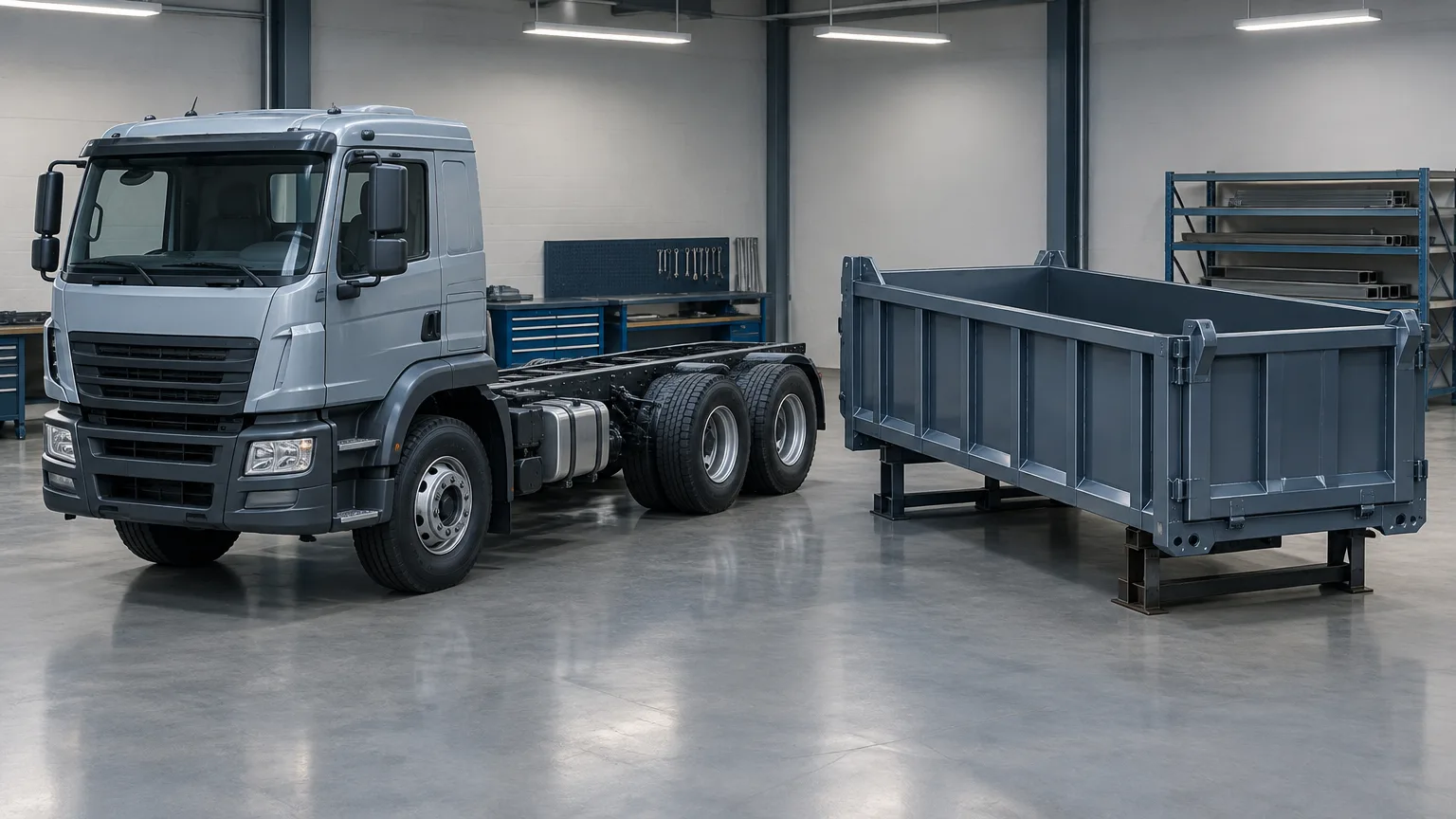
Minty’s arranged for Yellowhead to build two hardox boxes for two semi-trucks, identified in the reasons by their model years, 2007 and 2008. The boxes were manufactured separately and were to be attached to the trucks after construction.
One box was installed on the 2007 truck. The second was built but never installed on the 2008 because the parties disagreed about price. Minty’s maintained that the oral agreement called for each box to be built and installed for $30,000 plus tax. Yellowhead disputed that alleged price and relied on higher invoiced amounts. Neither party alleged a written quote or estimate.
In March 2025, Minty’s sent a $70,999.91 cheque with a payment stub allocating the money among four vehicles, including $30,000 for each of the two boxes. Yellowhead cashed the cheque, but the parties disagreed over how the payment could be allocated and what remained owing.
Yellowhead registered liens against the two trucks and a third vehicle. It later recognized errors in those registrations. On May 20, 2025, it discharged the liens affecting the 2008 truck and the third vehicle and advised Minty’s lawyers that those vehicles could be collected. A lien remained on the 2007 at that point.
Two days later, Minty’s paid $57,226.40 into court under the Act, including the additional $50 prescribed by the payment procedure. Its employees subsequently collected the trucks. The 2007 had its box attached; the 2008 did not.
The money paid into court was later released following an uncontested motion. Minty’s nevertheless sought an order requiring Yellowhead to release the second box. The judge noted that Yellowhead said in its brief that the box had since been sold to another customer, but also expressly acknowledged that the sale was not addressed in affidavit evidence.
A lien procedure is not a contract-performance remedy
Section 13 of the Act provides a way for an owner disputing a garage keeper’s debt to obtain release of a vehicle by paying the disputed amount, with the prescribed additional sum, into court. The procedure requires an existing lien and detention, seizure or a qualifying right to seize the vehicle.
A garage keeper served with the payment notice has 30 days to start an action to realize its claim against the money. If it does not, the owner may seek payment out. The statute also requires the garage keeper to give up possession when the notice is properly served.
Minty’s argued that paying into court fixed its right to receive both trucks with their boxes, and that Yellowhead’s failure to start an action within the statutory period supported an order for the second box. It characterized the box as a vehicle part covered by the Act.
Leven rejected that approach. Yellowhead had acted in two capacities: as a manufacturer building the box, and as a garage keeper that anticipated installing it. Manufacturing the box from scratch was not repairing a motor vehicle. The second box did not exist when the truck arrived and never became an installed part of it.
The judge concluded that the Act did not apply to this dispute over a future part. Registering a financing statement in the Personal Property Registry did not itself create a statutory lien where the legal entitlement was absent.
There was also an independent reason the application failed. Even if that interpretation of the box was wrong, Minty’s could not invoke section 13 on May 22: Yellowhead had already discharged the relevant lien and told Minty’s it could collect the 2008 truck. The truck was neither being detained nor seized.
Once Yellowhead corrected the registrations, paying money into court did not give Minty’s new rights to compel installation or delivery of the disputed box.
Contract rights remain open
The judge identified the underlying dispute as a disagreement about the true contract price, not a continuing lien dispute. A contract claim could require evidence from the people who made the oral agreement and findings about credibility and reliability. Depending on what was established, contractual remedies could include performance of the agreement or damages.
The Act did not prevent such a lawsuit. But the lien application was not a substitute for proving a contractual entitlement, and the court did not determine the correct price or award Minty’s damages.
Leven also criticized evidentiary shortcomings on both sides. The affidavit supporting Minty’s payment into court failed to mention the lawyers’ earlier notice that the relevant liens had been discharged. Other affidavit passages relied on unsupported understandings or irrelevant material. Rather than catalogue every defect, the judge gave inadmissible material no weight.
The application was dismissed and Yellowhead received normal tariff costs, with no dollar amount fixed in the reasons. For businesses ordering custom vehicle equipment, the decision draws a practical distinction between obtaining release of property subject to a garage lien and proving a right to goods or installation under a disputed contract.