The Alberta Utilities Commission has rejected a proposed 100-megawatt battery-storage facility near High River, giving decisive weight to its conflict with Foothills County’s longstanding land-use plans while expressly rejecting the idea that municipalities have a veto over provincial energy approvals.
In Decision 28906-D01-2026, issued April 30, 2026, the commission denied 2569059 Alberta Inc.’s Laramide Battery Energy Storage Facility application and five related connection applications. The company, identified in the reasons as Enfinite, had proposed 105 battery units capable of storing 400 megawatt-hours of electricity.
The result turned on the particular sites, the scale of the development and the county’s planning rationale—not a general finding against battery-storage technology. The commission also found that Enfinite’s draft emergency-response plan met the applicable application requirements.
Provincial authority, meaningful local planning
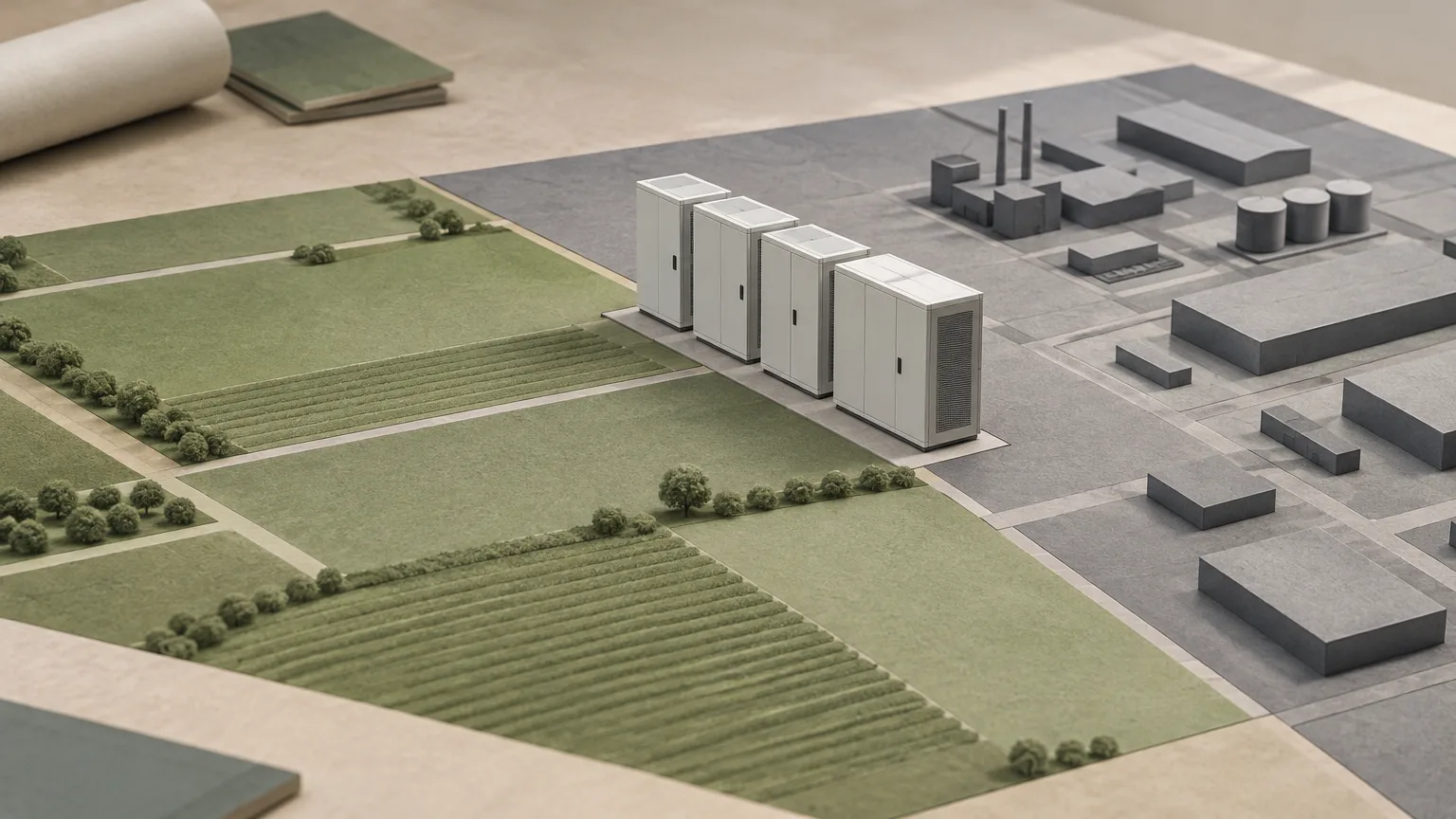
The preferred and alternative sites were on company-owned land approximately seven kilometres east of High River and north of Frank Lake. Both lay in the county’s predominantly agricultural East District, where municipal planning discouraged converting agricultural land to other uses.
Foothills County said industrial development belonged in its industrial corridor. Although battery storage was not then a permitted or discretionary use anywhere in the county, the corridor provided industrially zoned land, full-time firefighting coverage and reliable year-round piped water for firefighting. The Frank Lake North Concerned Citizens Group also opposed the project’s inconsistency with municipal planning.
The commission’s task under section 17 of the Alberta Utilities Commission Act was to assess the public interest, balancing social, economic, environmental and other effects. The applicant bore the burden of showing that its project’s benefits outweighed its negative impacts.
Municipal plans formed part of that assessment, but did not control it. The commission explained that sections 619 and 620 of the Municipal Government Act give its decisions precedence over municipal planning documents. Its effort to achieve consistency with local planning therefore did not amount to handing the county a veto.
A shorter transmission line was not enough
Enfinite argued that its chosen sites offered important advantages. Connecting to the 240-kilovolt system from the industrial corridor would require an approximately 15-kilometre transmission line, compared with one to two kilometres at the proposed sites. The shorter connection would reduce new transmission infrastructure and wildlife impacts.
The company also sought to minimize proximity to residences and use the least productive portions of the farmland. The facility would occupy no more than approximately six per cent of the quarter section’s farmable land, with the remainder continuing in agricultural use.
The commission accepted that these were competing siting considerations, but found the county’s position more persuasive on this record. Its planning framework had developed over decades through consultation and democratic adoption; it was not an unreasonable policy devised to exclude battery facilities. It reflected choices about incompatible land uses, public safety and community objectives.
The project’s departure from those choices was material. Its nature and scale, combined with concerns about nearby emergency-response resources, increased the significance of that departure. The commission found that it outweighed the claimed benefits: electricity-system reliability, resilience and efficiency, property taxes, construction and supply-chain activity, and commitments to support local emergency-service training and the nearby bird area.
The commission was not approving the industrial corridor as an alternative site. It was deciding whether the proposed development’s non-compliance with municipal planning was acceptable.
An adequate draft plan did not resolve local capacity concerns
Emergency planning reinforced the weight given to the county’s land-use choices. The county identified single access roads, reliance on volunteer firefighters and limited rural water supplies. Trucking in water could supplement reserves, it said, but was not equivalent to a dependable permanent supply, particularly when road conditions, weather and vehicle availability could affect a sustained response.
Enfinite presented expert evidence about equipment design, spacing, fire breaks and response procedures. It proposed training, thermal monitoring, continued planning with the county and on-site water storage if considered appropriate.
The commission found the draft plan sufficiently detailed for the project’s stage and compliant with Rule 007. It also found Enfinite’s expert evidence persuasive on technical fire and response issues. But the county was best placed to assess its own personnel, resources and ability to sustain an emergency response. Substantive disagreements remained despite consultation.
The planning finding was independently determinative. The commission did not need to decide the project’s other potential adverse impacts, and the reasons do not establish that the facility would contaminate Frank Lake or inevitably cause an emergency.
All six applications were denied. Once the battery facility was refused, the five related applications—for associated substation and transmission works and the Alberta Electric System Operator’s connection need—were unnecessary and were denied on that basis. The commission expressly limited its reasoning to this record: a project that conflicts with municipal planning could still, in another case, satisfy the public-interest test.