The Yukon Utilities Board has approved Yukon Energy Corporation’s roughly $22.4 million withdrawal from its Low Water Reserve Fund for 2025, accepting a year-end balance of negative $7.878 million. Its corrected Order 2026-10, dated April 28, 2026, also approves a zero Energy Reconciliation Adjustment charge from Yukon Energy to ATCO Electric Yukon.
The deficit remains within the fund’s positive and negative $16 million limits, leaving Rider E at zero for this determination. The withdrawal is not a new $22.4 million bill to customers. Nor does the decision erase the negative balance or freeze all electricity rates: it approves the fund accounting and the separate reconciliation filing.
Low water pushed the fund into deficit
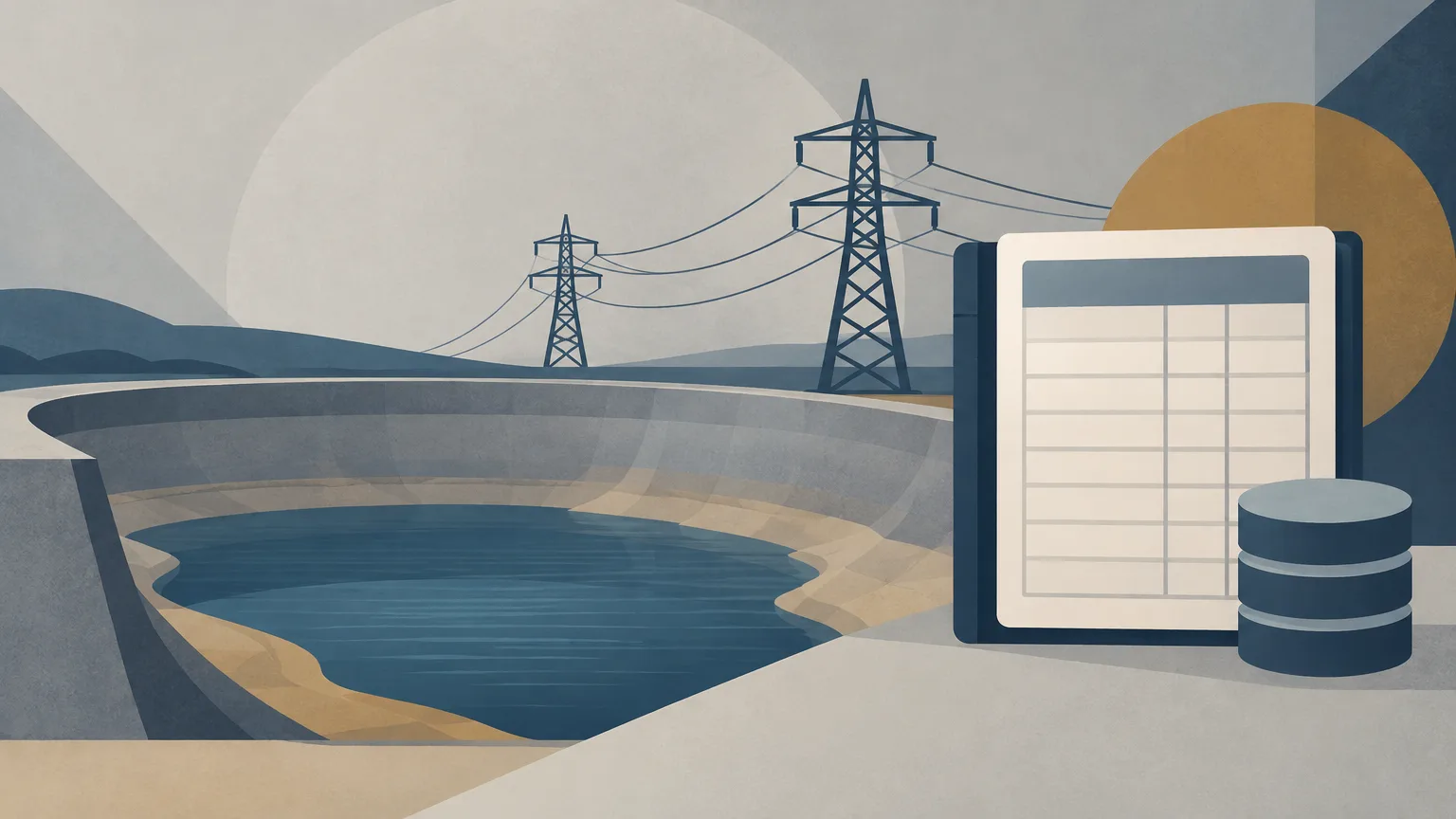
The fund is intended to smooth the rate effects of changes in water availability. Yukon Energy said low water in 2024 and 2025 required it to draw on the reserve, avoiding costs being passed immediately to customers. A positive fund balance represents an amount owing to customers; a negative balance represents an amount owing to Yukon Energy.
The revised March 23 application puts net thermal generation for 2025 at 136,500 megawatt-hours, compared with 58,865 MWh expected under long-term average water conditions at the actual load. The resulting 77,635 MWh difference is the generation included in the fund calculation. The calculation uses fuel costs approved in the utility’s general rate application, rather than a fresh determination of fuel prices in this proceeding.
Yukon Energy revised its filing after reconciling generation figures during preparations for its annual audit. It said replacement of a metering module in a rented diesel unit had led to inaccurate generation figures. Correcting those figures reduced the requested withdrawal by about $131,000. That was a revision to the utility’s calculation, not a penalty imposed by the Board.
Consumer group challenged the method and fuel costs
The Utilities’ Consumers Group, the only intervenor to comment, argued that the fund’s rules favoured Yukon Energy and disadvantaged customers. It questioned whether the movement between forecast and actual figures accurately reflected operations. The group also challenged the transparency of fuel-cost calculations and the utility’s incentives to control costs, and sought a review of Yukon Energy’s and ATCO Electric Yukon’s fuel purchasing before the Board decided the fund application.
Yukon Energy replied that the fund’s rate-smoothing function was required by the Rate Policy Directive and that its transfers followed the approved term sheet. On fuel costs, it pointed to the general rate proceeding and quarterly reports comparing actual and approved fuel prices. It said daily price reporting would add regulatory costs without useful information. The utility also defended its supply arrangements as supporting predictable distribution costs and reliable delivery.
The Board rejected the group’s criticism of the term sheet. It found the claims of disadvantage to customers and lack of public interest unsupported, and the objection to using forecast and actual data unsubstantiated. Crucially, it said the group had not shown that Yukon Energy’s calculations departed from the approved rules. The Board verified the fund calculations and found them consistent with the term sheet in its corrected reasons.
The fuel-purchasing challenge failed on scope, not through a blanket finding that every fuel cost was prudent. The Board said fuel forecasts and prices belonged to the recently completed 2025–2027 general rate proceeding, where the group had participated without raising those issues. It had dismissed the group’s motion on April 2 and said this fund application was not an opportunity to relitigate fuel prices and purchases.
Correction retains rebates already paid
The approved continuity schedule begins 2025 with $14.181 million in the fund. Alongside the withdrawal, it records $594,000 in interest and a negative $225,000 adjustment for rebates. The resulting negative $7.878 million balance carries into 2026.
In a May 6 letter, Yukon Energy explained that the $225,000 represented previously approved Rider E rebates already provided during 2025. It sought a correction because the balance affected interest calculations and financial reporting. The Board’s May 22 errata accepts the explanation for that adjustment and approves the report as filed, removing the earlier direction to change the ending balance. It does not award a new $225,000 refund.
Yukon Energy also committed to explain current-year changes more explicitly in future continuity-schedule notes and include its monthly fund-balance schedule in the PDF filing.
No wholesale reconciliation payment
The separate Energy Reconciliation Adjustment addresses the effect of changes in wholesale sales to ATCO Electric Yukon. The revised calculation shows approximately $402,000 in incremental thermal costs against $1.748 million in additional revenue, leaving no ERA payment required for 2025. Although the consumer group did not comment on that calculation, the Board reviewed it, verified the table and approved the zero charge.