A Northwest Territories human rights adjudicator refused a renewed declaration and punitive damages over delayed accessibility work at Yellowknife’s courthouse, while sharply criticizing the government’s response and preserving supervision of the renovations.
In Portman v. Northwest Territories (Justice), 2026 CanLII 64734 (NT HRAP), issued April 2, 2026, adjudicator Sheldon Toner found that discriminatory conditions persisted as of the decision. But another declaration would repeat one already made, and his continuing authority over implementation did not reopen a final damages award.
The ruling made no new monetary award. Elizabeth Portman had already received the $5,000 ordered in the original case.
Accessibility orders followed an earlier discrimination finding
Portman’s complaint arose from barriers she encountered when attending the courthouse in 2016 as a person with a disability. The April ruling recounted the panel’s May 2021 finding that the government operated and maintained the facility in a way that adversely affected her access, without justification for leaving known barriers in place.
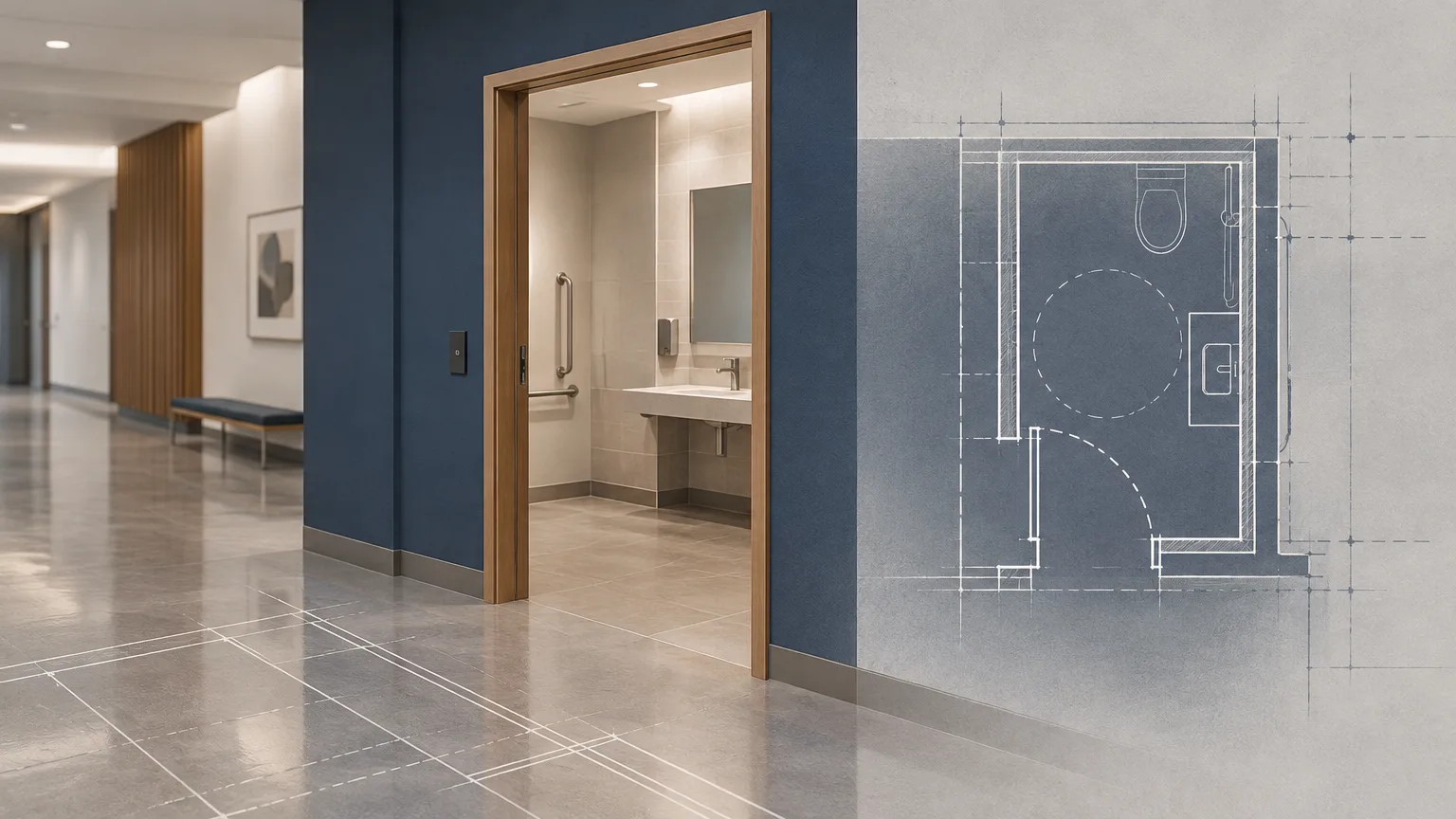
The original remedies required tactile indicators on the accessibility ramp and washrooms upgraded to barrier-free standards, including emergency call systems in single-toilet universal washrooms. The government also had to provide an adequate number of accessible washrooms, taking account of occupancy and travel distances within the building.
Toner expressly retained authority to deal with implementation problems. Beginning in early 2022, Portman sought a further public hearing, leading to conferences, progress-report directions and ultimately written submissions.
By April 2026, the washroom renovation requirements remained unfinished. The other remedies had been fulfilled. The record described missed completion deadlines, unsuccessful invitations for design services, funding approvals, revised drawings and construction work eventually beginning in 2025.
Procurement was not an exemption from human rights obligations
Portman argued that repeated delays undermined accountability. The government pointed to the scale of the project, expert advice, procurement and funding requirements, and the need to keep the courthouse operating.
Toner found the delays excessive on their face. More than a year passed after Portman sought another hearing before the government began providing meaningful explanations of the steps it considered necessary. Procurement requirements did not insulate it from human rights obligations: it had to find a timely way to meet both.
The adjudicator nevertheless identified a limit in the record. Portman had not supplied evidence establishing that the three-year implementation delay was too long in the specific context of government procurement. Neither she nor the Human Rights Commission had presented evidence or submissions asking the panel to direct the procurement process or the renovations themselves.
That distinction mattered. The ruling criticized the government’s approach without prescribing a particular construction or procurement solution.
Supervision continued, but damages were final
The government initially argued that the panel could not hold any further hearing, later accepting a more limited supervisory role. Toner concluded that his broadly worded original order allowed him to address implementation for as long as the accessible-washroom requirements remained unfulfilled.
It did not, however, permit him to revisit final decisions. The $5,000 compensation award had been paid, leaving no implementation problem with that remedy. The original hearing had not established the wilful, malicious or repeated statutory violations required for punitive damages.
There was also no evidence that Portman had personally needed to use the courthouse since the original decision. Toner recognized her public-interest concern but distinguished it from proof of further discrimination against her personally.
He dismissed the requested declaration and additional damages while retaining supervisory jurisdiction until the washroom work was completed. Portman or the commission could seek further implementation directions.
The government’s latest update in the record forecast completion by September 30, 2026, and Toner expressed hope that further applications would not be necessary. That was a forecast recorded in the April ruling, not a finding that construction had been completed.