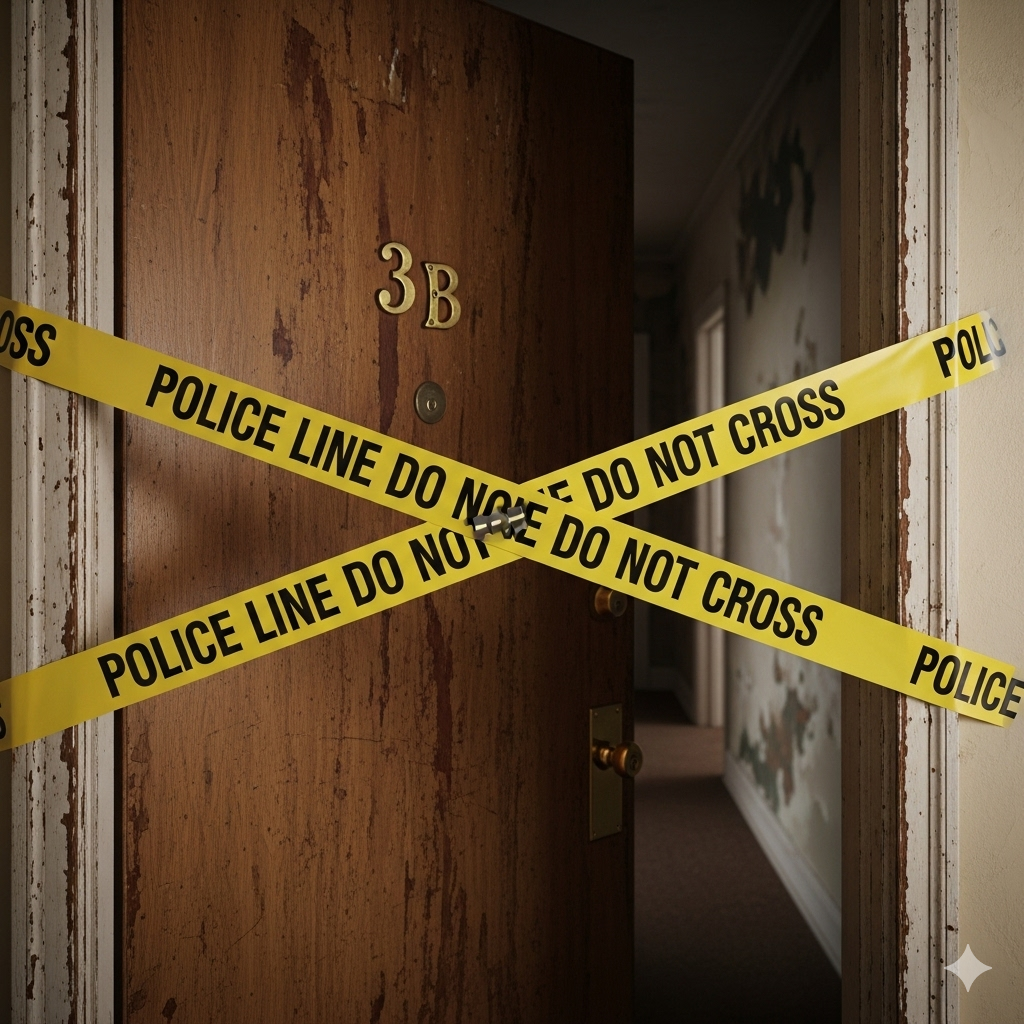
A Toronto security guard who discovered his long-term girlfriend in bed with another man and stabbed the man to death has been sentenced to a total of 11 years in prison. On September 9, 2025, Justice Kenneth L. Campbell of the Ontario Superior Court of Justice handed down the sentence to Shaquille Chalmers, who was found guilty by a jury of manslaughter in the killing of 38-year-old Marvin Matthew1.
The tragic series of events unfolded from a troubled romantic relationship. Mr. Chalmers, 32, had been in a long-term relationship with his girlfriend, Cheyenne Fitzsimons. The couple lived together in a second-floor apartment on Dynevor Road and had a five-year-old son. Mr. Chalmers worked as a security guard, while Ms. Fitzsimons worked in catering. The court heard that their relationship experienced difficulties, and in March of 2023, Ms. Fitzsimons began a secret romantic and sexual affair with Mr. Matthew. When Mr. Chalmers discovered the affair, he was upset and asked Ms. Fitzsimons to end it so they could work on their own relationship. Although she agreed, she continued to see Mr. Matthew.
Tensions escalated significantly on May 15, 2023. Mr. Chalmers arrived at the home of his son’s babysitter to find Ms. Fitzsimons and Mr. Matthew together outside. An emotional, verbal confrontation erupted between the two men. Mr. Chalmers told Mr. Matthew to leave, but he refused. In response, Mr. Chalmers walked to his car, retrieved a knife, and slashed all four tires of the vehicle Mr. Matthew had rented before leaving the scene. As a result of this incident, Mr. Chalmers was charged with mischief and released on bail. The conditions of his release were strict: he was ordered to have no contact with either Ms. Fitzsimons or Mr. Matthew and was forbidden from attending the Dynevor Road apartment. Despite this clear court order, within a week of his release from jail, Mr. Chalmers moved back into the apartment with Ms. Fitzsimons, in direct violation of his bail.
The fatal encounter occurred just over a week later, on the evening of May 26, 2023. Mr. Chalmers was scheduled to work an evening shift. Believing he would be gone for some time, Ms. Fitzsimons and Mr. Matthew went to the apartment. After smoking marijuana on the balcony and showering together, they began having consensual sex in the main bedroom. Unknown to them, Mr. Chalmers returned to the building. He entered the apartment carrying a large hunting knife. The Crown argued at trial that Mr. Chalmers knew his girlfriend and Mr. Matthew were inside and had retrieved the knife from a hiding spot in a nearby dumpster with the plan to attack and kill Mr. Matthew. The defence contended that Mr. Chalmers always carried the knife as part of his security guard work, though his employer never authorized it, and that he had no plan or intent to kill anyone.
Upon entering the apartment, Mr. Chalmers saw clothes on the floor and heard noises from the bedroom. He testified that he thought it might be an intruder. He pulled out his hunting knife, opened the bedroom door, turned on the light, and walked in. Inside, he was confronted with the sight of Ms. Fitzsimons and Mr. Matthew naked and engaged in intercourse on the bed. What happened next was a point of contention at trial. Mr. Chalmers claimed that Mr. Matthew, a large man at 6’4” and 230 pounds, stood up from the bed and advanced toward him. The Crown argued that Mr. Chalmers immediately launched an attack on a naked and defenceless Mr. Matthew. It was undisputed, however, that a physical confrontation occurred in which Mr. Chalmers stabbed the unarmed Mr. Matthew six or seven times, with multiple wounds to his chest and torso, killing him.
As soon as Mr. Chalmers entered the room, Ms. Fitzsimons ran naked from the bedroom and out into the apartment building’s hallway, desperately seeking help. She eventually found refuge in a neighbour’s apartment, where she placed a frantic 911 call. During the recorded call, which was played for the jury, a crying and sobbing Ms. Fitzsimons told the operator that her ex-boyfriend, Mr. Chalmers, had come into the apartment, “jumped over the bed,” and “started stabbing” her boyfriend with a knife. She said she did not know if Mr. Matthew was alive or dead as she had just run out.
Mr. Chalmers was arrested and charged with first-degree murder. Following a jury trial, on March 26, 2025, he was found not guilty of murder but guilty of the lesser included offence of manslaughter. Justice Campbell explained in his sentencing reasons that this verdict meant the jury rejected Mr. Chalmers’s claim of self-defence. It also meant the jury concluded he did not plan and deliberate the killing, which would be required for a first-degree murder conviction, and that he did not have the specific intent required for a second-degree murder conviction.
At the sentencing hearing, the Crown asked for a total sentence of 11 and a half years, while the defence argued for a sentence at the lower end of the appropriate eight to 12 year range. The court received a victim impact statement from Mr. Matthew’s eldest brother, Dale Matthew. He described his brother as a “gentle giant” who was a “peacemaker” and “protector.” He wrote that Mr. Chalmers had “destroyed a family,” “shattered a mother’s heart,” and “ripped away” their family’s peace. The judge noted that while some portions of the statement went beyond the scope of what is legally permissible, he would consider the relevant parts detailing the family’s profound loss.
The court also considered Mr. Chalmers’s personal background. He had a stable upbringing in Brampton, a high school diploma, and a history of steady employment, including as a supervisor at Pearson International Airport. He had no prior criminal record. Friends and family described the offence as entirely out of character for the quiet and gentle man they knew. While in pre-sentence custody, Mr. Chalmers completed numerous life skills courses, including anger management and effective fathering.
Despite Mr. Chalmers expressing in a letter that he was “so sorry” and felt “terrible” for the victim’s family, Justice Campbell stated he did not accept the sincerity of his remorse. The judge wrote, “I have no hesitation in saying that I do not accept the sincerity of any of these statements of alleged remorse on the part of the accused. Indeed, I reject them.” The judge recounted an example from the trial where Mr. Chalmers repeatedly denied he was wearing black gloves while walking down a stairwell moments before the killing, even when shown a video that “showed, with unmistakable clarity” that he was. Justice Campbell concluded that Mr. Chalmers was willing to say anything to his own tactical advantage and that the expressed remorse was a selfish strategy to obtain a lighter sentence. The judge clarified that this lack of remorse was not treated as an aggravating factor but as the absence of a mitigating one.
In his final analysis, Justice Campbell described the killing as a case of “near-murder.” He noted Mr. Chalmers attacked an unarmed, naked, and vulnerable man, stabbing him multiple times, including twice in the heart, and then left him to die. A significant aggravating factor, the judge stated, was Mr. Chalmers’s “flagrant disregard” for his bail order. “Had the accused simply abided by the terms of his judicial interim release order, as he was legally required, this crime simply could not have happened,” Justice Campbell wrote.
The total sentence was set at 11 years of imprisonment. Mr. Chalmers was credited for the 837 days he had already spent in custody, enhanced to the equivalent of approximately three years and five and a half months. He was granted an additional credit of two and a half months for having endured harsh lockdown conditions for 174 days at the Toronto South Detention Centre. After subtracting the total credit of three years and eight months, Mr. Chalmers was sentenced to a further penitentiary term of seven years and four months. He is also subject to a lifetime weapons prohibition and must provide a sample for the national DNA databank.
Read more crime stories here.