Vladislav Listovets was once a man of significant professional standing, having served as a physics professor in both the former Soviet Union and the United States. After immigrating to Canada in 1994, he successfully transitioned into a career as a Certified Financial Planner. For much of his life, he was considered a healthy and active individual. However, this began to change in 2003 when, at the age of sixty-two, his family physician diagnosed him with Chronic Obstructive Pulmonary Disease, commonly known as COPD. To manage his symptoms, particularly the wheezing that accompanied his condition, his respirologist prescribed him Symbicort Turbuhaler in 2004. At the time, this was a relatively new treatment in Canada, having only been authorized for asthma in 2002 and later for COPD in 2009.
The medication prescribed to Mr. Listovets, Symbicort, is a common prescription inhaler that utilizes two primary active ingredients to treat respiratory distress. The first is budesonide, which belongs to a class of drugs known as corticosteroids that work to manage and reduce inflammation within the airways. The second is formoterol, a bronchodilator designed to relax the muscles surrounding the airways, thereby making it easier for a patient to breathe. When Mr. Listovets first began his treatment regimen, the official product monograph for Symbicort listed several rare but serious side effects. These included increased wheezing, skin rashes, irregular heartbeats, and severe allergic reactions such as anaphylaxis. At that time, there was no mention of the rare disease that would later become the center of a decade-long legal dispute.
In 2016, more than a decade after he began using the inhaler, Mr. Listovets received a diagnosis that would fundamentally alter his life. He was found to be suffering from Eosinophilic Granulomatosis with Polyangiitis, a condition formerly known as Churg-Strauss Syndrome. This rare disease causes significant inflammation in the blood vessels, which can restrict blood flow and lead to permanent damage to vital organs and tissues. The medical community considers the disease to be poorly understood, and its exact cause remains unknown to science. It typically progresses through three distinct phases: an allergic phase characterized by asthma, an eosinophilia phase where white blood cell counts spike, and finally a vasculitis phase involving dangerous inflammation of the blood vessels.
Following his diagnosis, Mr. Listovets discovered that AstraZeneca Canada Inc., the manufacturer of Symbicort, had updated its product monograph in 2015. The new warning stated that in rare cases, patients using inhaled corticosteroids might present with clinical features of vasculitis consistent with the disease he had just been diagnosed with. Believing that the medication was the direct cause of his condition and that the manufacturer had known of this risk as early as 2002, Mr. Listovets initiated a legal proceeding in May 2018. He sought $2.7 million in damages, alleging that the pharmaceutical giant had been negligent in failing to warn patients and had actively covered up the potential risks for years.
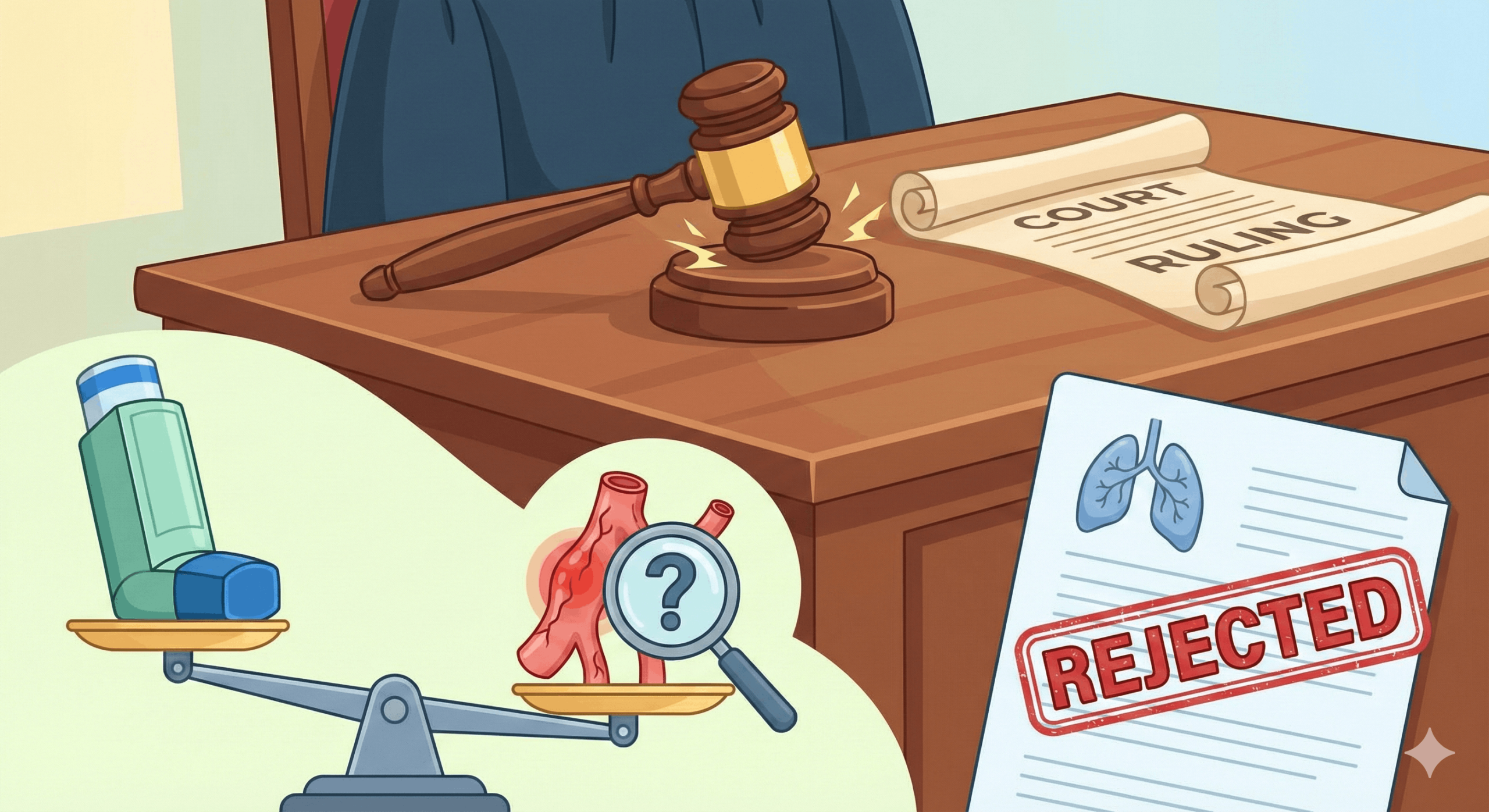
The litigation spanned nearly eight years, during which Mr. Listovets represented himself against the multinational corporation. As the case moved through the Ontario Superior Court of Justice1, the focus eventually narrowed to a single, pivotal legal question: whether Symbicort is actually capable of causing the development of the disease in question. In legal terms, this is known as general causation. It serves as a necessary first step in any product liability case involving a failure to warn. If a plaintiff cannot prove that a product is capable of causing the alleged harm under ordinary use, the rest of the negligence claim cannot proceed. Recognizing this as a gating issue, the court directed that a motion for summary judgment be heard specifically on the matter of causation to determine if a full trial was truly necessary.
To support its position that the inhaler does not cause the disease, AstraZeneca relied on the expert testimony of Dr. Parameswaran Nair, a distinguished respirologist and professor at McMaster University. Dr. Nair provided evidence explaining that while there is a documented association between the use of inhalers like Symbicort and the diagnosis of the disease, this does not imply that the drug causes the illness. He noted that because asthma is often the very first symptom of the disease, patients are frequently prescribed inhaled corticosteroids to treat those initial respiratory issues before the full extent of the vascular inflammation becomes apparent. In these instances, the medication is treating a symptom of a disease that is already present but not yet diagnosed.
Furthermore, Dr. Nair explained a medical phenomenon known as unmasking. Many patients with severe respiratory issues are treated with high-dose oral corticosteroids. When these patients transition to lower-dose inhaled versions like Symbicort, the reduction in the systemic steroid dose may allow the symptoms of the underlying vascular disease to surface. In such cases, the disease was already there, but it was being suppressed by the stronger oral medication. Dr. Nair testified that there is no known biological explanation for how the ingredients in Symbicort could cause the inflammation or the spike in white blood cells associated with the condition.
Mr. Listovets challenged the admissibility of Dr. Nair’s testimony, raising concerns about the expert’s impartiality. He pointed out that Dr. Nair held a research chair at McMaster University named after AstraZeneca and that the company provided various forms of funding to the institution. However, Justice Ranjan K. Agarwal of the Ontario Superior Court of Justice determined that the optics of the relationship did not disqualify the expert. The court found that Mr. Listovets failed to provide evidence that Dr. Nair was unable or unwilling to fulfill his primary duty to be fair, objective, and non-partisan. The judge noted that the burden was on the person opposing the expert to show a realistic concern of bias, which had not been met in this instance.
In his own defense, Mr. Listovets presented several arguments to bridge the gap between association and causation. He pointed to the 2015 label change as an admission of guilt and cited forty-seven adverse event reports worldwide where patients developed the disease while using the drug. He also attempted to introduce various academic studies and case reports that he believed supported his claim. However, the court found these pieces of evidence to be insufficient or inadmissible. The judge noted that Mr. Listovets, not being a medical expert himself, was not qualified to provide opinion evidence on complex scientific matters. Additionally, the academic articles were not provided in full, some were in foreign languages without translation, and others involved different drugs or single-patient studies that did not establish a broad scientific truth.
The legal standard for summary judgment in Ontario requires that there be a genuine issue requiring a trial. Justice Agarwal found that because Mr. Listovets had not provided any admissible expert evidence to contradict Dr. Nair, there was no factual basis to conclude that the medication could cause the disease. The court reiterated that in complex medical or product liability cases, the absence of an expert report on causation is almost always fatal to a claim. The judge observed that while the plaintiff sincerely believed the manufacturer had prioritized profits over safety, the scientific evidence suggested that his breathing difficulties in 2010 were likely the early stages of the disease itself, rather than a reaction to the treatment.
In the final assessment, the court granted AstraZeneca’s motion for summary judgment and dismissed Mr. Listovets’s amended statement of claim in its entirety. The ruling emphasized that a manufacturer is not required to warn consumers about every possible risk, only those that are known or ought to be known as inherent dangers. Since a causal link was never established, the manufacturer could not be found negligent for failing to warn of a link that does not scientifically exist. The court noted that directing the matter to a long and expensive trial would serve no purpose given the fundamental lack of evidence regarding the drug’s propensity to cause the harm alleged.
Regarding the matter of legal costs, the court exercised its discretion under the Courts of Justice Act. AstraZeneca had incurred actual legal fees and disbursements exceeding $250,000 over the course of the litigation. However, the company requested a significantly lower amount of $25,000, citing the plaintiff’s advanced age and health condition as factors for a more moderate award. Mr. Listovets argued that no costs should be awarded, claiming the defendant had delayed the proceedings. The judge disagreed, finding that the pharmaceutical company had been cooperative in moving the case toward a resolution. The court ultimately fixed the costs at $25,000, inclusive of disbursements, describing the amount as objectively reasonable and fair given the $2.7 million scope of the original claim.
The decision brings a conclusion to a long-standing dispute that highlighted the difficulties self-represented litigants face when navigating complex scientific litigation. While the court acknowledged the physical and emotional toll the disease has taken on Mr. Listovets, it ultimately held that legal liability must be grounded in proven scientific causation. The ruling confirms that the 2015 update to the product monograph was a regulatory measure to reflect a known association rather than an admission that the medication possesses a causal link to the rare vascular condition. With the dismissal of all claims, the decade-long scrutiny of the respiratory medication’s safety profile in this specific context has come to an end.
Read more Ontario legal news here.