The Ontario Superior Court of Justice has delivered a ruling regarding the limits of self defence in cases where an accused person commits a crime against innocent bystanders1. Justice M. Sharma found Nashon Marshall guilty of robbery following an incident on May 9, 2022, at the Sheridan Mall parking lot in Toronto. While the court acknowledged that Mr. Marshall had been acting to protect his life during an initial shootout, it ultimately determined that his subsequent decision to steal a vehicle from a family at gunpoint was an unreasonable response to the situation he helped create. The case centered on a complex interpretation of the Criminal Code and the extent to which a person’s role in a dangerous incident influences their right to claim self defence for later actions.
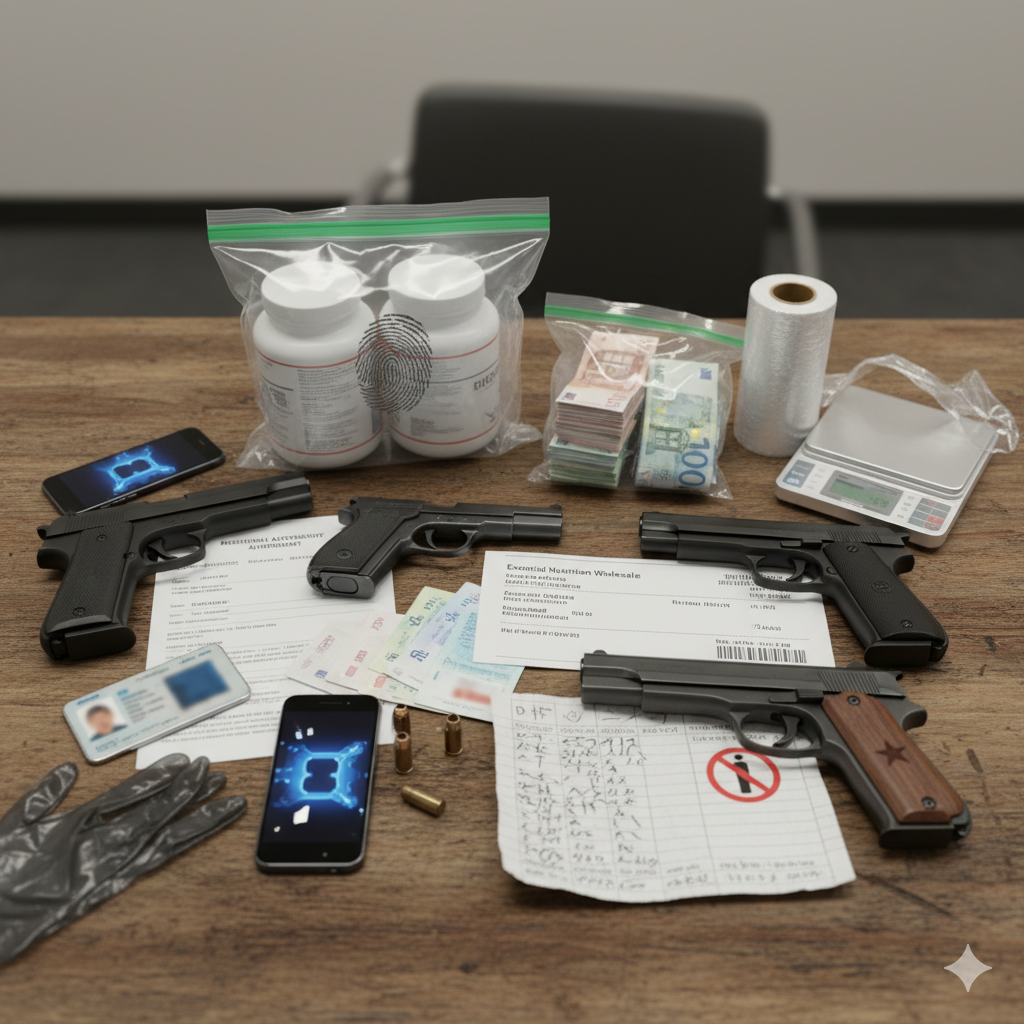
The events leading to the conviction began when Mr. Marshall traveled by taxi to the mall parking lot with the intention of purchasing a kilogram of cocaine for $40,000. He arrived carrying the cash in a plastic bag and was also in possession of a loaded handgun, despite being under a court order that prohibited him from having any weapons. Upon arriving, he approached a group of men near a white Acura SUV, believing them to be associated with the drug seller he had arranged to meet. The situation escalated rapidly when three men behind the SUV attempted to rob Mr. Marshall. One man lunged at him with a knife while another brandished what appeared to be a firearm. In response, Mr. Marshall drew his own weapon and fired several shots, leading to the death of one of the men, Mr. Scott.
Following the initial exchange of gunfire, Mr. Marshall was originally charged with second degree murder. In May 2025, a jury acquitted him of that charge, accepting that the shooting itself was an act of self defence. However, the trial before Justice Sharma focused specifically on what occurred in the roughly twelve seconds immediately following those shots. As the scene in the parking lot descended into chaos, Mr. Marshall ran toward the front of the SUV and fired more shots into the air and at the ground. He testified that he did this to ensure anyone nearby would hide or seek cover rather than pursue him. He then sought a way to escape the parking lot, as he believed the associates of the drug dealers might attempt to run him over or shoot him in retaliation.
During this frantic escape attempt, Mr. Marshall approached a Toyota Corolla belonging to Mr. Phan and his wife, Ms. To. The couple was in the process of helping their young daughter out of the vehicle when they heard the gunshots. Ms. To had pushed her daughter back into the rear seat and climbed in beside her just as Mr. Marshall arrived at the driver’s side door. The evidence presented at trial included video footage and testimony from the couple, who described the terrifying moment Mr. Marshall demanded they surrender the car. While Mr. Marshall claimed he had put his gun away before reaching the vehicle, Justice Sharma accepted the testimony of the victims, who stated they saw a black handgun in his hand as he ordered Mr. Phan to get out.
The legal framework for the case relied heavily on Section 34 of the Criminal Code, which was updated in 2013 to provide a more unified approach to self defence. Under the current law, an accused person can be acquitted if they reasonably believe force is being used or threatened against them, if their actions are taken for a defensive purpose, and if the act committed is reasonable in the circumstances. In this instance, the court had to decide if stealing a car from an innocent family met these criteria. Justice Sharma noted that the law is no longer limited to using force against an original aggressor but can theoretically extend to crimes committed against third parties if the situation warrants such an extreme measure.
In analyzing the first two parts of the legal test, the court found in favor of Mr. Marshall. Justice Sharma determined that the Crown had not disproven that Mr. Marshall held a genuine and reasonable fear for his safety during those twelve seconds. The court noted that fear for one’s life is a powerful human emotion that cannot be easily switched off, even if no attackers are immediately visible. Given the violent nature of the attempted robbery and the presence of a larger group of men in the parking lot, the judge found it was plausible that a reasonable person in Mr. Marshall’s position would still feel threatened. Furthermore, the court accepted that at least part of his motive for taking the car was to protect himself from potential pursuers, rather than solely to evade the police.
However, the defense ultimately failed on the third requirement: the reasonableness of the act. Justice Sharma emphasized that the law of self defence must conform to community norms and should not encourage unnecessary resorts to violent self help. The court examined several factors to determine if robbing the Phan family was a proportional response. One of the most critical elements was Mr. Marshall’s role in the incident. The judge found that Mr. Marshall was far from an innocent bystander, as he had voluntarily entered into an inherently dangerous drug transaction while illegally armed with a loaded handgun. By choosing to participate in a high stakes criminal deal in a busy public parking lot, he had directly contributed to the creation of the life threatening environment.
The court also considered whether Mr. Marshall had other options available to him that did not involve committing a further violent crime against innocent people. Justice Sharma pointed out that instead of brandishing a gun at a family, Mr. Marshall could have attempted to hide within the mall, sought cover behind other vehicles, or even asked a driver to take him to a nearby police station. The evidence showed that he did not consider these lawful alternatives. Instead, his first instinct was to attempt to steal one vehicle, and when that failed, he moved on to the Phan family’s car. The judge remarked that such behavior reflected a level of lawlessness that exceeded what society expects from a person acting in self defence.
The testimony of Mr. Phan and Ms. To played a pivotal role in the court’s assessment of the violence involved in the robbery. The couple described how Mr. Marshall yanked Mr. Phan from the driver’s seat and began reversing the vehicle while the mother and child were still in the back. Video evidence showed the family had to scramble out of the way to avoid being struck by the car as Mr. Marshall sped off. Justice Sharma described the response as disproportionate and violent, noting that the presence of the handgun was a significant aggravating factor. While Mr. Marshall argued that he did not harm the family or damage the car, the court found that the trauma inflicted upon the victims and the risk to their lives outweighed these considerations.
In the final analysis, Justice Sharma concluded that allowing a self defence claim in these circumstances would be contrary to the public interest and the basic purpose of the Criminal Code. The court held that an accused person cannot use self defence as an insurance policy to escape liability for crimes committed while attempting to flee a dangerous situation they helped engineer. The judge noted that the community would find it abhorrent to permit someone who brought a gun to a drug deal to be relieved of responsibility for robbing a family as a means of escape. Consequently, the court found that the Crown had proven beyond a reasonable doubt that the robbery was not a reasonable response.
The ruling reaffirms the principle that while the law recognizes the necessity of self preservation, it also demands that individuals act with a degree of responsibility toward the safety of the general public. Justice Sharma’s decision highlights that the “role in the incident” factor in Section 34 serves as a necessary guardrail to prevent the law from becoming a convenient excuse for those who instigate or participate in violent encounters. With the self defence claim rejected, Mr. Marshall was found guilty of the count of robbery. The proceedings will now move toward the sentencing phase to determine the appropriate penalty for the offense committed against the Phan family in the Sheridan Mall parking lot.
Read more crime stories here.