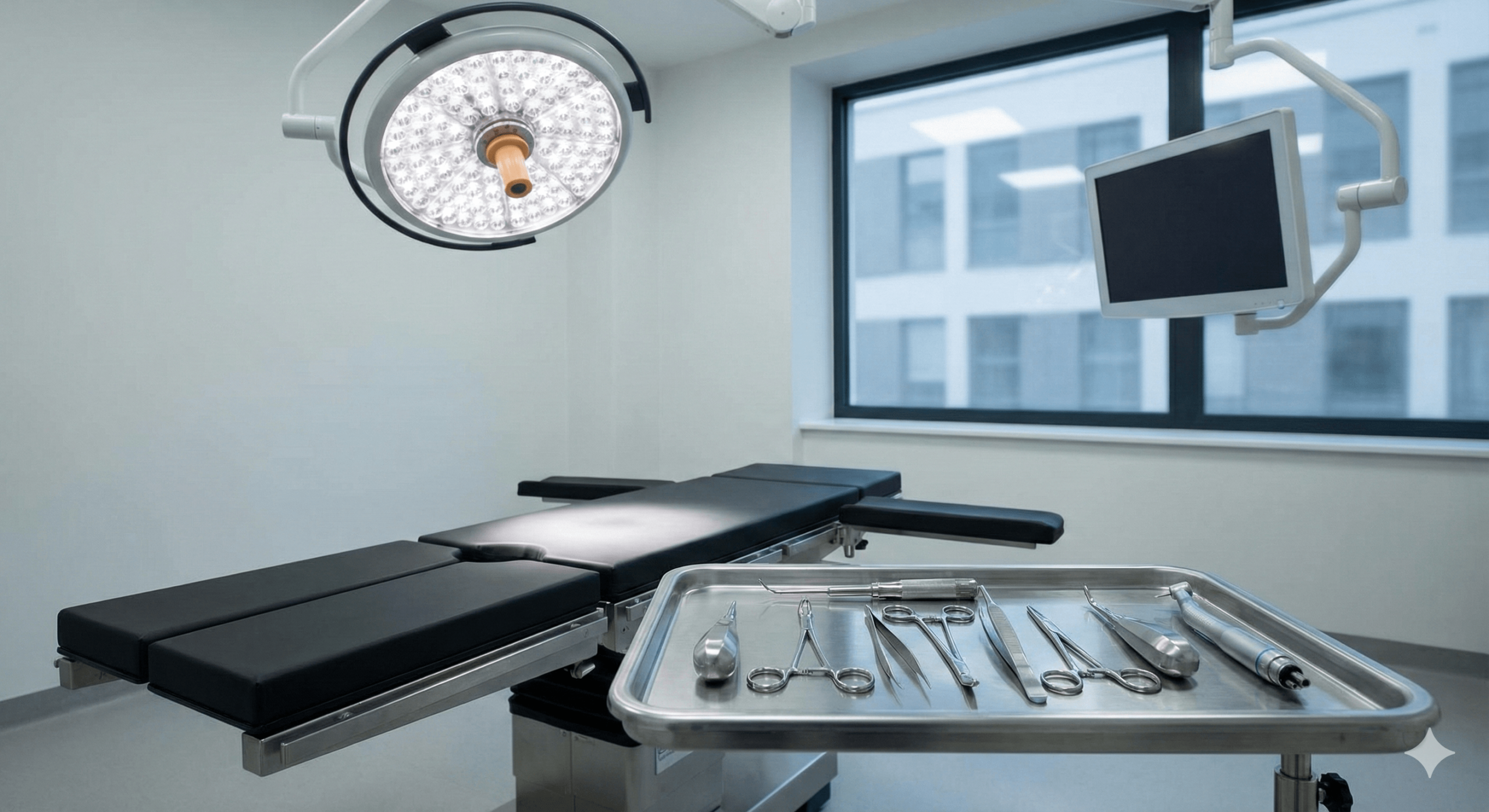
The Court of Appeal for Ontario has delivered a ruling concerning the administrative powers of public hospitals and the limits of procedural fairness for healthcare providers1. In a decision released on December 24, 2025, the court dismissed an appeal brought by seven dental surgeons against the London Health Sciences Centre. The central conflict of the case involved the hospital’s decision to terminate long-standing access to operating room resources for private practice patients without providing the surgeons a formal hearing. The ruling clarifies how the Public Hospitals Act governs the restructuring of clinical services and the circumstances under which hospital boards can revoke privileges without the traditional requirements of a full evidentiary hearing or prior notice.
Read about the lower court’s decision here.
The appellants, Dr. William Abbott, Dr. William Frydman, Dr. Giorgio Aiello, Dr. Mitchell Kravitz, Dr. Keyvan Abbaszadeh, Dr. Michael Kirton, and Dr. Zachary Kerr, are highly specialized dental surgeons who operate as partners in a private dental clinic in Southwestern Ontario. For many years, these practitioners held appointments and privileges at the London Health Sciences Centre, a major acute-care teaching hospital. This arrangement granted them dedicated operating room time and hospital resources to perform oral surgery on patients from their private practice. While these surgeons were part of the hospital’s Department of Dentistry, their use of the facilities was specific to their private cases, a practice that eventually came under internal scrutiny by the hospital’s administration.
The shift in policy began in 2023 when the hospital’s Office of Capacity Management conducted a review of its accountabilities under the Hospital Service Accountability Agreement with Ontario Health. This agreement dictates how public funding is used and requires the hospital to prioritize clinical services based on provincial standards. The review concluded that providing operating room time to private practice oral surgeons was no longer aligned with the hospital’s obligations. Specifically, the administration found that the private practice surgeons were not using the provincial Wait Time Information System to track and prioritize their cases. This lack of integration meant that patients from the private clinic were not being clinically prioritized according to the same standards as other surgical patients at the hospital.
In September 2023, the surgeons were informed that their allocated operating room time would be cancelled. In response, the surgeons retained legal counsel and provided several affidavits to the hospital. These documents detailed the surgeons’ extensive qualifications, their contributions to the hospital as teachers and practitioners, and the potential negative impact on patients who required hospital-based care that could not be provided in a community clinic. The surgeons also raised concerns about a perceived history of animosity within the Department of Dentistry, suggesting that their allocation of time had been unfairly squeezed over several years. Despite these submissions, the hospital’s Board of Directors moved forward with a formal recommendation to cease providing these specific operating room services.
The Board’s decision was informed by a detailed briefing note prepared by the Strategic Redevelopment Committee. This note argued that while the private surgeons provided a service to the community, the benefits to the hospital itself were limited. It highlighted that unlike staff surgeons, the private practitioners were not required to treat admitted hospital patients or perform on-call shifts. Furthermore, they billed the Ontario Health Insurance Plan or patients directly and did not reimburse the hospital for the use of staff, equipment, or supplies. The hospital determined that by reclaiming this time, it could reallocate resources to higher-priority cases, such as complex cardiac, neurosurgery, and pediatric cases, which would also increase the hospital’s funding and reduce wait times for more critical provincial needs.
Following the Board’s formal decision in late 2023 to cancel the privileges and revoke the staff appointments of the surgeons, the matter moved to the Divisional Court for judicial review. The surgeons argued that the Board had acted unfairly by not granting them a hearing or considering the affidavits they had submitted. However, the hospital relied on Section 44 of the Public Hospitals Act. This specific section of the legislation allows a hospital board to revoke appointments and cancel privileges without a hearing if the board determines that the hospital will cease to provide a service. The Divisional Court agreed with the hospital, finding that providing operating room access to private practice surgeons constituted a distinct service that the hospital was entitled to end in good faith.
The surgeons then brought their case to the Court of Appeal for Ontario, raising several legal challenges to the Divisional Court’s findings. One of the primary arguments was that the hospital had not actually ceased to provide a service. The surgeons contended that because the hospital would continue to perform dental and oral surgery through other staff, the service had not been terminated. They argued that Section 44 should only be triggered if an entire category of medicine, such as all dentistry, was being eliminated. The Court of Appeal rejected this interpretation. Justice Zarnett, writing for the court, explained that the term service is not defined in the Act and can be interpreted to mean a distinct clinical pathway. The court found it reasonable for the Board to identify the specific arrangement with private practice surgeons as a unique service due to how patients were selected, booked, and prioritized outside of the standard provincial system.
A second major point of contention was whether the surgeons, as dentists, fell under the definition of a physician as used in Section 44 of the Act. The surgeons argued that because they are members of the Royal College of Dental Surgeons and not the College of Physicians and Surgeons, the provision allowing for the revocation of privileges without a hearing did not apply to them. The Court of Appeal looked to the regulations under the Public Hospitals Act and the Medicine Act to resolve this issue. The court found that the legislative framework effectively extends the definition of physician to include oral surgeons for these purposes. Consequently, the Board’s decision to apply Section 44 to the dental surgeons was deemed legally sound and within the range of reasonable outcomes.
The surgeons also challenged the Board’s failure to hold a hearing regarding the threshold decision of whether to cease the service in the first place. They argued that even if the implementation of the decision did not require a hearing, the initial choice to end the service should have involved procedural fairness. The Court of Appeal dismissed this distinction, stating that the Public Hospitals Act is clear in its intent. The court noted that if the legislature exempted decisions to close an entire hospital from hearing requirements, it stands to reason that the less intrusive decision to end a specific service would also be exempt. The court concluded that the choice to proceed without a hearing was a direct consequence of the legislative design of the Act, which empowers hospital boards to make strategic resource decisions efficiently.
Finally, the Court of Appeal addressed the surgeons’ complaint that the Divisional Court had ignored their affidavits. The court clarified that in a reasonableness review of an administrative decision where no hearing was required, the reviewing court is generally limited to the record that was actually before the decision maker. Since the Board was not legally obligated to hold a hearing, it was not required to consider the evidence the surgeons tried to submit. The court emphasized that it cannot speculate on what a reasonable decision might have been if a hearing had occurred when the law specifically allowed the Board to act without one. Justice Zarnett noted that the Board’s duty was to ensure its decision was justified in light of the legal and factual constraints, a standard the hospital met by following the recommendations in the briefing note.
The appeal was dismissed in its entirety, and the court awarded costs of 50,000 dollars to the London Health Sciences Centre. This ruling reinforces the broad discretion afforded to public hospital boards in Ontario to manage their resources and prioritize clinical services according to provincial funding agreements. It underscores that while healthcare professionals generally enjoy significant procedural protections under the Public Hospitals Act, those protections are set aside when a hospital makes the strategic decision to terminate a specific service line. The decision serves as a definitive statement on the application of Section 44, confirming that hospitals have the authority to restructure their operations to meet provincial wait-time standards even when such changes displace long-standing private practice arrangements.
Read more Ontario legal news here.