The Real Estate Council of Ontario has issued a formal discipline decision against Paul Dishke, a registered real estate salesperson, following a series of professional failures involving a pre-construction home purchase in City A, Ontario1. The case, which concluded with an agreed statement of facts and penalty, centers on a transaction that began in early 2021 and eventually left a pair of buyers unable to recover more than $60,000 of their deposit funds. Dishke, who was employed at a local brokerage at the time of the events, was found to have violated multiple sections of the provincial Code of Ethics, including those governing best interests, competent service, and the disclosure of multiple representation.
The matter originated in February 2021 when two prospective home purchasers, identified in the proceedings as Buyer A and Buyer B, contacted the office of Paul Dishke. The buyers were interested in a property being developed by a company operating as Builder A. At the time, Dishke was actively marketing properties for this builder. During an initial phone call, Dishke discussed the subdivision and the specific homes the builder was constructing before providing the buyers with the builder’s contact information. This initial contact set the stage for a transaction where the buyers believed they were receiving professional representation in their dealings with the developer.

On February 26, 2021, the progression of the sale moved forward without the physical presence of the real estate salesperson. Two representatives from the builder met with the buyers at their home, bringing two copies of the necessary agreements to finalize the purchase of a freehold bungalow. During this meeting, the builder’s representatives informed the buyers that Dishke would be representing both the builder and the buyers in the transaction. This arrangement, known as multiple representation, requires specific disclosures and informed consent under Ontario law to ensure all parties understand the potential conflicts of interest and the limitations placed on the agent’s role.
The buyers proceeded to sign the documents provided by the builder’s representatives. These documents included a buyer representation agreement, which named Brokerage A and Dishke as their representatives, as well as the formal Agreement of Purchase and Sale. Despite his signature appearing on both the representation agreement and the purchase contract, Dishke was not present during the signing process. Furthermore, he did not contact the buyers to explain the terms, conditions, or specific clauses contained within the documents they were signing. This absence and lack of communication formed a central part of the later disciplinary findings regarding his failure to provide conscientious and competent service.
The documentation signed by the buyers contained significant irregularities regarding the handling of their deposit money. On the first page of the Agreement of Purchase and Sale, the builder had altered the standard wording. The terms “in trust” and “real estate trust” were deleted entirely rather than being crossed out and initialled, which is the standard practice for making amendments to a legal contract. These deletions indicated that the deposit was to be paid directly to the builder rather than being held in a protected trust account by a brokerage. However, the contract also included a Schedule B that directly contradicted the first page. This schedule stated that the deposit would be held by Dishke’s brokerage in a variable interest rate trust account in accordance with the Real Estate and Business Brokers Act.
Unaware of the implications of these conflicting terms, the buyers provided the builder with two deposits totaling $160,500. The first installment was for $25,000, followed by a second payment of $135,500. For more than a year, the buyers believed their purchase was proceeding as planned. However, in August 2022, they discovered an online article indicating that the builder was embroiled in litigation with the local municipality. The reports suggested that the builder was unable to secure the necessary building permits for the development where the buyers had purchased their home.
Concerned by this news, the buyers contacted the builder in October 2022 to request the return of their deposit. The builder refused to refund the money. It was not until March 2023, during a phone call with Dishke, that the buyers were informed that the brokerage did not actually hold their deposit funds. The situation worsened in April 2023 when the buyers were contacted by Tarion, the organization responsible for overseeing New Home Warranties in Ontario. Tarion informed the buyers that their specific property had never been registered with the warranty program, a requirement for new home constructions in the province.
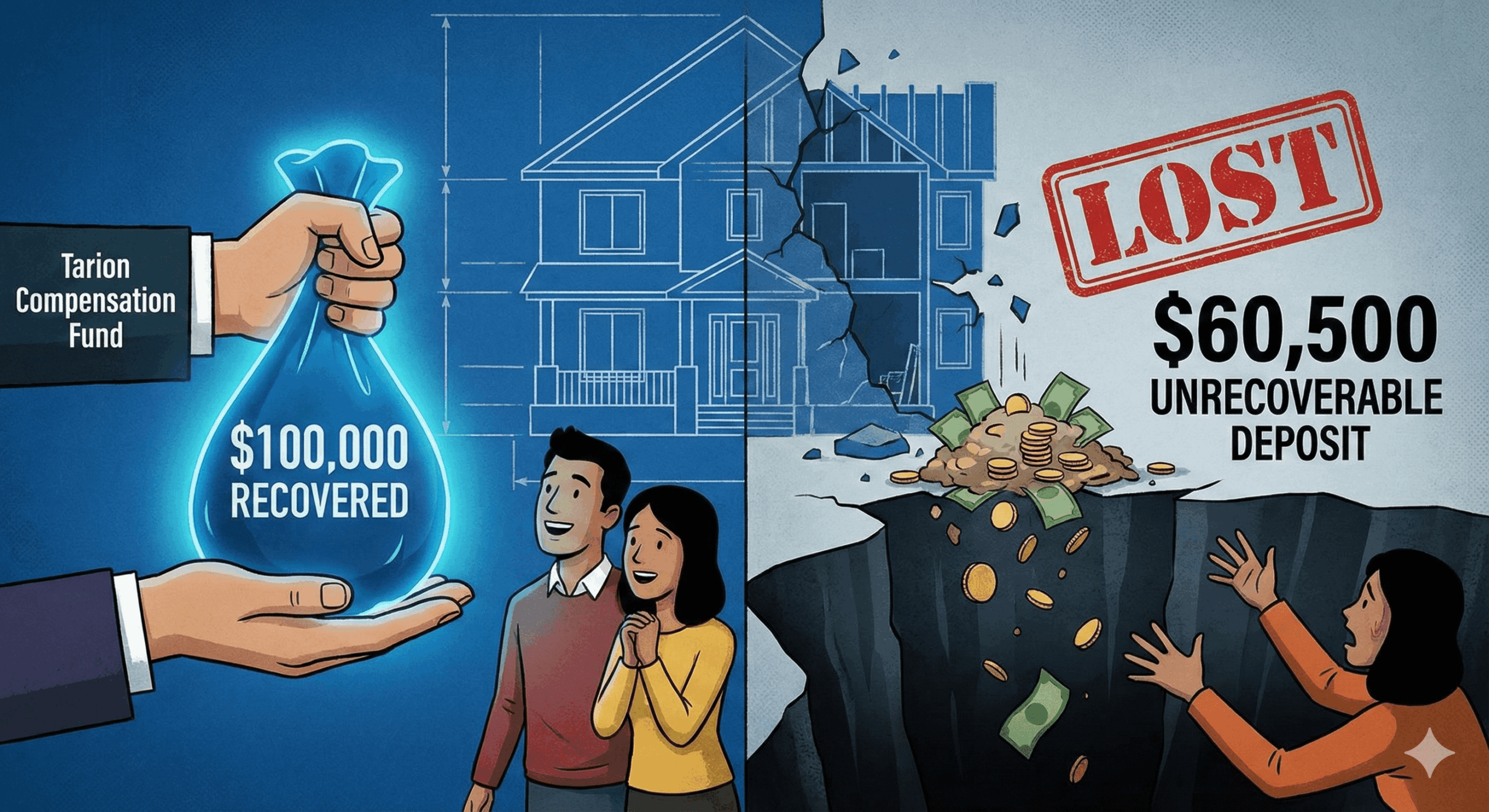
The Home Construction Regulatory Authority subsequently refused to renew the builder’s registration, leaving the builder unable to complete the construction of the bungalow. While the buyers were eventually able to recover $100,000 through the Tarion compensation fund, the remaining $60,500 of their original deposit remained unrecoverable. The buyers have since initiated civil litigation against both the builder and Dishke to seek damages for the losses sustained in the failed transaction.
In the regulatory proceedings, it was agreed that Dishke had engaged in several instances of unprofessional conduct. By producing an Agreement of Purchase and Sale with conflicting directions and failing to ensure the proper handling of the deposit, he was found to have breached his duty to protect the best interests of his clients. The Discipline Committee noted that he failed to review or confirm the standing of the builder with the Home Construction Regulatory Authority or Tarion before the buyers committed their funds. Additionally, the committee found that Dishke failed to properly disclose the nature of the multiple representation and did not obtain the required informed consent before the trade was finalized.
The findings also highlighted the failure of Dishke to inform his clients of significant steps in the process or to be present during the execution of legal documents. By pre-signing the agreements and allowing the builder’s representatives to handle the signing process without providing any explanation of the contract terms to the buyers, Dishke was found to have failed in his obligation to provide the knowledge, skill, and judgment expected of a registered real estate professional. These omissions were deemed to be unprofessional and unbecoming of a registrant under the provincial standards.
As a result of these findings, the Chair of the Discipline Committee accepted a joint submission for penalty. Paul Dishke was ordered to pay a fine of $14,000 to the Real Estate Council of Ontario, with a deadline for payment set for February 2026. In addition to the financial penalty, he is required to successfully complete a course titled Ethics in Business Practice provided by the Real Estate Institute of Canada. He must provide proof of his successful completion of the course to the regulator within a specific timeframe. The decision was officially released on August 13, 2025, concluding the administrative disciplinary phase of the matter.
Read more cases about proceedings in regulated professions here.
- Some information has been anonymized by RECO for privacy reasons. ↩︎