The Real Estate Council of Ontario has released a discipline decision involving Chien-Ting Wu, a real estate professional also known as Johnny Wu, following a series of professional conduct violations centered around a commercial property transaction in 2020. The decision, which was finalized in September 2025, details a complex arrangement where the sale price of a property was intentionally and significantly understated in official documents to facilitate a tax avoidance scheme for the seller.
Some of the information in this case has been anonymized by RECO for privacy reasons.
According to the agreed statement of facts, Wu was acting as a salesperson and later as a broker during the relevant period while working for a firm identified as Brokerage A. The core of the misconduct occurred during the sale of a commercial property located at 1-A Street in City A, Ontario, where Wu represented the buyer.
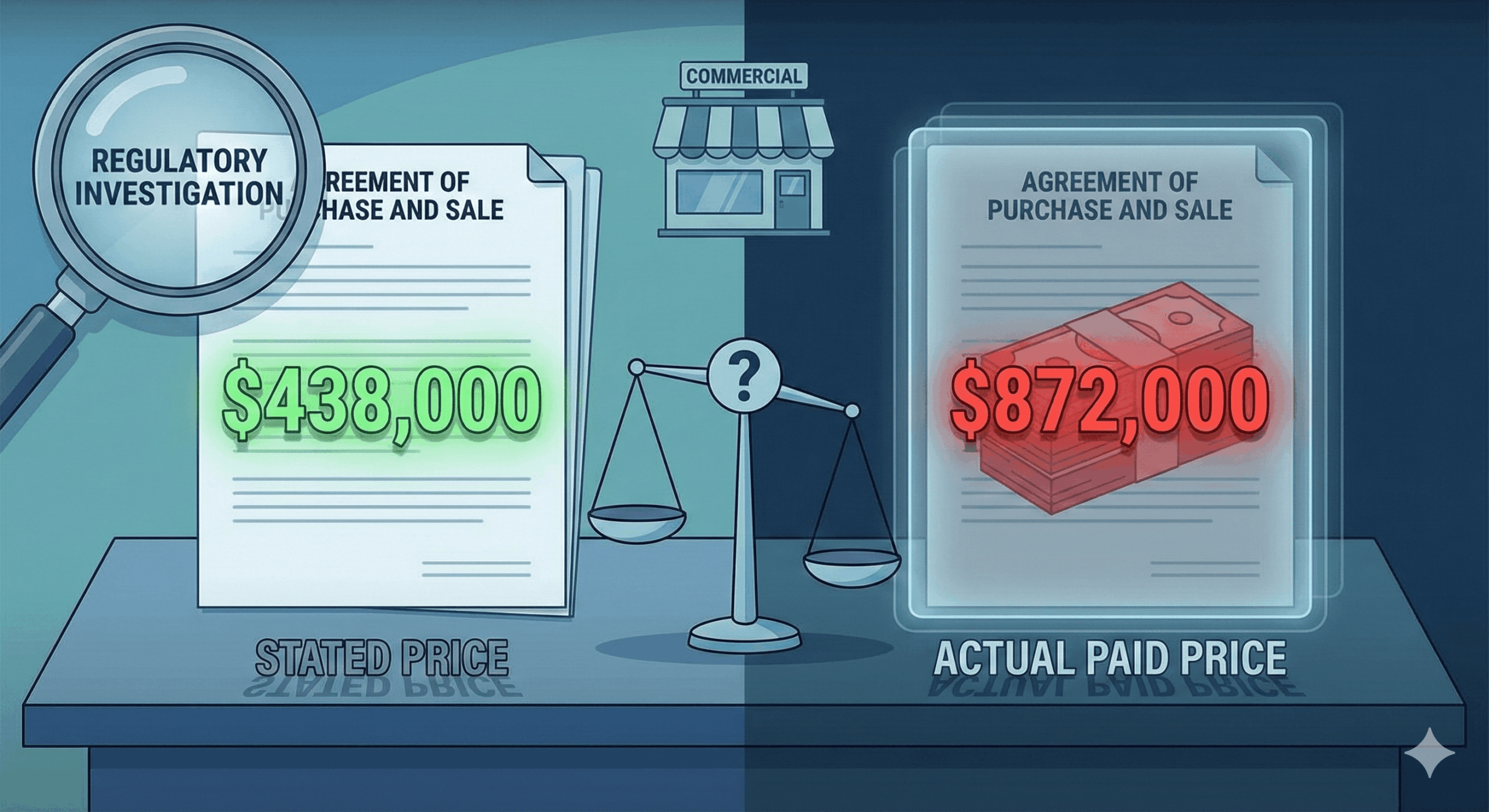
The transaction first came together in the fall of 2020, with the agreement of purchase and sale being fully executed on or about October 14, 2020. On the surface, the paperwork indicated that the property was being sold for a total of $438,000. However, the regulatory investigation revealed that this figure was not a true representation of the deal. In reality, the parties had previously agreed to a sale price of $872,000, which was the amount ultimately paid for the commercial asset. This discrepancy meant that the price listed on the official agreement of purchase and sale was nearly 50 percent lower than the actual market value exchanged between the parties. The discipline committee found that Wu was fully aware of this falsehood and played a central role in the arrangement.

According to the findings of the Real Estate Council of Ontario, Wu was the individual who advised his client, the buyer, to allow the sale price in the agreement to be artificially low. The motivation behind this suggestion was specifically to reduce the tax burden that would otherwise have been owed by the seller following the completion of the sale. By significantly under-reporting the capital gains or total proceeds of the transaction to the government, the seller stood to benefit financially at the expense of public tax revenues. The buyer agreed to this proposal, and Wu facilitated the execution of the documents that contained the fraudulent pricing information. This act of counseling a client to enter into a false agreement is considered a severe breach of the ethical standards required of real estate professionals in the province.
Beyond the falsification of the sale price, Wu also engaged in what the industry refers to as trading outside of a brokerage. Under the Real Estate and Business Brokers Act, all transactions conducted by a registered salesperson or broker must be recorded and processed through their employing brokerage. This system is designed to provide oversight, ensure that proper insurance is in place, and protect the public interest by having a broker of record review the legality and ethics of every deal. In this instance, Wu did not provide or file any paperwork or documents with Brokerage A relating to the sale of the commercial property at 1-A Street. Instead, he facilitated and managed the entire transaction independently, effectively bypassing the regulatory and professional safeguards provided by his firm.
The consequences of these actions led to a formal discipline proceeding before the Real Estate Council of Ontario. Rather than proceeding to a full contested hearing, Wu and the council entered into an agreed statement of facts and penalty. In this agreement, Wu admitted to violating several key sections of the Code of Ethics. Specifically, he was found to have breached Section 3, which requires registrants to treat every person they deal with in the course of a trade fairly, honestly, and with integrity. By participating in a scheme to deceive tax authorities and misrepresent the value of a property, Wu failed to meet the basic threshold of honesty required by his license.
Furthermore, Wu was found in violation of Section 4 and Section 5 of the Code. Section 4 mandates that a registrant must promote and protect the best interests of their client. While it might appear that helping a client or a counterparty save money on taxes is in their interest, the council views participation in illegal or unethical schemes as a failure to protect the client from potential legal and financial risks. Section 5 requires registrants to provide conscientious and competent service while demonstrating reasonable knowledge and judgment. Facilitating a shadow transaction outside of a brokerage and falsifying legal documents is considered a fundamental failure of professional judgment and competence.
The discipline committee also highlighted violations of Sections 37, 38, and 39. Section 37 prohibits registrants from knowingly making inaccurate representations in respect of a trade in real estate. The agreement of purchase and sale is a foundational legal document, and listing a price that is hundreds of thousands of dollars off the mark is a clear inaccurate representation. Section 38 requires registrants to use their best efforts to prevent error, misrepresentation, fraud, or any unethical practice. Instead of preventing such practices, Wu was found to have actively encouraged them. Finally, Section 39 covers unprofessional conduct, prohibiting any act or omission that would be regarded as disgraceful, dishonorable, or unbecoming of a registrant.
In light of these findings, the chair of the discipline committee ordered a substantial financial penalty. Wu has been ordered to pay a fine of $32,000 to the Real Estate Council of Ontario. The payment structure requires an initial $6,000 to be paid within 30 days of the decision, with the remaining balance due by July 17, 2026. This timeline provides a ten month window for the full payment of the fine. Financial penalties of this size are intended to act as a deterrent to other professionals who might consider bypassing brokerage oversight or participating in price manipulation schemes.
In addition to the fine, the council has mandated further professional education for Wu. He must successfully complete the Ethics in Business Practice course offered by the Real Estate Institute of Canada. This course, specifically identified as REIC 2600, must be completed within six months of the decision date. Wu is required to provide proof of his successful completion to the council shortly thereafter. The inclusion of an educational component in the penalty is a standard practice for the council when a registrant has demonstrated a fundamental misunderstanding or disregard for the ethical boundaries of the real estate profession.
This case serves as a reminder of the strict regulations governing real estate transactions in Ontario and the importance of brokerage oversight. The practice of trading outside of a brokerage, often called pocket deals or shadow trading when hidden from the firm, removes the layers of protection that the public relies upon when hiring a licensed professional. When those deals also involve the falsification of government documents and tax evasion strategies, the regulatory response is typically severe. The council’s decision emphasizes that the duty of honesty and integrity extends beyond the immediate relationship between a broker and a client and includes a duty to the broader legal and regulatory framework of the province.
The decision was officially released on September 17, 2025, following the chair’s review of the agreed statement of facts and the waiver of a formal hearing. By signing the waiver, Wu acknowledged that he had the right to seek legal counsel and voluntarily gave up his right to a full hearing in exchange for the settled penalty. The matter is now considered closed, provided that Wu meets the deadlines for the fine payments and the completion of his ethics training. The commercial property at 1-A Street remains a central piece of evidence in a case that underscores the risks real estate professionals take when they prioritize short term financial gains for their clients through dishonest means.
The Real Estate Council of Ontario continues to monitor the conduct of its registrants to ensure that the transition of property ownership in the province remains transparent and lawful. For the general public, this case illustrates the necessity of ensuring that all real estate agreements accurately reflect the terms of the sale and that all transactions are handled through a registered brokerage. The failure to do so can lead to significant professional consequences, including heavy fines and mandatory retraining, as seen in the matter of Chien-Ting Wu.
Read more cases about proceedings in regulated professions here.