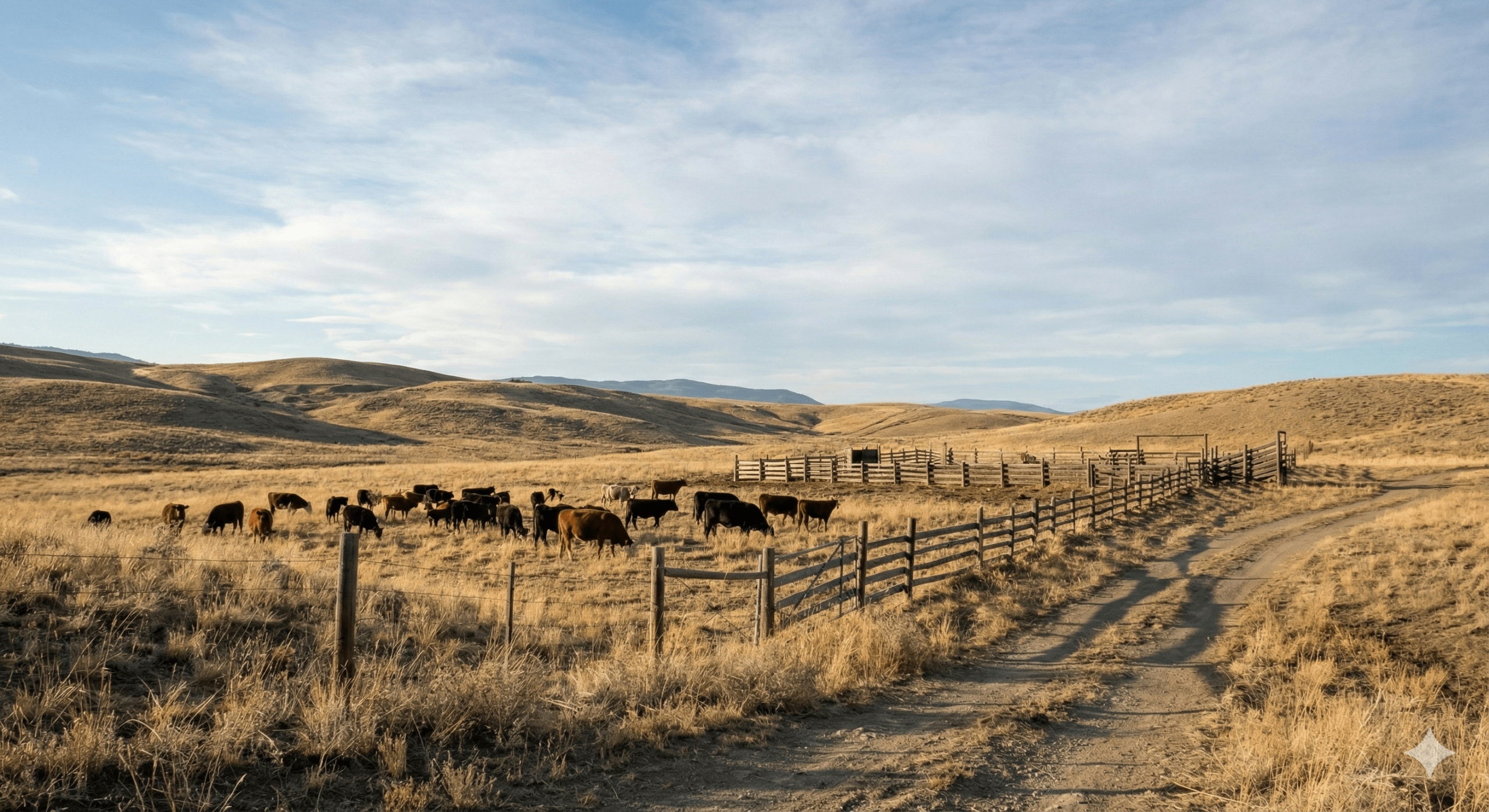
The history of the Sather Ranch in Penticton, British Columbia, dates back to 1939, when Palmer Sather first began building a cattle operation that would eventually become a local fixture for decades1. For nearly eighty years, the ranch operated as a family endeavor, deeply rooted in the rugged terrain of the Okanagan. However, a recent decision by the Supreme Court of British Columbia has brought a definitive end to a modern legal battle over the ranch’s future, centering on a breach of duty by Palmer’s son and the eventual collapse of the family business. The case, Sather Ranch Ltd. v. Sather, provides a detailed look at the complex intersection of family loyalty, corporate responsibility, and the high price of broken trust in a closely held company.
Click here to read a previous court decision involving this same case, dated June 1, 2023.
The dispute began with the transition of the ranch from its founding patriarch to the next generation. Palmer Sather, who had operated the ranch for most of his life, was diagnosed with early onset dementia in 2009. By 2013, he was no longer capable of managing the business or his personal affairs. To ensure the ranch’s continued operation, his son, Joe Sather, joined forces with Mike Street, a longtime ranch hand who had worked on the property since 1995. Together, they incorporated Sather Ranch Ltd., known as SRL, with the goal of acquiring the ranch’s assets, increasing the cattle herd, and building a sustainable, profitable future. Joe and Mike were the sole directors and owners of the company, holding equal shares through their respective holding companies.
Central to the ranch’s viability were three distinct types of land. There was the eighty acre home ranch, a 160 acre parcel of vacant land known as the grazing lands, and approximately 150,000 acres of Crown range lands over which Palmer held a grazing license. The 160 acre grazing lands were particularly vital. Every year, the ranch moved its cattle from the vast Crown lands to these specific grazing lands for October and November before bringing them back to the home ranch for the winter. Under the provincial Range Act, the holder of a grazing license must own or lease sufficient private land to sustain their cattle during the months they are not on Crown property. Without the grazing lands, the entire cattle operation risked losing its legal right to use the Crown range.
In early 2017, SRL successfully purchased the home ranch. The next logical step was to acquire the grazing lands from Palmer, whose affairs were being managed by Joe’s sister, Carol Sather, acting as their father’s power of attorney. Mike Street commissioned an appraisal which valued the grazing lands at $115,000 based on their use for ranching. Mike then prepared a formal offer on behalf of SRL to purchase the property for $120,000. He delivered this offer to Joe, who agreed to present it to Carol and negotiate the purchase for the company. At this stage, the plan appeared to be moving forward with the support of both partners.
However, the process soon stalled. After Mike delivered the offer to Joe in April 2017, several months passed without progress. In late June, Mike contacted Carol directly and discovered that Joe had never actually delivered the company’s offer to her. When Mike confronted Joe about this at a social gathering in July 2017, the relationship between the two business partners fractured. Joe informed Mike that he intended to purchase the grazing lands in his own name rather than for the company. Despite Mike’s vocal objections, Joe moved forward with the personal acquisition. By August 2017, Carol, acting as power of attorney, transferred the land to Joe for $120,000, the same price the company had intended to pay.
This move effectively paralyzed the company. The trust between Joe and Mike was shattered, and both men stopped providing the financial support necessary to keep the ranch running. By July 2018, SRL was no longer a viable operation and was placed into receivership by the court. A court appointed receiver took control of the company’s remaining assets to pay off creditors. The receiver eventually brought a lawsuit against Joe, alleging that he had breached his fiduciary duty to SRL by taking a corporate opportunity for himself. In an earlier 2023 ruling, Justice Elwood confirmed that Joe had indeed breached his duty, finding that Joe put his personal interests in conflict with his obligations to the company he co owned.
The most recent phase of the litigation, concluded in April 2024, focused on how to remedy this breach. The receiver argued that the court should impose a constructive trust, which would involve a court order stripping Joe of the title and vesting the land directly in SRL. This would allow the receiver to sell the land and use the proceeds to satisfy the claims of creditors, who are owed over $700,000. The receiver argued that this was the cleanest and fairest solution, ensuring that a faithless director could not profit from his wrongdoing. They also pointed out that the grazing lands currently lack legal road access, and the receiver intended to improve that access to double the property’s value before a sale.
Joe Sather, conversely, argued that the court should not take the land away from him. Instead, he proposed that he should pay equitable compensation, a form of monetary damages, to the company. His legal team argued that what the company lost was not the land itself, but rather the opportunity to purchase it. Joe maintained that because the company was now in receivership and no longer operating as a ranch, it had no actual need for the land beyond its monetary value. He also noted that as one of Palmer’s heirs, he would have eventually inherited an interest in the property regardless of the corporate dispute.
Justice Elwood’s decision required a careful balancing of these competing interests. While a constructive trust is a powerful tool used by courts to deter fiduciaries from acting in their own self interest, the judge noted that it is a discretionary remedy that must be proportionate to the harm caused. The court found that because SRL was no longer a functioning ranching business, the grazing lands had lost their unique operational value to the company. The property was now merely an asset to be liquidated for cash. In this context, the judge determined that a monetary award would be more appropriate than a forced transfer of the land.
The court then turned to the complex task of calculating the value of the lost opportunity. Justice Elwood noted that it was not a certainty that SRL would have acquired the land even if Joe had acted properly. Two significant contingencies remained: whether Carol would have ultimately agreed to sell to the company and whether the company could have secured the necessary financing given its existing debts. While the judge found it was more likely than not that the deal would have closed, he assessed a 33 percent risk that the purchase might have failed for these reasons.
As a result, the court ordered Joe Sather to pay equitable compensation equivalent to 66 percent of the fair market value of the grazing lands. This value is to be determined based on the market conditions at the time of the trial, rather than the original 2017 purchase price. This ensures the company receives the benefit of any appreciation in land value that occurred while Joe held the title. From this amount, Joe is permitted to deduct the $120,000 he originally paid, as well as any property taxes or maintenance expenses he incurred over the years.
The receiver also sought special costs against Joe, a high level of legal fee reimbursement typically reserved for cases of reprehensible conduct during litigation. The receiver pointed to Joe’s lack of document production and his testimony, which the court found was not credible on several points. However, Justice Elwood declined to award special costs, finding that while Joe’s evidence was rejected in favor of Mike Street’s testimony, his conduct did not meet the exceptional threshold of being outrageous or scandalous. The judge characterized the dispute as similar to a commercial disagreement between shareholders in a closely held business, where standard cost rules should apply.
The final judgment requires the parties to agree on a professional appraiser to determine the current value of the land. If they cannot agree on the final calculations or the instructions for the appraisal, the court has left the door open for further applications. The decision effectively allows Joe Sather to keep the land his family has held for generations, provided he can pay the substantial monetary judgment to the receiver for the benefit of the company’s creditors.
This ruling marks a significant chapter in the dissolution of the Sather Ranch legacy. What began as a plan to modernize and expand a historic family business ended in a total collapse of the partnership and a decade of litigation. For the legal community, the case serves as a reminder that while the courts will strictly enforce the duties of corporate directors, the remedies provided will be tailored to the practical realities of the business at the time of judgment. For the residents of the Okanagan, it marks the quiet end of a ranching era that spanned nearly a century.
Read more business cases here.