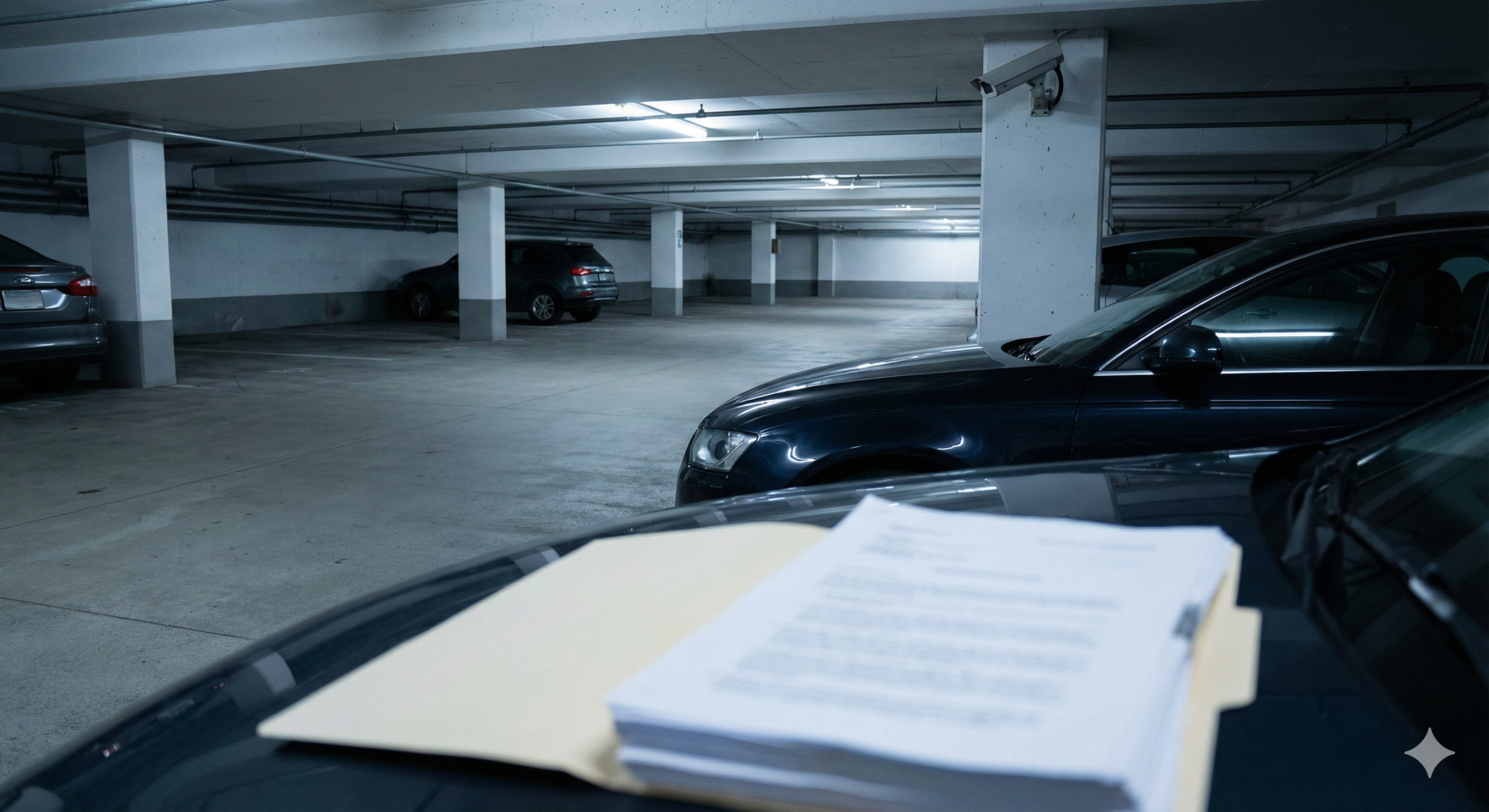
In a decision released on November 18, 2025, the Ontario Superior Court of Justice has allowed The Co-operators General Insurance Company to amend a third-party claim, formally substituting specific property management and security companies for generic “John Doe” placeholders1. The ruling in Annibale-Khan v Singh addresses the complex procedural intersection of insurance liability, statutory limitation periods, and the legal doctrine of misnomer following a hit-and-run incident in a Brampton condominium complex.
The underlying action stems from a motor vehicle accident that occurred on September 17, 2020. The plaintiff, Tessa Annibale-Khan, alleges she was walking as a pedestrian in an underground parking garage located at 200 Malta Avenue in Brampton when she was struck and run over by a vehicle. The parking garage serves a townhome condominium complex. The claim alleges that the vehicle was operated by one of the individual defendants, Manvir Dhaliwal Singh or Amandeep Grewal, who were purportedly involved in criminal activity at the time and subsequently fled the scene.
Because the individual defendants involved in the accident have not defended the action, the legal focus shifted significantly toward the available insurance coverage. The plaintiffs commenced their claim on November 23, 2021, suing the alleged operators of the vehicle as well as their own insurer, Co-operators, under the uninsured and underinsured coverage provisions of their policy. This type of coverage is designed to protect individuals when the at-fault party lacks sufficient insurance or cannot be identified or compelled to pay.
Upon being served with the statement of claim, Co-operators filed its statement of defence and crossclaim on January 13, 2022. On that same day, counsel for the insurance company initiated an inquiry into the management of the premises where the accident occurred. They wrote to the plaintiff’s counsel seeking the specific identities of the property management and security companies responsible for the garage at the time of the accident. This inquiry marked the beginning of a prolonged effort to identify potential third parties who might share liability for the safety of the premises.
By September 2022, Co-operators had not yet solidified the names of these entities but sought to preserve its right to seek contribution and indemnity. The insurer brought a motion for leave to issue a third-party claim, which was granted by Associate Justice Abrams on June 22, 2023. Five days later, Co-operators issued the claim naming I2 Developments (Brampton) Inc. as a third party, alongside placeholders “John Doe Property Management Inc.” and “Jay Doe Security Inc.” The claim alleged negligence on the part of these unknown entities, citing failures to secure the premises, prevent criminal acts, and properly train employees regarding safety and security.
The search for the correct identities continued into late 2023. Former counsel for Co-operators wrote to counsel for I2 Developments in November 2023 and again in January 2024, requesting that the affidavit of documents include copies of all contracts between the developer and any property management or security firms. These efforts finally yielded results on January 24, 2024. Counsel for I2 Developments provided a Letter of Engagement dated March 27, 2020, which identified Maple Ridge Community Management Ltd. as the entity agreeing to provide property management services. On the same day, invoices were provided identifying Gallant Protection Inc. as the security provider.
Following this disclosure, Co-operators moved to formally substitute Maple Ridge and Gallant for the John Doe defendants. However, the motion faced delays due to procedural issues and changes in legal representation. New counsel for Co-operators served the notice of motion in June 2024. While Gallant Protection Inc. did not appear on the motion, Maple Ridge Community Management Ltd. opposed the substitution, arguing that the amendment should not be permitted.
The legal dispute before Associate Justice L. La Horey centered on whether the substitution was barred by the Limitations Act, 2002, which generally prevents adding parties to a lawsuit after the expiry of a limitation period. However, the Act contains a specific exception that allows for the correction of a “misnaming or misdescription of a party.” This is known as the doctrine of misnomer. Co-operators relied on Rule 5.04(2) of the Rules of Civil Procedure, which grants the court discretion to correct the name of a party incorrectly named at any stage of a proceeding, provided that doing so would not result in non-compensable prejudice to the other side.
To succeed on a misnomer motion, the moving party must satisfy the “litigating finger” test. This legal standard asks whether a person with knowledge of the facts would be aware of the true identity of the misnamed party by reading the claim. If the test is met, the plaintiff—or in this case, the defendant insurer—does not strictly need to prove they exercised due diligence in identifying the party, provided the original claim was brought within the limitation period. The primary barrier to such an amendment is whether the substitution would cause prejudice that cannot be fixed by costs or an adjournment.
In applying the litigating finger test, the court examined the language of the third-party claim issued in June 2023. Paragraph 5 of that claim specifically described “John Doe Property Management Inc.” as the company responsible for the administration and maintenance of the premises at 200 Malta Avenue. The court found that this description clearly pointed the “litigating finger” at Maple Ridge. Any person with knowledge of the building’s operations reading that pleading would know that Maple Ridge was the entity being targeted for allegations of negligence regarding site safety and security.
Maple Ridge attempted to argue that it was not the appropriate party because, at the time of the accident in September 2020, it was only overseeing the complex during a pre-registration phase with limited involvement. They submitted an affidavit from their Vice-President of Operations stating they had no employees on-site at the time and were only “fully engaged” after November 2020. Associate Justice La Horey rejected this line of argument for the purposes of the motion. The court clarified that a misnomer motion is not the appropriate forum to determine factual liability or the scope of a contract. Whether Maple Ridge is ultimately liable for the plaintiff’s injuries is a matter for trial, not a procedural motion regarding the naming of parties.
The court then turned to the issue of prejudice and delay. Maple Ridge argued that the delay was inordinate and that they had been denied the opportunity to conduct a timely investigation. Under Ontario law, prejudice is presumed if the delay between the initiation of proceedings and the motion to amend is exceptional. Co-operators discovered the identity of Maple Ridge in January 2024 and served the motion to amend in June 2024, a period of five months. The court noted that during this window, Co-operators had changed law firms, and found that a five-month delay was neither excessive nor inordinate.
When assessing the broader timeline, the court calculated the delay from the issuance of the third-party claim in June 2023 to the service of the motion in June 2024. This one-year period was deemed acceptable by the court, particularly when compared to other precedents where delays of several years were permitted. Because the delay was not viewed as exceptional, there was no presumption of prejudice against Maple Ridge.
Furthermore, the court found that Maple Ridge failed to provide evidence of actual non-compensable prejudice. While the affidavit from Maple Ridge’s representative asserted that they would suffer prejudice by having to defend a claim years after the incident, the court characterized this as a “bald statement” lacking specific evidence. There was no concrete proof offered that witnesses were unavailable, evidence had been lost, or that their ability to defend the action had been substantively compromised. Without specific particulars showing why a fair trial was no longer possible, the argument of actual prejudice could not succeed.
The court also addressed the evidentiary record regarding when Co-operators learned the names of the third parties. Maple Ridge challenged portions of an affidavit sworn by the new counsel for Co-operators, arguing it contained inadmissible hearsay regarding what previous counsel knew. Associate Justice La Horey agreed to disregard those specific paragraphs but found there was still sufficient admissible evidence in the form of correspondence. The letters clearly showed that Co-operators had been asking for the information since 2022 but only received the relevant contracts and invoices from I2 Developments on January 24, 2024.
Maple Ridge further argued that Co-operators could have discovered their identity earlier by searching the public condominium registry. The court dismissed this as a due diligence argument. Citing the Court of Appeal decision in Loney v Doe, the Associate Justice reiterated that due diligence is not a requirement of the misnomer test when the claim was initiated within the limitation period. While the speed of the amendment is a factor in the court’s discretion, the failure to search a public registry earlier did not bar the insurer from correcting the name.
Ultimately, Associate Justice La Horey exercised the court’s discretion to grant the motion. The order permits Co-operators to issue an amended third-party claim that specifically names Maple Ridge Community Management Ltd. and Gallant Protection Inc. in place of the John Doe defendants. This allows the litigation to proceed with all relevant entities participating in the discovery and trial process to determine liability for the underground garage accident.
As the successful party on the motion, Co-operators was awarded costs. The parties had agreed on the quantum of costs prior to the decision, and the court ordered Maple Ridge to pay Co-operators the all-inclusive sum of $7,500 within thirty days. The decision reinforces the court’s preference for resolving matters on their merits rather than procedural technicalities, provided the correct party was clearly intended and no irreversible harm has been caused by the delay in naming them.
Read more Ontario legal news here.