For Joshua Connelly, the purchase of a residential property on Essa Avenue in South Porcupine was meant to be the start of a new chapter, but the excitement of homeownership proved to be distressingly short-lived1. Following the closing of the transaction in June 2018, Mr. Connelly settled into the home only to face immediate and severe environmental challenges as the seasons turned. Within months, the property became abnormally cold, plaguing the new owner with frozen pipes and a bathroom so frigid that wet facecloths would freeze solid. These physical discomforts were merely symptoms of a much deeper structural failure that led to a significant legal battle before the Ontario Superior Court of Justice, resulting in a judgment delivered on November 18, 2025, by Justice Cullin.
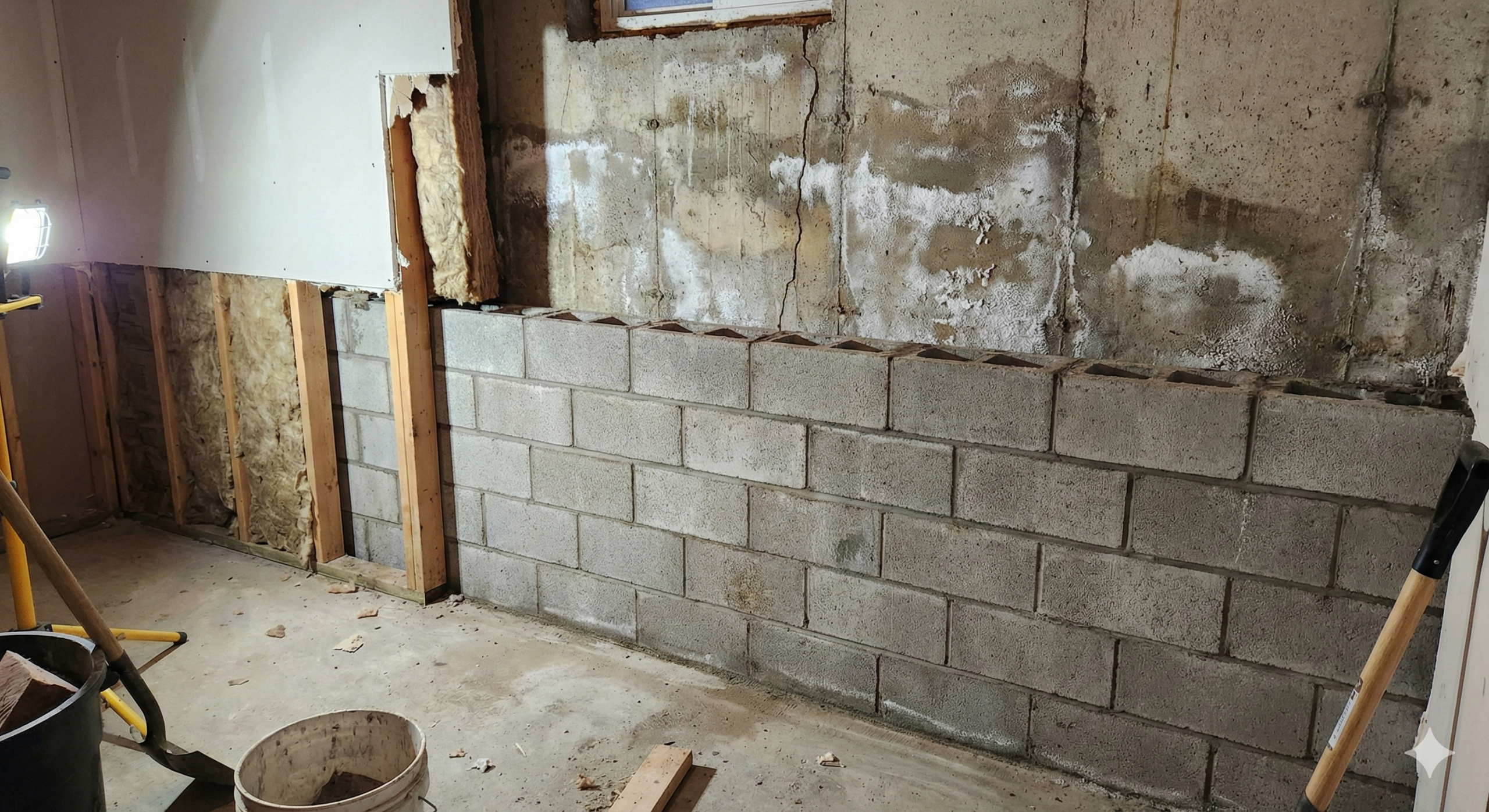
The dispute centered on the condition of the home’s foundation and the history of repairs undertaken by the sellers, Francies and Penelope Garito. The Garitos had acquired the home from Mr. Garito’s father’s estate in 2012 and lived there for approximately six years before selling it to Mr. Connelly. During the trial, it emerged that shortly after the Garitos moved in, Mr. Garito noticed cold air and frost building up along the south foundation wall. Rather than hiring a professional contractor to address the root cause of the frost, Mr. Garito decided to undertake the repairs himself in 2014. His solution was substantial and unorthodox. He constructed a massive second wall in front of the frost-covered foundation. This new barrier was composed of concrete and rebar, measuring eight inches thick and four feet high, running the entire length of the south wall and wrapping around to the east and west walls.
Crucially, Mr. Garito did not obtain a building permit for this heavy-duty construction project, nor did he insulate the area before pouring the concrete. He testified that he believed the clay soil behind the wall made insulation unnecessary. Once the concrete structure was in place, the area was framed, insulated, and drywalled, effectively entombing the original foundation wall and the new concrete barrier behind a finished interior. To the naked eye, the basement appeared finished and functional. The Garitos testified that following this intervention, they experienced no further issues with cold air or plumbing, a claim that stood in stark contrast to the conditions Mr. Connelly endured shortly after taking possession.
When Mr. Connelly and his spouse, Ms. Ketchabaw, began experiencing extreme cold and water infiltration, they retained Aime Rivard, a professional engineer, to inspect the property. Mr. Rivard’s investigation required the removal of the drywall to expose the foundation, revealing a grim reality. The original south foundation wall had failed significantly. It was buckled inward and sloped, a condition Mr. Rivard attributed to long-term exposure to frost. He described the concrete block wall as acting effectively as a holding tank for outside water. Furthermore, the expert witness testified that the second wall constructed by Mr. Garito was wholly inadequate to address the structural failure. It did not comply with the Building Code and did nothing to stop the shifting of the foundation or the ingress of cold air and vermin.
The legal action brought by Mr. Connelly against the sellers relied on two primary arguments: negligent construction and negligent misrepresentation. regarding the construction claim, the court had to determine if Mr. Garito, as a homeowner performing his own work, owed a duty of care to future purchasers. Justice Cullin found that he did. The court ruled that when a homeowner undertakes a major structural repair, it is foreseeable that a failure to take reasonable care could create a latent defect posing substantial danger to subsequent occupants. Mr. Garito was held to the standard of a reasonably competent construction contractor, a standard he failed to meet. The judge noted that the design was non-compliant with building regulations and failed to address the source of the cold air infiltration. Because Mrs. Garito was not involved in the design or construction of the wall, she was not found liable for the negligent construction claim, leaving that liability to rest solely on her husband.
The second prong of the lawsuit, negligent misrepresentation, turned on the Seller Property Information Statement (SPIS) provided by the Garitos before the sale. In this document, the sellers stated they were not aware of any structural problems or moisture issues. They disclosed that there had been a foundation issue due to frost in 2014 but claimed it had been addressed and had not been problematic since. Mr. Connelly testified that he relied on this document when deciding to purchase the home, believing the structural integrity of the property was sound. The court found that this representation was untrue and misleading. Justice Cullin concluded that Mr. Garito knew the south foundation wall was failing and built the second wall to reinforce it, yet failed to disclose the true nature of the structural compromise. Mrs. Garito, who admitted to watching her husband perform the work and approaching the repair as a couple, was also found to have possessed this knowledge. Consequently, both defendants were found liable for negligent misrepresentation regarding the south wall.
However, the court’s decision was not a total victory for the plaintiff, as the judgment highlighted the critical distinction between latent and patent defects. Mr. Connelly also sought damages for water infiltration discovered along the north foundation wall. Unlike the south wall, which was hidden behind drywall and the unpermitted concrete barrier, the issues on the north wall were visible. The home inspector hired by Mr. Connelly prior to the purchase had flagged efflorescence, stains, and evidence of water infiltration behind the furnace and freezer on the north wall. The inspector’s report even suggested that immediate repairs, including excavation and damp proofing, might be required.
Despite these clear warnings from his own inspector, Mr. Connelly chose not to investigate further or negotiate repairs with the sellers regarding the north wall. He testified that he relied on the SPIS, which stated there were no water problems. Justice Cullin ruled that this reliance was unreasonable. The water damage on the north wall was a patent defect, meaning it was open and observable. The court determined that a prudent purchaser, faced with a home inspection report identifying immediate water issues, would have undertaken further investigations rather than blindly trusting the sellers’ document. Because Mr. Connelly ignored the warning signs regarding the north wall, the court dismissed his claim for damages related to that specific area of the basement.
The assessment of damages required the court to apportion the repair costs based on these liability findings. Mr. Connelly had paid a contractor, R&A Excavation, nearly $45,000 to replace the south wall, waterproof the entire perimeter, and install weeping tiles. Since the defendants were only liable for the hidden defects on the south wall and not the visible defects on the north wall, the judge had to determine what percentage of the bill was recoverable. Based on the photographic evidence and the scope of work, Justice Cullin determined that 65 percent of the excavation and structural repair costs were attributable to the south wall. This resulted in an award of $29,233.10 for the structural repairs.
In addition to the exterior work, the plaintiff sought compensation for restoring the interior of the basement, which had been dismantled to allow for the engineering inspection and subsequent repairs. The court examined estimates provided by restoration companies ServiceMaster and Paul Davis Systems. The judge noted that the restoration work in the bedroom, bathroom, and recreation room was directly necessitated by the south wall failure and the need to investigate the cold air entry. Damages for the interior restoration were assessed at $12,150.57, favoring the estimate that more closely aligned with the affected areas.
The total judgment awarded to Mr. Connelly amounted to $41,383.67. This sum reflects the court’s determination to hold the sellers accountable for the defects they actively concealed and the substandard work performed by Mr. Garito, while simultaneously reinforcing the principle of caveat emptor regarding defects that were discovered during the home inspection but ignored by the buyer. The decision serves as a significant reminder to homeowners that DIY renovations, particularly those involving structure and foundation, carry a long tail of liability that extends to future owners. It simultaneously warns buyers that a clean property disclosure statement does not absolve them of the responsibility to act on the red flags raised by their own home inspectors.
The court ordered Francies Garito to pay damages based on both negligent construction and negligent misrepresentation, while Penelope Garito’s liability was limited to negligent misrepresentation. The parties were given thirty days to make written submissions regarding costs and prejudgment interest, which will likely add to the final financial obligation of the defendants. The case of Connelly v. Garito stands as a detailed judicial examination of the duties owed between buyers and sellers, specifically clarifying where the line is drawn between a seller’s deceit and a buyer’s due diligence.
Read about more real estate cases here.