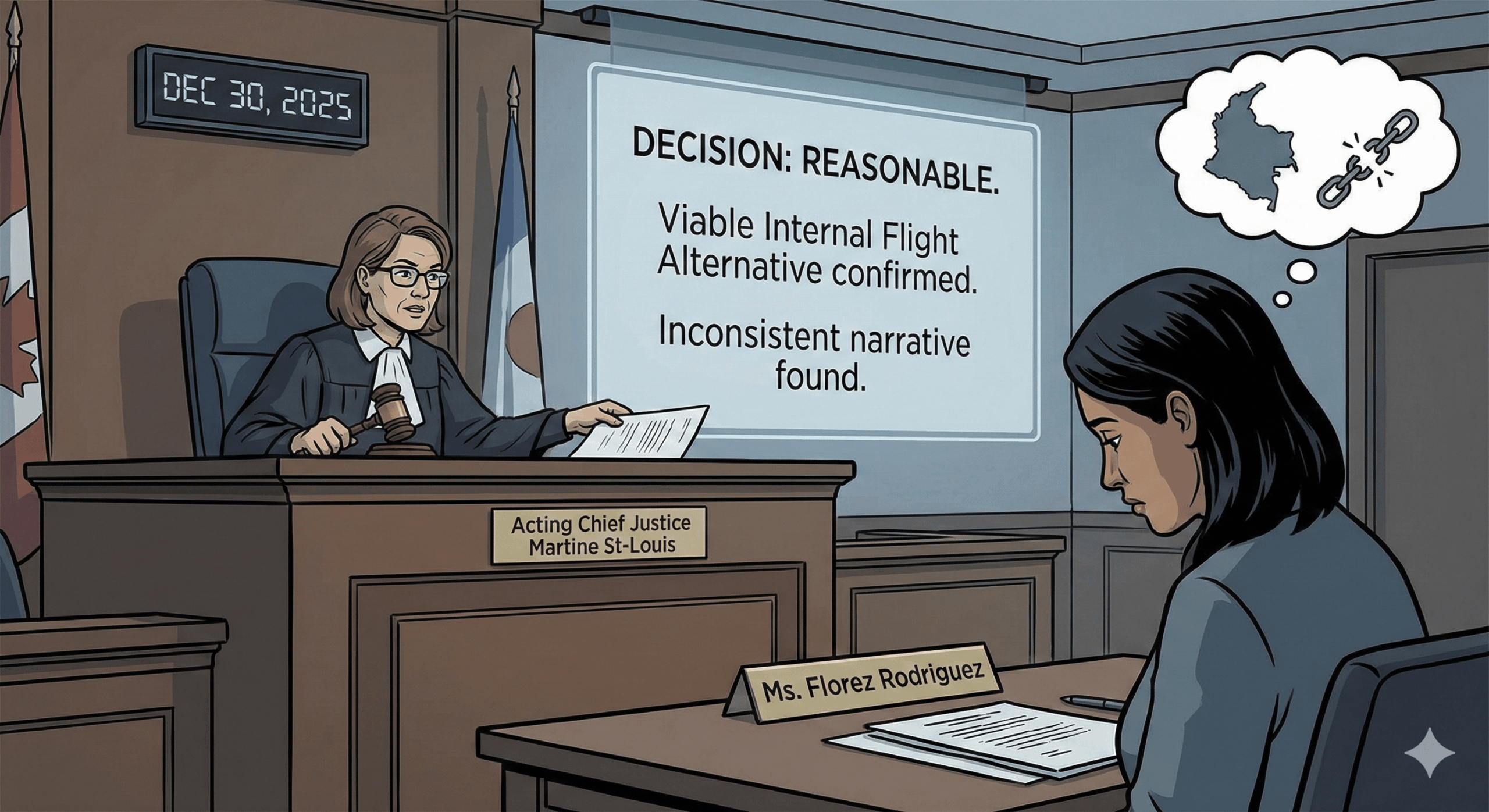
The Federal Court of Canada issued a ruling regarding the relocation benefits of several Royal Canadian Mounted Police (RCMP) members who suffered massive financial losses on their homes1. The decision, released on December 30, 2025, involved seven different officers who had all been transferred to Fort McMurray, Alberta, between 2012 and 2016. These officers eventually sold their homes at a significant loss when they were transferred to new locations a few years later. The court had to decide whether a change in government policy that reduced their compensation was fair and legally binding.
The legal battle began when the officers challenged the decisions made by an internal RCMP adjudicator. The officers, including Andrew Brock, Brent Clarke, Samuel Métivier, Brent Alain, Vanderlei Holz, Lance Flintoff, and Thomas Cooke, had their individual cases consolidated into one proceeding because their situations were so similar. Each of these members had moved to Fort McMurray during a time when the real estate market was high. When it came time for them to move again between 2019 and 2021, the market had crashed. This resulted in some members losing nearly half the value of their homes.
At the center of the dispute were two different versions of the relocation policy. When the officers first moved to Fort McMurray, the RCMP was following a 2009 version of the Integrated Relocation Program. This older policy included a specific benefit called the Depressed Market Benefit. This benefit was designed to protect members who were forced to move out of areas where the housing market had dropped by 20 percent or more. If a member could prove their case, the policy potentially allowed them to be reimbursed for 100 percent of their housing loss. This gave many officers the confidence to buy homes in Fort McMurray rather than renting.
However, on April 1, 2017, the rules changed. The Treasury Board and the RCMP introduced a new directive that replaced the 2009 policy. This new 2017 policy completely removed the Depressed Market Benefit. In its place, it offered a different program called Home Equity Assistance. This newer program was much less generous. It only reimbursed 80 percent of a loss and was capped at a maximum of $30,000. For officers who were losing hundreds of thousands of dollars on their homes, this cap meant they would still be left with massive debts even after receiving the government assistance.
Andrew Brock was the lead applicant in the case. He moved to Fort McMurray in 2012 for a posting that was supposed to last at least five years. He purchased a house for $819,950 and spent another $40,000 on repairs. When he was transferred to Burnaby, British Columbia, in 2019, he sold the house for nearly $260,000 less than what he had originally paid. After accounting for his home improvements, he lost about 35 percent of his investment. He even had to pay over $64,000 out of his own pocket just to cover the shortfall on his mortgage. Mr. Brock argued that he only chose to buy a house because he thought the 2009 policy would protect him if the market crashed.
The other officers faced similarly difficult financial situations. Brent Clarke sold his house in 2021 for $510,000 after paying $711,000 for it just a few years earlier. Samuel Métivier suffered one of the most dramatic losses in the group. He bought a house for roughly $377,400 and was forced to sell it for only $185,000, which represented a loss of about 51 percent of the home’s value. He received the maximum $30,000 allowed under the new policy, but this covered only a small fraction of the $192,400 he had lost.
Brent Alain also saw a 43 percent drop in his home value, selling his house for $215,000 after purchasing it for $380,000. Vanderlei Holz bought a home for $849,000 in 2014 and sold it for $613,000 in 2019. Lance Flintoff and Thomas Cooke also reported losses of over 25 percent on their respective properties. All these members told the court that they believed the 2009 policy was part of their employment contract and should have stayed in place for as long as they lived in the homes they bought under those rules.
The officers raised several legal arguments to support their claim for more compensation. First, they argued the concept of vested rights. This is a legal idea that once a person has earned a specific right under a law or policy, a new law cannot come along later and take that right away. They believed that because they bought their homes while the 2009 policy was active, they had a permanent right to the 100 percent loss protection for those specific houses. They argued their situation was unique because they were sent to a volatile market like Fort McMurray specifically because the RCMP required them to go there.
Their second main argument was based on a legal principle called promissory estoppel. This principle prevents a party from going back on a promise if another person relied on that promise to their own disadvantage. The officers claimed that by having the 2009 policy in place, the RCMP had essentially promised to protect them from market crashes. They argued that they relied on this promise when they decided to buy expensive homes in a risky market. Without that policy, many of them said they would have simply rented a home instead of buying one.
The government, represented by the Attorney General of Canada, disagreed with these arguments. They pointed out that the 2009 policy itself stated that it would be reviewed and transitioned to a new governing policy year every April. The government argued that there was no promise that the same benefits would last forever. They contended that since the officers started their moves out of Fort McMurray after the 2017 policy took effect, the 2017 rules were the only ones that could legally apply to those transfers. The government also noted that the Treasury Board has the legal right to update employment policies for the public service as economic conditions change.
Madam Justice Heneghan presided over the case in the Federal Court. In her written reasons, she explained that the court’s job was not to decide if the policy change was a good idea, but rather to decide if the adjudicator’s decision to follow the new policy was reasonable. She looked closely at the wording of the 2009 policy and found that it did not contain a clear or permanent promise to the members. She noted that the policy explicitly mentioned it would transition to new rules each year, which meant that members should have known the benefits could change at any time.
Justice Heneghan also addressed the issue of vested rights. She found that while the officers were certainly in a difficult financial spot, they did not have a legal right that was set in stone. The judge explained that the 2009 policy only applied to relocations that happened while it was the active policy. Since the moves away from Fort McMurray happened after 2017, the benefits were governed by the rules in place at that specific time. She concluded that the IRP 2009 did not create a perpetual or eternal entitlement to the Depressed Market Benefit.
Regarding the argument about a broken promise, the judge found that the test for promissory estoppel was not met. She stated there was no evidence of a specific, unequivocal promise made to the officers that the 2009 rules would apply to future moves. The existence of a policy at the time of purchase was not the same as a guarantee that the policy would never be updated or replaced by the Treasury Board.
Ultimately, Justice Heneghan dismissed the applications for judicial review. She ruled that the decisions made by the RCMP adjudicators were transparent and justified based on the laws and policies in place. The court found that the officers had been heard and that their individual circumstances were considered, but the legal constraints of the government’s policy-making power meant that the lower compensation was the only benefit available to them. The court also ordered that the officers pay the legal costs for the proceeding.
Read about other federal court cases here.