The Ontario Superior Court of Justice has ordered a prominent heating, ventilation, and air conditioning company to pay more than $2.6 million in damages to a Waterloo based startup after finding that it misused confidential information to develop a competing technology1. The decision, delivered by Justice A.A. Sanfilippo on December 19, 2025, concludes a lengthy legal battle over the remote monitoring systems used in Starbucks retail outlets across Canada. The court found that RACE Mechanical Systems Inc. and its related entity, Aquire Facilities Management Services, breached their duties of confidence and good faith by reverse engineering the plaintiff’s hardware and using its proprietary pricing data to secure a massive national contract.
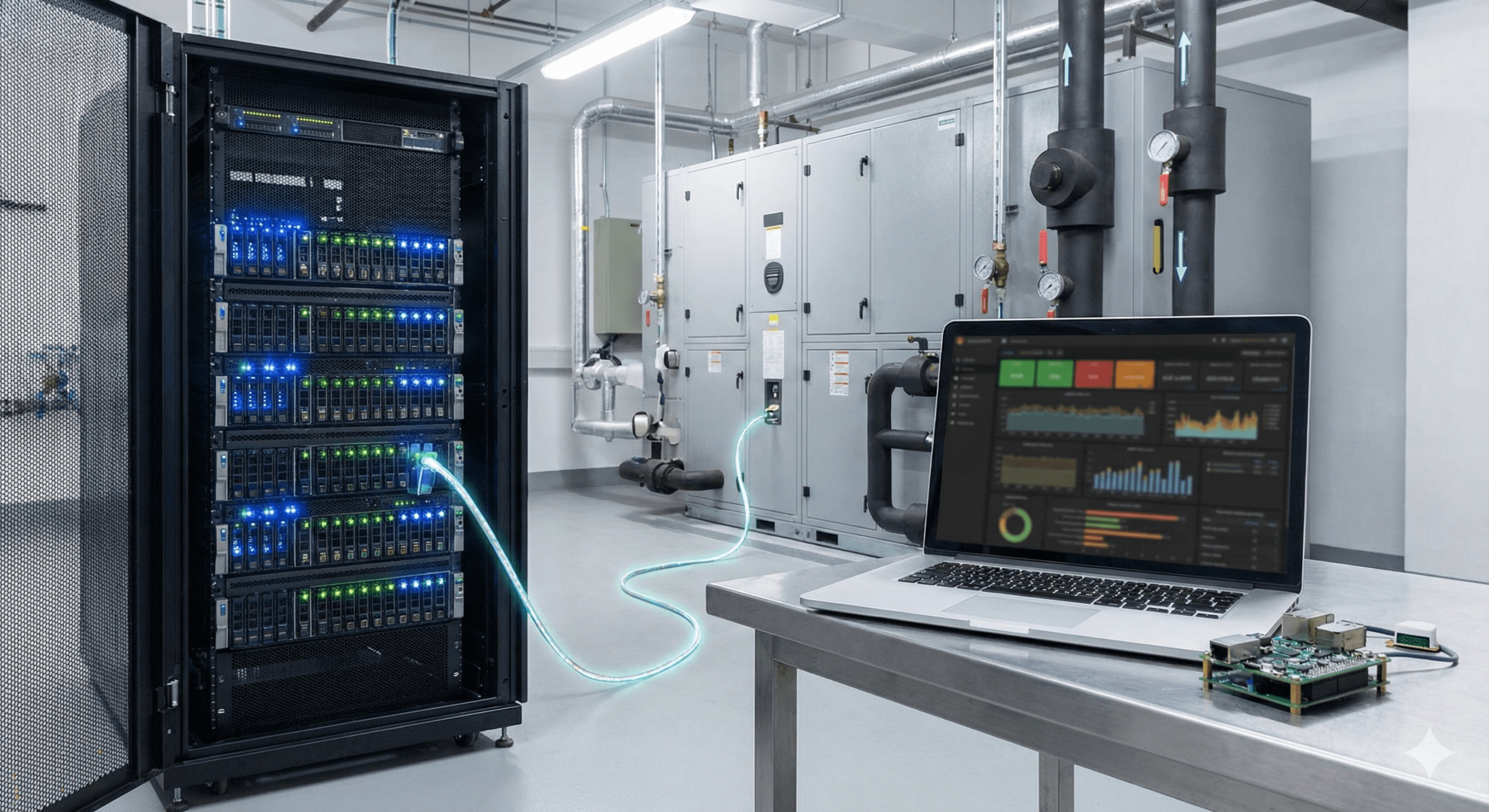
The story began in 2013 when Trevor Strauss, an entrepreneur with a background in telecommunications and product development, identified a gap in the commercial technology market. While large commercial buildings often utilized expensive, complex automation systems for remote monitoring, Strauss observed that small to medium sized facilities were largely underserved. He incorporated Behold Control Equipment Inc. with the goal of creating what he described as a poor man’s automation system. Over three years, Strauss invested between $1.2 million and $1.5 million of his own savings and thousands of hours into developing an Internet of Things platform. This system used sensors to collect data from heating and refrigeration equipment, transmitting that information to a digital dashboard for remote diagnostics and predictive maintenance.
In early 2016, Strauss made a cold call to Starbucks Coffee Canada Inc. to pitch his product as a way to reduce emergency repair costs and ensure customer comfort. Starbucks expressed interest and connected Strauss with their national HVAC supplier, RACE Mechanical Systems Inc. At the time, RACE was a well established service company led by Terrence Timmins, who had built the business from a small operation in Orono, Ontario, into a nationwide vendor. RACE provided Starbucks with traditional scheduled maintenance and emergency repairs, but it did not possess the technology for remote, predictive monitoring. The potential partnership promised a revolutionary shift for RACE, allowing them to transition from a reactive service model to a predictive one where they could dispatch a technician only when data suggested a failure was imminent.
The two companies engaged in a six store pilot project during the summer of 2017. The trial was successful, and Starbucks eventually approved a larger rollout of the Behold system into 160 retail outlets. During this period, the relationship appeared collaborative. RACE and Behold worked together to refine the hardware and software, identifying improvements for liquid line temperature sensors and door switches. However, behind the scenes, RACE was exploring ways to bring the technology in house. In September 2017, RACE executives inquired about purchasing Behold entirely, but they walked away from the deal after Strauss valued his startup at $10 million. Immediately after declining the purchase, RACE applied for a Canadian trademark for the name Aquire to be used for remote monitoring systems.
While continuing to work with Behold on the 160 store rollout, RACE hired its first software developer, Mert Kilan, in September 2018. Kilan was a recent college graduate with no prior experience in hardware design or the HVAC industry. Despite his junior status, Kilan was tasked with familiarizing himself with the Behold system. Evidence presented at trial showed that RACE provided Kilan with unrestricted access to Behold’s hardware, software, and digital dashboard. Internal communications revealed that RACE executives explicitly directed Kilan to determine if they could take control of the sensors already installed in stores by replacing Behold’s software with their own. When Kilan expressed concerns that the devices were branded and licensed to Behold, RACE vice president Patrick Woodward told him it was not an issue.
The court examined internal text messages and emails that confirmed RACE was actively engaged in reverse engineering Behold’s hardware throughout late 2018 and early 2019. Kilan dismantled Behold’s circuit boards to identify specific components, such as multiplexers and relays, and eventually produced a schematic for a new board that mirrored Behold’s design. Although the president of RACE, Patrick Hegan, eventually cautioned staff that they were not allowed to reverse engineer the product due to legal agreements, the court found that the unauthorized work continued. The Defendants leveraged Behold’s technical specifications to instruct third party design firms to build a competing system, effectively skipping the lengthy trial and error phase that Strauss had originally endured.
The business relationship finally collapsed in October 2019. RACE terminated its dealings with Behold without notice, citing Strauss’s attempts to contact Starbucks executives in the United States and alleged defects in the hardware. Justice Sanfilippo noted that RACE staff were instructed to secretly rip out Behold’s equipment from Starbucks stores over a period of three days. Technicians were told that if store managers asked what they were doing, they should claim they were simply investigating a system issue. Following the termination, RACE and its newly incorporated company, Aquire, moved forward with their own monitoring system. Using Behold’s confidential volume discount pricing data as a benchmark, they secured an eight year contract with Starbucks in October 2020 to install their predictive monitoring system in every company owned retail store in Canada.
In his decision, Justice Sanfilippo rejected the defendants’ claims that Behold’s hardware was defective or unfit for its purpose. The court found that the issues reported during the 160 store rollout were largely due to installation errors by RACE technicians or the delay in RACE providing necessary equipment lists to Behold. Furthermore, the court noted that the defendants had praised the technology to Starbucks and used data generated by the Behold system to build the very business cases that eventually won them the national contract. The judge found the testimony of the RACE leadership team to be consistently unresponsive and occasionally evasive, whereas Strauss was found to be a sincere and forthright witness.
The court concluded that the defendants had gained a significant springboard advantage by misusing Behold’s confidential information. Expert testimony suggested that without copying Behold’s work, it would have taken RACE much longer to develop a functional system from scratch. Justice Sanfilippo determined that the appropriate springboard period was 36 months, representing the time the defendants saved by leveraging Strauss’s innovations. The judge ruled that RACE and Aquire were jointly and severally liable for the breach of confidence and the breach of the duty of good faith. The court held that while RACE had no obligation to stay in a permanent business relationship with Behold, it was not permitted to use Behold’s secret sauce to create a rival product and push Behold out of the market prematurely.
The damages awarded to Behold were calculated based on the profits the company lost during that three year springboard window. This included an assessment of lost hardware sales and lost monthly software as a service fees that Behold would have earned had it remained the supplier for the Starbucks rollout. The total award of $2,608,798 includes compensation for 826 store installations and the associated monitoring revenue. The court also dismissed a counterclaim brought by RACE, which had sought over $500,000 for the alleged costs of replacing Behold’s equipment. Justice Sanfilippo found that the defendants failed to provide adequate documentary evidence to support their claim that they had actually sustained those losses.
While the court acknowledged that the defendants' conduct was high handed, it declined to award punitive damages. The judge reasoned that the $2.6 million compensatory award was sufficient to accomplish the goals of retribution and deterrence. By being stripped of the profits they made during the springboard period, the defendants were effectively penalized for their misconduct. The ruling serves as a significant precedent regarding the protection of trade secrets and the limits of competitive behavior between contractors and their suppliers in the technology sector.
Behold Control Equipment Inc. was also granted pre judgment and post judgment interest. The parties were encouraged to resolve the issue of legal costs between themselves, with the court remaining available to determine those costs if an agreement cannot be reached by early 2026. The judgment brings to an end a case that underscored the high stakes of innovation in the burgeoning Internet of Things industry and the legal protections afforded to entrepreneurs against more established corporate entities.
Read more business law cases here.