The Supreme Court of Canada has delivered a decisive ruling that settles a significant debate regarding the evidence required to prosecute impaired driving offences under the Criminal Code1. In a decision released on November 14, 2025, the nation’s highest court confirmed that prosecutors can rely on the certificate of a qualified technician to prove that the alcohol standard used to calibrate a breathalyzer machine was properly certified. This ruling resolves conflicting interpretations of the 2018 amendments to Canada’s impaired driving laws and affirms that the Crown does not need to call a separate analyst or produce a separate analyst’s certificate to prove the machine’s accuracy in every case. The decision restores a streamlined approach to these trials and upholds the conviction of a New Brunswick man.
The case centers on the events of August 22, 2019, when Tony Rousselle was stopped by an RCMP officer while driving his vehicle. The officer formed reasonable grounds to believe Mr. Rousselle was impaired by alcohol and arrested him. He was taken to a police station where he provided two breath samples. The analysis indicated a blood alcohol concentration of 100 milligrams of alcohol in 100 millilitres of blood, which is over the legal limit of 80 milligrams. Consequently, Mr. Rousselle was charged with operating a motor vehicle with a blood alcohol concentration equal to or exceeding the legal limit within two hours of ceasing to drive.
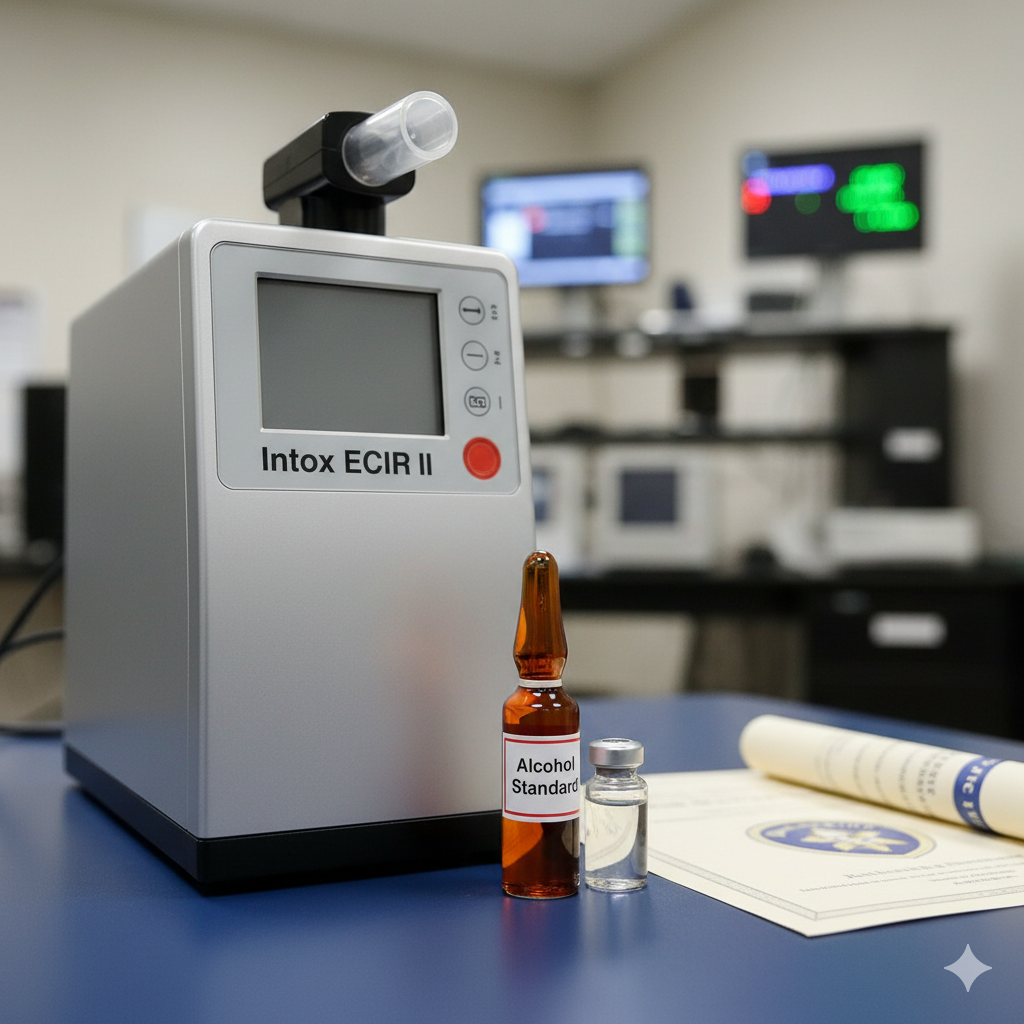
At his trial, the prosecution relied on the testimony of the arresting officer and a certificate prepared by a qualified technician. This technician was the officer trained to operate the breathalyzer instrument, specifically the Intox EC/IR II. The technician’s certificate stated that before taking Mr. Rousselle’s breath samples, a system calibration check was performed. This check ensures the machine is measuring accurately by testing it against a known sample of alcohol, called an alcohol standard. The technician’s certificate attested that the result of this check was within the acceptable margin of error and that the alcohol standard used had been certified by an analyst.
A procedural issue arose during the trial regarding the specific proof required for that alcohol standard. The Criminal Code requires the alcohol standard to be certified by an analyst, who is a distinct specialist from the qualified technician operating the machine. The Crown had intended to file separate certificates from the analyst to prove this certification but failed to give the defence reasonable notice as required by law. As a result, the trial judge ruled those specific analyst certificates inadmissible. This left the Crown relying solely on the qualified technician’s certificate to prove that the alcohol standard was valid. The defence argued this was insufficient because the technician did not have personal knowledge of the analyst’s work and was essentially providing hearsay evidence regarding the certification.
The trial judge agreed with the defence, acquitting Mr. Rousselle on the grounds that the Crown had failed to prove a necessary precondition for the presumption of accuracy. The presumption of accuracy is a legal tool that allows a court to accept breathalyzer results as conclusive proof of a driver’s blood alcohol level without requiring expert testimony on the science of the machine in every single trial. To benefit from this presumption, the Crown must prove specific steps were followed, including that the calibration check used a certified standard. The trial judge held that without direct evidence from the analyst, this condition was not met. This decision was later overturned by a summary conviction appeal judge and the New Brunswick Court of Appeal, leading to the appeal at the Supreme Court of Canada.
To understand the legal dispute, it is necessary to look at the mechanics of breath testing and the legislative history. Breath testing instruments work by analyzing a subject’s breath to calculate the amount of alcohol in their blood. To ensure the machine is reading correctly, the operator performs a calibration check before testing the subject. This involves introducing a gas or liquid solution with a known alcohol concentration into the machine. If the machine reads this known sample correctly, it is deemed to be working properly. The “alcohol standard” is that known sample, and its composition is verified and certified by a scientific analyst before it is distributed to police stations.
In 2018, Parliament passed Bill C-46, a major overhaul of impaired driving laws intended to simplify and streamline prosecutions. Under the previous law, the Criminal Code allowed a qualified technician to certify that the alcohol standard was “suitable for use.” The 2018 amendments changed the wording, requiring proof that the standard was “certified by an analyst.” This change in language sparked a division among Canadian courts. The Alberta Court of Appeal, in a case called R. v. Goldson, interpreted the new wording to mean that Parliament intended to add a stricter requirement, forcing the Crown to provide direct evidence from the analyst. Conversely, the Yukon Court of Appeal, in R. v. MacDonald, ruled that the change was merely a standardization of language and that the technician’s certificate remained sufficient.
The Supreme Court of Canada majority adopted the reasoning that aligns with the Yukon decision. Writing for the majority, Justices Rowe and Moreau explained that the purpose of the 2018 amendments was to modernize and simplify the trial process, not to add new layers of complexity. They noted that Parliament intended to reduce delays in the justice system, particularly for routine impaired driving cases. Requiring an analyst to testify or providing a separate certificate in every case would run counter to the legislative goal of efficiency. The Court concluded that the phrase “certified by an analyst” in the new legislation is functionally equivalent to the old phrase “suitable for use.”
The majority judgment emphasized that the qualified technician’s role includes verifying that the instrument is working properly. Part of that role involves checking that the alcohol standard being used is valid. Technicians rely on the certification provided with the standard to perform their duties. The Court found that the Criminal Code provisions regarding certificates are exceptions to the general rule against hearsay evidence. Hearsay is typically inadmissible because it involves reporting a statement made by someone else who is not present in court. However, Parliament has the power to create statutory exceptions to this rule to facilitate the administration of justice. The Court ruled that the provision allowing a qualified technician’s certificate to be evidence of the “facts alleged” includes the fact that the alcohol standard was certified.
The judgment detailed that the 2018 evidentiary scheme consolidated various requirements into a single section to streamline the process. While the wording changed, the legislative evolution suggests Parliament meant to maintain the “evidentiary shortcut” that has existed for decades. This shortcut allows the Crown to prove the necessary elements of the offence through the technician’s paperwork unless there is a specific reason to doubt the reliability of the machine or the procedure. The Court noted that if an accused person has a genuine reason to question the alcohol standard, they still have the right to apply to the court to cross-examine the technician or request further disclosure, ensuring their right to a fair trial is preserved.
The decision was not unanimous. Justice Côté provided a dissenting opinion, arguing that the acquittal should have been restored. The dissent focused strictly on the text of the new statute and the rules of evidence. Justice Côté argued that because the technician does not personally certify the alcohol standard, their statement that it was certified amounts to “double hearsay.” The technician is relying on a label or document from the analyst, and then the court is asked to rely on the technician’s certificate. The dissent posited that when Parliament rewrote the law and removed the specific phrase “suitable for use,” it signaled an intent to heighten the evidentiary standards in exchange for the stronger “conclusive proof” presumption that the new law grants to the Crown.
Justice Côté expressed concern that allowing the technician to attest to the analyst’s work undermines the distinct roles defined in the Criminal Code. The legislation defines an analyst and a qualified technician separately, assigning them different duties. The dissent argued that if the Crown wants to rely on the certification of the standard, they should simply file the analyst’s certificate, which is already a requirement for disclosure to the defence. By failing to do so in this case, the dissent reasoned, the Crown failed to prove the case beyond a reasonable doubt according to the strict letter of the law.
Despite the dissent, the majority ruling stands as the law of the land. The Supreme Court affirmed that the evidentiary scheme is designed to function as a cohesive whole. The requirement to disclose the analyst’s certificate to the defence before trial serves as a safeguard, allowing the defence to spot any potential issues with the alcohol standard. However, the Crown is not required to formally enter that document into evidence to secure a conviction if the technician’s certificate covers the necessary facts. This distinction between disclosure obligations and evidentiary requirements was central to the Court’s dismissal of the appeal.
The practical implication of this decision is that impaired driving trials will continue to operate under the streamlined procedures envisioned by the 2018 amendments. Police technicians can continue to complete their standard certificates, attesting that they performed the necessary calibration checks with certified alcohol standards. Prosecutors will not be forced to add additional witnesses or file redundant paperwork to prove routine scientific facts, provided the defence has been given proper disclosure. The ruling provides certainty to police, prosecutors, and defence counsel across Canada, ending the jurisdictional split that had seen different standards of proof applied in different provinces.
The conviction of Tony Rousselle is upheld, and the case serves as a precedent that the 2018 overhaul of the Criminal Code maintained the historical ability of the Crown to rely on technician evidence. The Supreme Court has reinforced the principle that legislative amendments aimed at efficiency should be interpreted in a way that furthers that goal, provided the statutory language supports such an interpretation. For drivers and legal professionals, the message is clear: the certificates generated by police technicians during breath testing carry significant evidentiary weight and are sufficient to trigger the presumption that the breathalyzer results are accurate.