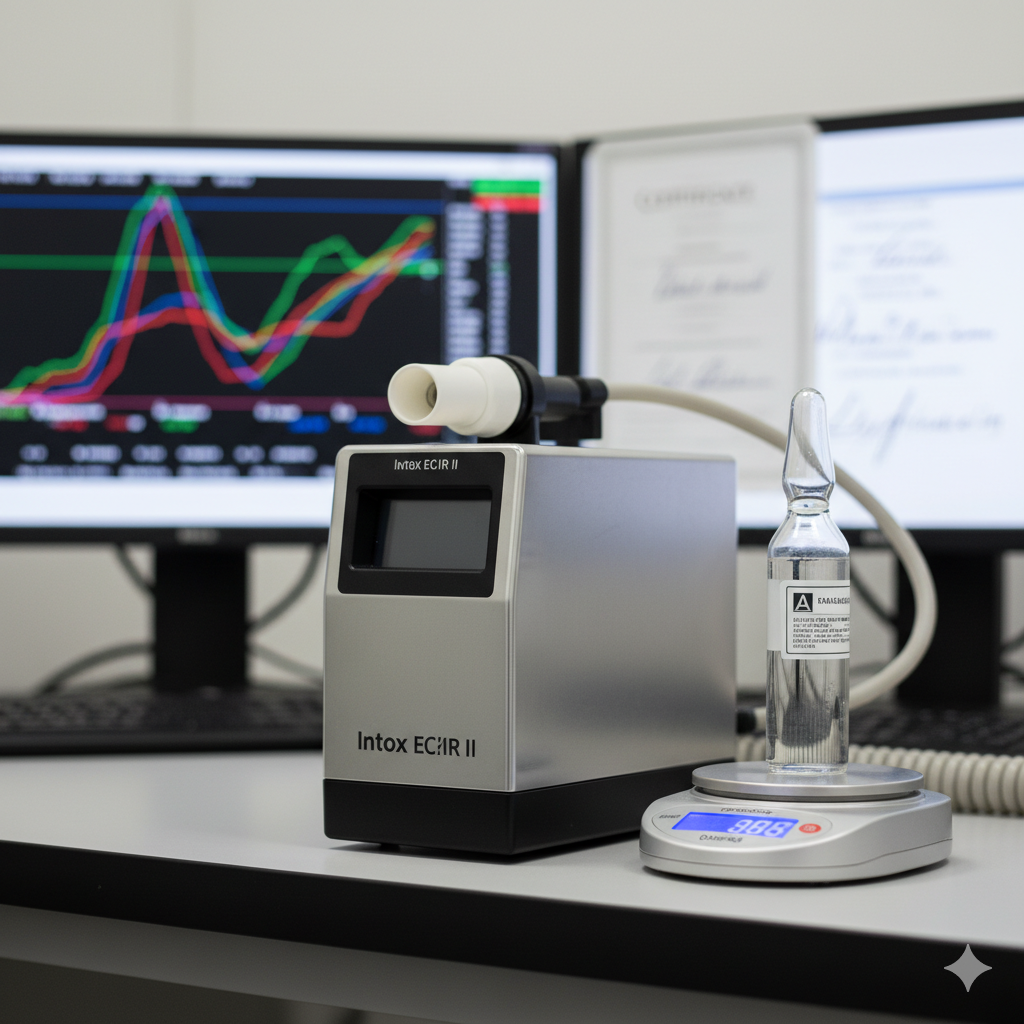
The Supreme Court of Canada has released a significant judgment regarding the evidentiary requirements in impaired driving cases, specifically concerning how the accuracy of breath testing instruments is established in court1. In a decision released on November 14, 2025, the country’s highest court upheld the conviction of Stéphane Larocque, a New Brunswick man charged with driving with a blood alcohol concentration exceeding the legal limit. The ruling settles a debate regarding whether the Crown must strictly prove the specific “target value” of the alcohol standard used to calibrate breathalyzers or if simply disclosing that information to the defence is sufficient. The Court concluded that while the Crown must disclose this technical data to the accused, they are not required to introduce it as formal proof during the trial to benefit from the statutory presumption of accuracy.
The case originated from a traffic stop that occurred on August 16, 2019. Mr. Larocque was driving his vehicle when he encountered a sobriety checkpoint manned by the Royal Canadian Mounted Police. During the interaction, the investigating officer formed reasonable grounds to believe that Mr. Larocque had operated his motor vehicle while impaired by alcohol. Consequently, Mr. Larocque was arrested and transported to the local police station to provide breath samples. He provided two samples of his breath into an approved instrument. The analysis revealed a blood alcohol concentration of 110 milligrams of alcohol in 100 millilitres of blood for the first sample, and 120 milligrams for the second sample. Both readings were well above the legal limit of 80 milligrams.
Mr. Larocque was subsequently charged under section 320.14(1)(b) of the Criminal Code, which makes it an offence to have a blood alcohol concentration equal to or exceeding 80 milligrams within two hours of ceasing to operate a conveyance. During his trial in the New Brunswick Provincial Court, the Crown sought to rely on the statutory presumption of accuracy. This legal mechanism allows the court to accept the results of the breathalyzer as conclusive proof of the accused’s blood alcohol level at the time of driving, provided that certain procedural conditions are met. To satisfy these conditions, the Crown introduced a certificate from a qualified technician and certificates from two analysts.
The legal dispute at trial focused on the technical maintenance of the breathalyzer machine. Before a breath sample is accepted, a qualified technician must perform a “system calibration check.” This process involves testing the machine with a known sample of alcohol, called an alcohol standard, to ensure the device is reading correctly. The result of this check must be within 10 percent of the “target value” of that standard. At trial, Mr. Larocque’s defence counsel argued that the Crown had failed to prove what the actual target value was. They contended that without evidence of the specific number used as the target, the court could not verify if the calibration check was truly within the 10 percent margin. The trial judge rejected this argument and convicted Mr. Larocque.
Mr. Larocque appealed his conviction to the Court of King’s Bench of New Brunswick and subsequently to the New Brunswick Court of Appeal. Both appellate levels dismissed his arguments. The New Brunswick Court of Appeal went a step further, ruling that the Crown was not even required to disclose information about the target value to the defence, let alone prove it in court. The appellate court held that the certificate of the qualified technician, which stated the test was successful, was sufficient evidence on its own. Mr. Larocque then took his case to the Supreme Court of Canada, arguing that the statutory scheme requires strict proof of the target value to protect the presumption of innocence.
The Supreme Court’s majority decision was delivered by Justices Rowe and Moreau, with agreement from Chief Justice Wagner and Justices Karakatsanis, Martin, Kasirer, Jamal, and O’Bonsawin. The majority dismissed the appeal, thereby affirming Mr. Larocque’s conviction, but they offered a nuanced correction to the lower court’s reasoning regarding disclosure. The Supreme Court emphasized that the legislative amendments made to the Criminal Code in 2018 were designed to streamline the prosecution of impaired driving offences and reduce the technical burdens that often bogged down trials.
A central part of the majority’s analysis focused on the distinction between what the Crown must share with the defence and what the Crown must formally prove to the judge. The justices agreed with the Attorneys General of Alberta and British Columbia, who intervened in the case, that the target value falls within the mandatory disclosure obligations. Section 320.34(1)(b) of the Criminal Code requires the Crown to disclose the “results of the system calibration checks.” The Court reasoned that a “result” is meaningless without context. Knowing that a machine read a sample as 97 milligrams is useless unless the accused also knows that the target value was 100 milligrams. Therefore, to allow an accused person to make full answer and defence, the Crown must provide the target value in the disclosure package given to the defence lawyers.
However, the obligation to disclose information is distinct from the obligation to prove facts in court. The majority ruled that Parliament did not intend for the target value itself to be a precondition that must be proven to rely on the presumption of accuracy. Section 320.31(1)(a) requires proof that the qualified technician conducted a calibration check and obtained a result within 10 percent of the target. The Court held that the testimony or certificate of the qualified technician stating that this condition was met is sufficient proof. The justices noted that requiring the Crown to independently prove the numerical target value would reintroduce the kind of technical hurdles that Parliament specifically sought to remove with the 2018 amendments.
The judgment detailed the practical realities of how these values are determined. For “wet bath” simulators, the target value is a constant 100 milligrams percent. For “dry gas” standards, the target value changes based on atmospheric pressure at the time of the test. The Court noted that the qualified technician is trained to determine the corrected target value based on the barometric pressure at the testing location. Because the Criminal Code deems the technician’s certificate admissible for the truth of its contents, a statement in the certificate confirming the calibration result was within the acceptable range is legally adequate to establish the machine’s reliability.
The Court clarified that if the disclosure provided to the defence reveals an issue—such as a discrepancy between the target value and the test result that falls outside the 10 percent margin—the defence can then apply to cross-examine the technician. However, the initial burden on the Crown to establish the presumption of accuracy does not require laying out the underlying scientific data points in open court. The presumption of accuracy is based on scientific consensus that properly operated instruments are reliable, and the technician’s certification confirms proper operation.
Justice Côté provided a dissenting opinion in the case. She disagreed with the majority’s interpretation of the evidentiary requirements. In her view, the target value is a critical component of the system calibration check. She argued that because the calibration check is the primary safeguard ensuring the machine is accurate, the components of that check must be rigorously proven. Justice Côté posited that the presumption of innocence demands that the Crown prove every element of the preconditions required to trigger the statutory shortcut of the presumption of accuracy.
The dissent argued that the target value is not a “picayune detail” but the benchmark against which accuracy is measured. Justice Côté agreed with the majority that the information must be disclosed, but she went further to state that disclosure is insufficient if the element is not also introduced into evidence. She expressed concern that relieving the Crown of this burden reduces the standard of proof to a “paper formality” derived solely from hearsay in the technician’s certificate. For Justice Côté, since the certificates in Mr. Larocque’s case did not explicitly state the target value, the Crown had failed to prove the machine was accurate, and she would have acquitted the appellant.
Despite the strong dissent, the majority ruling stands as the law of the land. The decision confirms that the 2018 overhaul of Canada’s impaired driving laws successfully removed the requirement for prosecutors to present detailed scientific proof of standard alcohol values in routine cases. The Crown must be transparent and provide the defence with all the data necessary to verify the machine’s operation, including the target values, during the pre-trial disclosure process. However, once the trial begins, the Crown can rely on the qualified technician’s certificate to establish that the calibration was successful.
This decision in R. v. Larocque is expected to have an immediate impact on impaired driving litigation across Canada. It reinforces the trend toward streamlining these trials and limiting the scope of technical defences related to the maintenance and calibration of breathalyzer instruments. Defence lawyers will still scrutinize the disclosure packages for errors in the target value calculations, but the ability to argue for an acquittal simply because the specific target number was not read into the court record has been foreclosed. For Mr. Larocque, the decision marks the end of his legal challenges, and his conviction for the August 2019 offence remains in place.