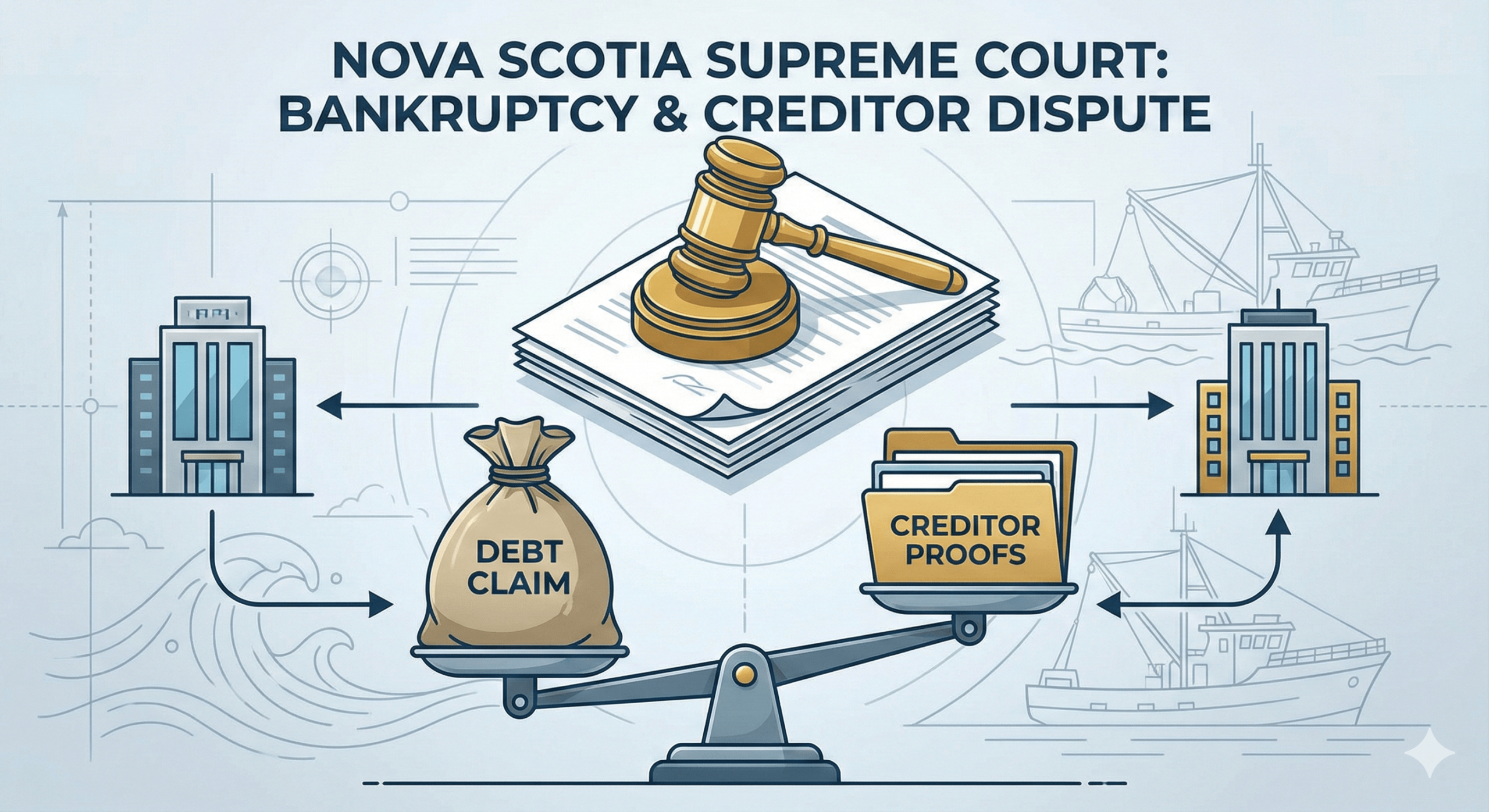
On November 14, 2025, the Ontario Superior Court of Justice released a significant endorsement addressing a critical procedural conflict between the Construction Act and insolvency law1. Justice F.L. Myers presided over motions brought by several construction lien claimants, including PCL Constructors Canada Inc., Kohn Partnership Architects Incorporated, and Aquila Project Solutions Ltd. These parties sought court orders to prevent their registered liens from expiring due to the passage of time while the property owners, various entities under the Vandyk group of companies, remained in receivership. The decision highlights the tension between the strict timelines required to preserve construction liens and the automatic stays of proceedings that typically accompany receiverships.
The core issue before the court was the statutory deadline imposed by the Construction Act. Under sections 37 and 46 of the legislation, a lien claimant must set their action down for trial within two years of commencement. If this deadline is missed, the lien is liable to be dismissed, causing the contractor or supplier to lose their secured status and fall to the bottom of the priority ladder as an unsecured creditor. In this case, the lien claimants had not set their matters down for trial because the court orders establishing the receivership had stayed all litigation against the debtor companies. The claimants found themselves in a precarious legal position where they were prohibited from advancing their lawsuits by the receivership order, yet simultaneously facing the statutory expiration of their lien rights because they were not advancing those same lawsuits.
Justice Myers began his analysis by examining the fundamental economic realities of insolvency proceedings. When a company enters receivership, it is usually because its liabilities exceed the realizable value of its assets. This creates a situation where there will insufficient funds to pay every creditor what they are owed. The court noted that uncertainty regarding the final amount of money that will be recovered from the sale of assets creates a ripple effect on how litigation is managed. In typical insolvency scenarios, creditors at the very top of the priority list, such as first mortgage lenders, are generally secure and can afford to wait. Conversely, creditors at the bottom of the list often have no realistic hope of recovery and therefore have no financial incentive to participate in the proceedings.
The court focused its analysis on the creditors situated in the middle of this priority hierarchy, whom Justice Myers referred to as creditors at the “plimsoll line.” This maritime metaphor describes the point on a ship’s hull that indicates the maximum safe draft, separating the part of the ship above water from the part submerged. In an insolvency context, the plimsoll line represents the financial threshold where available funds run out. Creditors at this line are the ones whose recovery depends entirely on the efficiency of the asset realization process and the minimization of costs. For these creditors, every dollar spent on legal fees reduces the pool of capital available for distribution. Consequently, the standard approach in receiverships is to defer the assessment and quantification of claims until the end of the process. This “wait and see” strategy is designed to save time and money by avoiding litigation over claims that may ultimately turn out to have no value if the available funds do not reach that far down the priority list.
However, Justice Myers pointed out that construction lien claimants occupy a unique position within this framework. Unlike unsecured trade creditors, lien claimants hold a statutory security interest that can, in certain circumstances, survive bankruptcy and even take priority over pre-existing mortgages. The Construction Act was specifically designed by the legislature to ensure that those who supply services and materials to a construction project are paid. The statute reflects a public policy mandate that lien claims should be dealt with expeditiously. This legislative intent stands in direct contrast to the “wait and see” approach favored in general insolvency practice. The court expressed skepticism regarding the idea that lien claims should automatically be paused simply to save money, noting that the desirability of deferring costs does not necessarily trump the statutory requirement for liens to be moved forward.
The endorsement referenced a recent decision by Justice Osborne in the case of KEB Hana as Trustee v. Mizrahi Commercial (The One) LP, which involved the high-profile insolvency of a major development in Toronto. In that case, the court approved a “Lien Regularization Order,” which created a parallel process allowing lien claims to be adjudicated without interfering with the broader receivership. Justice Myers noted that the court has the authority to recognize bona fide efforts to comply with the Construction Act and can use the Rules of Civil Procedure to remedy technical non-compliance. However, the court distinguished between remedying a technical error and deliberately using the rules to circumvent a statutory limitation period that creates inconvenience for the parties.
Despite the tension between the two legal regimes, Justice Myers acknowledged that failing to grant the requested relief would result in the lien claimants losing their security solely because they adhered to the stay of proceedings. The court considered whether the stay could have been lifted earlier to allow the claimants to set the matter down for trial, or if a process could have been implemented to protect their rights without waiting for the two-year deadline to approach. The court observed that the assets involved in the Vandyk receivership were complex and that even high-priority recovery was at risk on at least one of the project sites. Given these specific facts, the court found it reasonable that the parties had not sought to lift the stay while the receiver was still attempting to understand the value of the assets.
Justice Myers emphasized that the Construction Act remains the law of the land and that statutory words and policy must be respected absent a finding of paramountcy by federal bankruptcy legislation. The court warned against allowing form to overtake substance. While it would be possible to refer the lien claims to an Associate Judge for trial merely to satisfy the technical requirement of section 37, only to have the Associate Judge immediately stay the trial, such a maneuver would be a procedural fiction. Instead, the court looked to the intent of the parties and the practical realities of the case.
The court ultimately decided to grant the orders sought by PCL Constructors, Kohn Partnership Architects, and Aquila Project Solutions. The order effectively protected the liens from dismissal under section 37 of the Construction Act, allowing them to survive despite not having been set down for trial within the mandatory two-year window. Justice Myers was satisfied that the processes employed by the parties in this specific instance did not undermine the underlying policy of the Construction Act, which is to resolve construction disputes efficiently while protecting the security of those who build.
While granting the relief in this specific instance, Justice Myers issued a stern caution to the legal bar regarding future applications of this nature. The endorsement explicitly stated that counsel should not wait until the last minute to seek these types of orders. The court indicated that in future cases, it would likely require a more robust explanation as to why the stay of proceedings could not have been lifted earlier to allow the lien actions to proceed in the normal course. Judges will expect counsel to demonstrate why a parallel process, similar to the one utilized in The One receivership, was not feasible.
The decision serves as a reminder that while the court has the equitable jurisdiction to prevent unjust outcomes in complex insolvency scenarios, it expects parties to be proactive. The “wait and see” approach, while economically efficient for the receiver, cannot be used as a blanket excuse to ignore statutory limitation periods. Lawyers representing lien claimants in future insolvencies will need to be vigilant in monitoring the two-year deadline and must be prepared to explain why they did not take steps to advance their claims sooner.
The court also touched upon the inherent risks facing the lien claimants even with the order granted. Because the Vandyk projects are in receivership, there is no guarantee that there will be sufficient funds to pay the liens in full, regardless of their validity. The “plimsoll line” analysis remains relevant; if the liquidation of the real estate does not generate enough capital to pay off the lenders sitting in priority ahead of the lien claimants, the preservation of the liens may ultimately be a pyrrhic victory. However, by granting the order, the court preserved the claimants’ opportunity to fight for their share of the proceeds once the financial picture becomes clearer.
In his concluding remarks, Justice Myers reiterated that each case must be determined on its own facts. The complexity of the Vandyk assets and the genuine uncertainty regarding priority recovery provided a sufficient basis for the court to intervene in this matter. The decision reinforces the principle that insolvency proceedings do not automatically suspend the operation of other provincial statutes, and that stakeholders must navigate the intersection of these laws with care. The orders were signed as requested, securing the lien rights of the applicants for the time being and allowing the receivership to proceed without the immediate distraction of multiple lien trials. The matter highlights the delicate balancing act courts must perform when distributing a limited pool of assets among competing stakeholders with different legal priorities.
Read more about business cases in Canada here.