A recent decision by the Ontario Court of Justice has clarified the scope of police powers during RIDE spot checks, ruling that a breath sample demand remains lawful even if the investigating officer relies on the wrong section of the Criminal Code. In the case of R. v. Jerlo1, Justice Joseph Callaghan determined that as long as the objective preconditions for Mandatory Alcohol Screening are met, the officer’s subjective belief regarding the legal basis for the demand does not invalidate the results. The ruling highlights the distinction between suspicion-based testing and the broader powers granted to police under federal impaired driving legislation introduced in 2018.
The incident giving rise to the trial occurred on the evening of October 8, 2023, on Jane Street in Toronto. Trevor Jerlo was operating a motor vehicle when he was directed to stop as part of a Reduced Impaired Driving Everywhere (RIDE) spot check operation. The police had set up a mobile processing center at the scene, which included a private booth for arrested individuals to contact legal counsel and a station for a Qualified Breath Technician to administer breath tests.
During the initial interaction, Officer Mohamed Haji engaged Mr. Jerlo in conversation. The officer noted that Mr. Jerlo appeared hesitant when answering questions about alcohol consumption. Furthermore, Officer Haji observed a very strong scent of perfume coming from the interior of the vehicle. Based on his professional experience, the officer believed that drivers sometimes use perfume, cologne, cigarettes, or gum to mask the odor of alcohol on their breath. Consequently, Officer Haji formed a subjective suspicion that Mr. Jerlo had alcohol in his body.
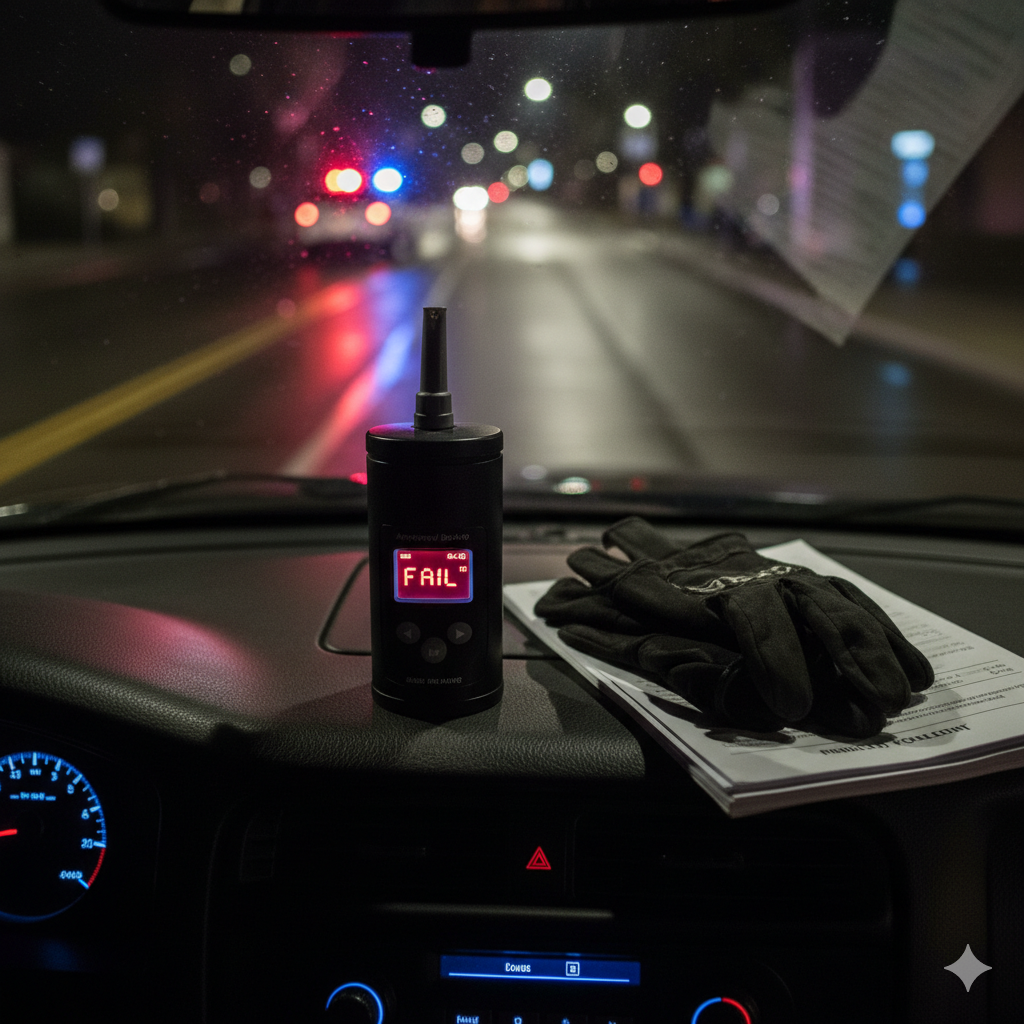
Acting on this suspicion, Officer Haji made a demand for a breath sample into an Approved Screening Device. In his testimony later provided to the court, the officer was explicit that he was relying on section 320.27(1)(b) of the Criminal Code. This specific section allows an officer to demand a breath sample only if they have reasonable grounds to suspect the driver has alcohol in their body. Officer Haji mistakenly believed that he was not authorized to use the separate Mandatory Alcohol Screening power found in section 320.27(2), and therefore he relied entirely on his suspicion regarding the perfume and the driver’s hesitation.
Mr. Jerlo complied with the demand and registered a fail on the roadside device. Following this result, he was arrested and provided with his rights to counsel. He utilized the private booth on site to speak with Duty Counsel. Subsequently, he provided two breath samples to the Qualified Breath Technician, which registered blood alcohol concentrations of 131 milligrams and 123 milligrams of alcohol in 100 milliliters of blood. Both readings were well above the legal limit. The entire process, from the initial stop to Mr. Jerlo’s release on a Form 9 appearance notice, lasted approximately one hour and fifteen minutes.
When the matter proceeded to trial in 2025, Mr. Jerlo appeared as a self-represented litigant. Recognizing the complexity of the legal issues at play, particularly regarding the validity of the breath demand, Justice Callaghan appointed an amicus curiae, or friend of the court. This independent lawyer was tasked with assisting the court in understanding the legal arguments and ensuring that potential defences were properly explored, given that the accused did not have his own legal representation.
A significant legal hurdle emerged during the trial regarding the grounds for the breath demand. Both the Crown prosecutor and the amicus agreed that Officer Haji’s observations did not actually meet the legal standard for “reasonable suspicion.” While the officer honestly believed the perfume and hesitation were sufficient, the law requires objective grounds that can withstand scrutiny. The parties concurred that the smell of perfume and a hesitant manner of speaking fell short of establishing the necessary reasonable suspicion required for a demand under section 320.27(1)(b).
Since the grounds for the officer’s chosen legal authority were insufficient, the central issue became whether the Crown could salvage the breath test results by relying on a different section of the Criminal Code that the officer had not intended to use. The Crown argued that the demand was valid under section 320.27(2), known as the Mandatory Alcohol Screening provision. This law allows an officer to demand a breath sample from any driver lawfully stopped, provided the officer has an approved screening device in their possession. No suspicion of alcohol consumption is required for this type of demand.
The defence argument, presented by the amicus, focused on the potential unfairness of allowing the state to pivot to a different legal justification after the fact. The argument posited that because Officer Haji specifically testified he was relying on reasonable suspicion—and applied that test incorrectly—the court should not retrospectively validate his actions using the Mandatory Alcohol Screening power. The defence pointed to prior case law where courts had declined to allow the Crown to switch legal theories in similar circumstances, arguing that if the officer failed to properly assess reasonable suspicion, the driver should have been permitted to leave.
Justice Callaghan rejected the defence’s position and ruled in favor of the Crown. In his analysis, the judge noted that the Criminal Code does not create a hierarchy between suspicion-based demands and mandatory screening demands. The two sections are not mutually exclusive, and nothing in the legislation requires an officer to verbally declare which specific section they are relying upon during a roadside stop.
The court emphasized that the requirements for Mandatory Alcohol Screening are purely objective. To be valid, three conditions must exist: the officer must have an approved screening device, the officer must be acting in the lawful exercise of their powers (such as a RIDE check), and the person must be operating a motor vehicle. Justice Callaghan found that all three conditions were undeniably present during the stop on Jane Street. Officer Haji had the device, he was conducting a lawful RIDE check, and Mr. Jerlo was driving.
The decision drew heavily on the rationale that Parliament intended to simplify the detection of impaired drivers when it introduced Mandatory Alcohol Screening. The judge reasoned that requiring an officer to form a subjective motivation to use the mandatory power would contradict the legislative intent, which was to remove the need for suspicion-based testing in these scenarios. The ruling cited a similar decision, R. v. Handley, where another judge found that an officer’s “mistaken but unvocalized” reliance on suspicion did not invalidate a demand that was otherwise lawful under the mandatory screening rules.
Justice Callaghan concluded that an officer’s internal thought process does not override the objective reality of the situation. Since the officer had the legal authority to make the demand without any suspicion at all, his erroneous belief that he needed suspicion was legally irrelevant. The demand was lawful because the objective criteria for Mandatory Alcohol Screening were satisfied the moment the officer engaged the driver.
Although the judge found no violation of Mr. Jerlo’s Charter rights regarding the breath demand, the decision proceeded to analyze what would have happened had a violation occurred. This analysis, known as a Grant analysis, is used to determine whether evidence obtained through a rights violation should be excluded from the trial to preserve the reputation of the justice system.
Justice Callaghan stated that even if the breath demand had been unlawful, he would not have excluded the breathalyzer results. The court found that Officer Haji did not act in bad faith. He was respectful throughout the encounter and honestly believed he had grounds to suspect alcohol consumption. The breach, if it existed, would have been technical in nature rather than a deliberate disregard for the accused’s rights. The judge noted that the existence of the Mandatory Alcohol Screening law attenuates the seriousness of any error, as the officer had a valid statutory basis to make the demand available to him, even if he didn’t mentally select it.
Furthermore, the court considered the impact on Mr. Jerlo’s interests. The detention was relatively brief, lasting just over an hour, and he was released at the scene rather than being transported to a police station in handcuffs. The intrusion on his privacy was deemed moderate in the context of a RIDE check. Finally, the judge highlighted society’s strong interest in adjudicating impaired driving cases on their merits. Given the high readings and the public safety risks associated with impaired driving, the court concluded that excluding the evidence would damage the reputation of the justice system more than admitting it would.
The ruling in R. v. Jerlo serves as a significant affirmation of the broad powers granted to police under Canada’s modernized impaired driving laws. It establishes that the validity of a roadside breath demand in Ontario rests on whether the police legally could make the demand based on the facts at the scene, rather than on the specific legal section the officer subjectively believed they were using. As a result, the breath test results were admitted into evidence, and the constitutional application brought on behalf of Mr. Jerlo was dismissed.
Read more crime stories here.