The Real Estate Council of Ontario has issued a disciplinary order against an Ontario real estate salesperson following a dispute over the sewage system of a property sold in Innisfil. Emily Lynn Matheson, who was registered as Emily Eibisberger-Benson at the time of the transaction, was found to have breached the industry Code of Ethics by listing a property as having a septic system when it was actually serviced by a holding tank. This distinction resulted in unexpected maintenance costs and logistical challenges for the buyer, leading to a formal complaint and a subsequent fine of $7,000 imposed by the regulator.
The events leading to the disciplinary action began in early 2022 when a residential property located at 1558 Houston Ave, Innisfil, ON L9S 4M7 was prepared for the market. Matheson was employed at the brokerage Century 21 B.J. Roth Realty and was hired to act as the listing sales representative for the sellers. According to the agreed facts of the case, one of the sellers of the home was related to Matheson. On March 3, 2022, the property was officially listed for sale on a local real estate listing service with an asking price of $699,000. Within the technical details of the listing, the sewage system was explicitly described as "Sewer: Septic."

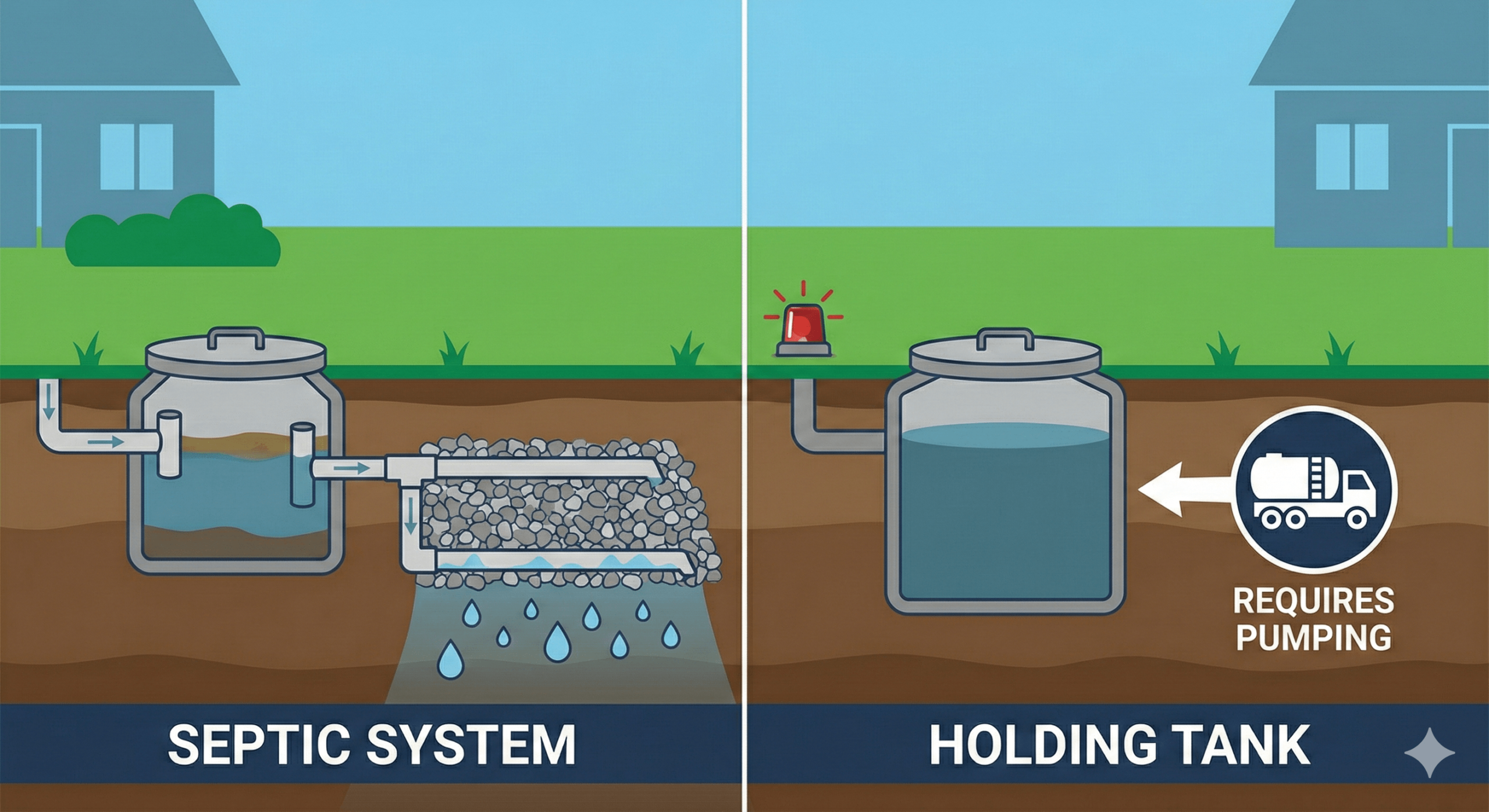
For many rural or semi-rural property buyers, the difference between a traditional septic system and a holding tank is significant. While a septic system typically uses a leaching bed to process and disperse waste into the ground, a holding tank is a closed system that merely collects waste and must be manually pumped out on a regular basis. The listing provided by Matheson did not specify that the property relied on a holding tank, an omission that would eventually form the basis of the buyer's grievance.
The marketing of the property was successful, and on March 10, 2022, a buyer represented by Nikhil Arora of iPro Realty made an offer to purchase the home. The transaction proceeded through the standard legal and administrative channels, eventually closing on April 26, 2022. At the time of the closing, the buyer remained under the impression that the property was equipped with a standard septic system, as had been indicated in the listing information provided during the sale process.
The reality of the property’s infrastructure became apparent less than a month after the buyer took possession. On May 22, 2022, the buyer was alerted by a light and an audible alarm connected to the sewage system. Unfamiliar with the equipment, the buyer called for professional assistance. A plumbing service arrived on May 28 to investigate the cause of the alarm. The technician discovered that the waste tank was completely full and recommended an immediate pump-out.
Following this discovery, the buyer’s representative, Arora, contacted Matheson on May 30 to discuss the discrepancy. It was during these communications that the nature of the system was clarified. The property did not have a functioning septic leaching bed; instead, it utilized a holding tank that required cleaning and pumping approximately every eight to ten weeks. By the following day, the buyer learned the financial implications of this arrangement, discovering that each pump-out would cost approximately $565. Over the course of a year, these recurring maintenance fees would add thousands of dollars to the cost of homeownership that had not been factored into the buyer's budget or the initial purchase negotiations.
Seeking to understand how the error occurred, the buyer eventually obtained official documentation from the Town of Innisfil in May 2024. These records confirmed that at the time the property was marketed and sold, the municipality recognized the system as a holding tank rather than a septic system. Furthermore, the Town of Innisfil later confirmed that a holding tank had been the primary waste management system at the Houston Avenue address since July 2012. Armed with this information, the buyer filed a formal complaint with the Real Estate Council of Ontario in June 2024.
During the regulatory investigation, Matheson provided an explanation for the wording used in the listing. She indicated that when she was inputting the property details, she chose the "septic" option because she believed the system was a form of septic. She noted that the paperwork she had reviewed from the Town of Innisfil referred to the installation as a "septic type 5." Matheson defended her choice by stating that she opted for the term "septic" rather than "septic system" based on the specific terminology she encountered in the municipal documents provided to her at the time of the listing.
However, the Real Estate Council of Ontario maintained that as a registered professional, Matheson had a duty to ensure the accuracy of the information presented to the public and to potential buyers. The regulator found that by posting the incorrect type of sewer system and failing to take reasonable steps to verify the specific nature of the documentation, Matheson had fallen short of the professional standards required by the Real Estate and Business Brokers Act, 2002.
The case was ultimately resolved through an Agreed Statement of Facts and Penalty, which allowed the matter to be settled without a full contested hearing. The Discipline Committee concluded that Matheson had violated two specific sections of the Code of Ethics. The first was Section 5, which requires registrants to provide conscientious service and demonstrate reasonable knowledge, skill, judgment, and competence. The second was Section 38, which mandates that registrants use their best efforts to prevent error, misrepresentation, fraud, or any unethical practice in a real estate trade.
In the decision released on October 22, 2025, the Chair of the Discipline Committee accepted the joint submission for penalty. Matheson was ordered to pay a fine of $7,000 to the Real Estate Council of Ontario, with a 12-month period allowed for payment. In addition to the financial penalty, the order included an educational component. Matheson is required to successfully complete the "Introduction to TRESA" course, which covers the Trust in Real Estate Services Act, within 180 days of the decision. She must also provide proof of completion to the regulator shortly thereafter.
The resolution of this file serves as a reminder of the importance of precise technical descriptions in real estate listings. For the buyer of 1558 Houston Avenue, the difference between a septic system and a holding tank was not merely a matter of terminology, but a significant operational and financial burden. The Real Estate Council of Ontario’s decision emphasizes that salespersons are expected to go beyond a surface-level reading of documents to ensure that the descriptions they provide to the public are accurate and not misleading.
The $7,000 fine and the requirement for remedial education reflect the regulator’s stance on the necessity of competence and diligence in the profession. By failing to verify the exact nature of the sewage system before listing the property, Matheson was found to have missed a critical step in the due diligence process that is fundamental to the role of a listing agent. This case underscores the high expectations placed on Ontario real estate professionals to protect the integrity of the marketplace and the interests of all parties involved in a transaction.
Read more cases about proceedings in regulated professions here.