KITCHENER, ON – The Ontario Superior Court of Justice has dismissed a man’s third attempt to renegotiate the forfeiture of a massive collection of firearms and weapons seized by police in 2019, bringing a measure of finality to a legal saga that has spanned nearly six years1. The ruling by Justice M. Gibson on September 5, 2025, affirmed a forfeiture order that Hubert Kump had previously consented to, effectively ending his efforts to reclaim additional items from the cache that included hundreds of guns, prohibited magazines, and other weapons.
The case originated on October 30, 2019, when officers from the Waterloo Regional Police Service were called to a Kitchener residence for a wellbeing check. Paramedics were on scene attending to an elderly man, later identified as Bruno Kump, the applicant’s father, who was disoriented and appeared to be in medical distress. While inside the home attempting to find identification for the man, officers observed two assault-style rifles leaning against a living room wall. Their search for identification led them to discover a rifle magazine, ammunition, and grenades in plain view in the kitchen. Further observations revealed more firearms on the main floor and in the basement, along with a firearms licence belonging to Hubert Kump.
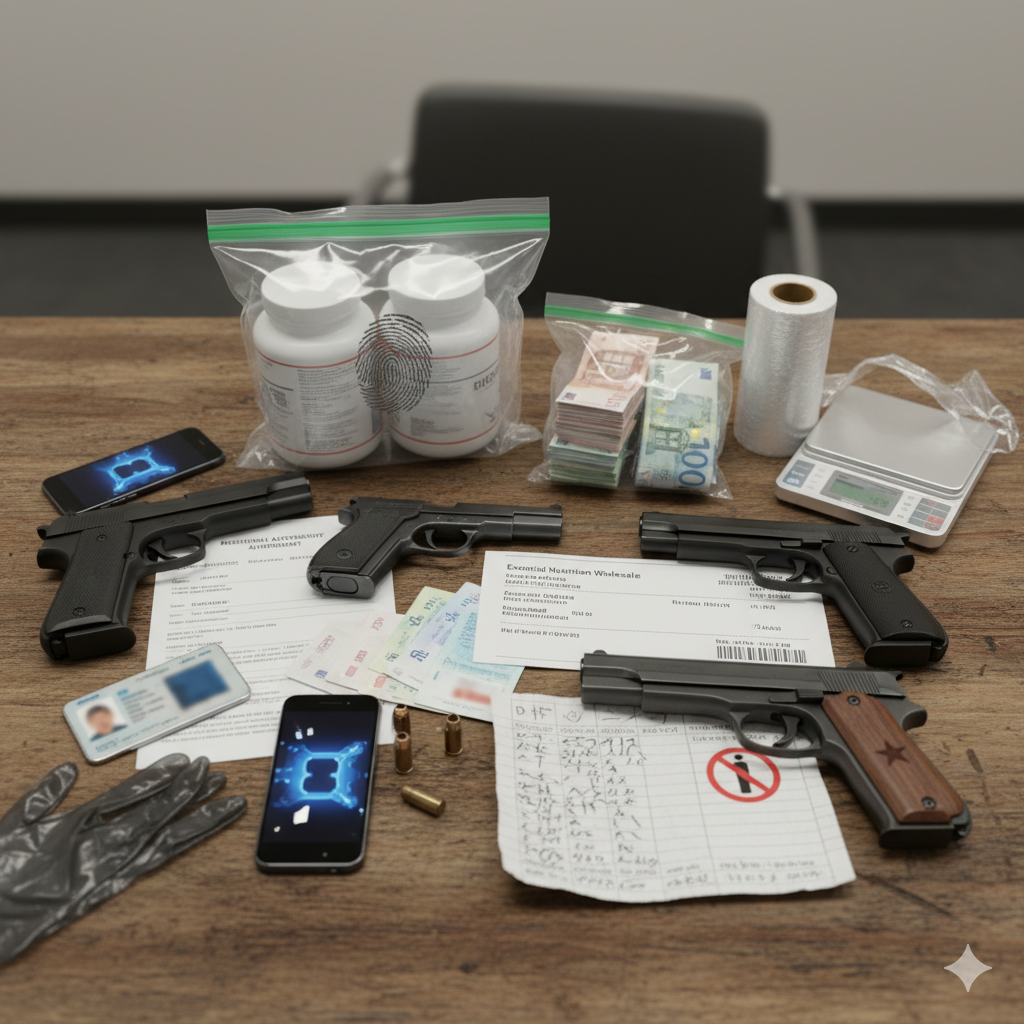
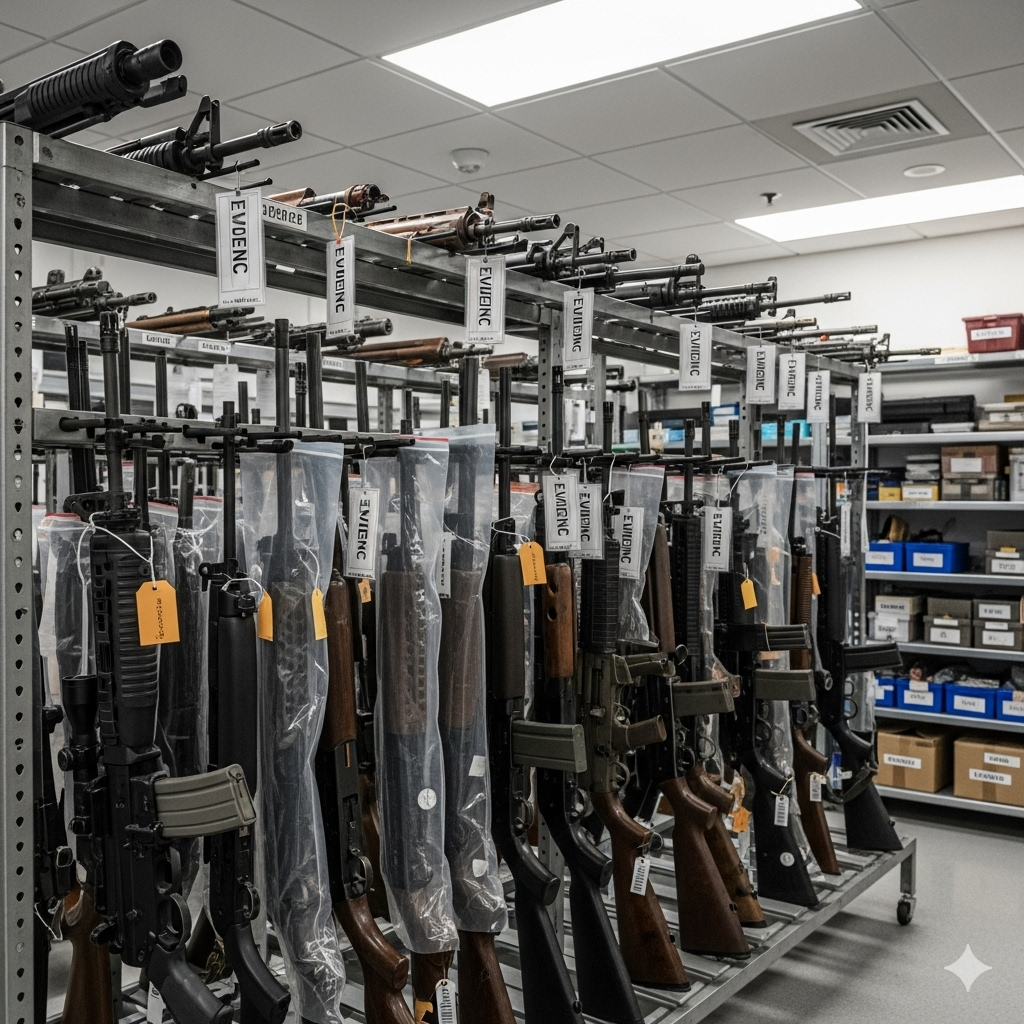
Based on these findings, police obtained a search warrant, which was executed the following day on October 31, 2019. The search uncovered a very large and significant collection of weapons and related items. In total, police seized approximately 325 firearms, a collection that included restricted firearms, prohibited firearms, unregistered weapons, and one firearm that had been reported stolen. Officers also seized over 500 magazines, many of which were prohibited high-capacity models, in addition to magazines found within the firearms themselves. A substantial quantity of ammunition was found stored unsafely throughout the home in cardboard boxes, plastic bags, and various containers. The seizure also included two sets of brass knuckles, which are classified as prohibited weapons under the Criminal Code. Both Hubert Kump and his father, Bruno Kump, were subsequently charged with numerous criminal offences related to the careless use and unsafe storage of firearms and ammunition.
The criminal proceedings concluded on November 26, 2021. On that day, the Crown withdrew all charges against both men. In conjunction with the withdrawal, two court orders were issued by Justice Sopinka of the Ontario Court of Justice. The first was a prohibition order under section 111 of the Criminal Code, which banned Hubert Kump from possessing any firearms or ammunition for a period of three years. The second was an Order for the Disposition of Property, which detailed the forfeiture of the seized items. During this court appearance, Kump was represented by legal counsel, who confirmed on the record that he had reviewed the disposition order with his client and that Kump was consenting to its terms.
Despite his initial consent, Kump later appealed the disposition order to the Superior Court of Justice. This appeal process, however, did not proceed to a full hearing. Instead, Kump and the Crown entered into new negotiations, which resulted in a revised agreement. On July 28, 2023, Kump formally abandoned his appeal. In exchange, a new, more favourable disposition order was put before Justice Smith of the Superior Court of Justice. This new agreement, referred to as the “Forfeiture Order,” was made with Kump’s consent, which he confirmed on the record in court. The Waterloo Regional Police Service was not a party to this new agreement.
The 2023 Forfeiture Order was detailed and specific, dividing the seized property into five appendices. Appendix A listed property to be forfeited outright. Appendix B also listed property for forfeiture, but with an exception allowing Kump’s brother, Harold Kump, to select and lawfully take ownership of up to fifty restricted firearms, excluding handguns. Appendix C contained items to be forfeited unless they could be transferred to a new lawful owner within 120 days. Appendices D and E listed specific properties to be returned directly to Hubert Kump and Harold Kump, respectively.
Following this second consent order, the Waterloo Regional Police Service began its implementation. According to police, all property listed for return to Hubert and Harold Kump was returned. The fifty restricted firearms selected by Harold Kump were lawfully transferred. Police also facilitated the transfer of all items in Appendix C that could be lawfully moved to new owners. However, a significant amount of property remained that could not be lawfully returned and was slated for disposal. Police efforts to destroy this remaining property were halted. The Ministry of the Attorney General’s Crown Law Office informed the police service that it would not provide the necessary direction to dispose of the items until the outcome of Kump’s further legal challenges was known. This left hundreds of firearms and quantities of ammunition in police storage.
Kump’s dissatisfaction with the order he consented to resurfaced. Around March 14, 2024, he filed a new application, which temporarily stayed the execution of the Forfeiture Order. That stay was ultimately lifted by Justice Ramsay on February 6, 2025. Undeterred, Kump filed the present application on August 5, 2025, seeking to vary the July 2023 order. He asked the court to direct the return of replica firearms, deactivated firearms, and an antique revolver. He also sought an order to have a licenced gunsmith conduct a further examination of the property held by police. His legal argument was that a material change in circumstances had occurred, which he attributed to alleged mistakes made by the police service in its initial inspection and cataloging of the firearms.
In the hearing before Justice Gibson, the Crown and the Waterloo Regional Police Service argued for the dismissal of the application. The police submitted that they had fully complied with the order and that the remaining property could not be lawfully returned to Kump. They stressed the need for finality, noting the public interest in resolving the matter and the burden of continuing to store the seized weapons. The Crown’s position focused on jurisdiction, arguing that the Superior Court of Justice did not have the authority to vary the order. The Crown lawyer emphasized that Kump had consented to the order as part of a bargain where his appeal was abandoned. This application, the Crown argued, was simply an attempt to relitigate an issue that had been settled on consent.
In his decision, Justice Gibson agreed with the Crown. He characterized Kump’s application not as a request to vary an order, but as “in substance effectively an attempt to re-launch an appeal that was previously disposed of.” He noted that an appeal of a final order from the Superior Court, particularly one made with the consent of the parties, must be taken to the Court of Appeal for Ontario, and even then, only with leave, or permission, from that court. The Superior Court, he concluded, lacked the jurisdiction to hear the matter.
Justice Gibson continued that even if he were wrong on the issue of jurisdiction, he would have dismissed the application on its merits. He cited the strong interest in the finality of court decisions, a principle “deeply engrained in Canadian common law.” He explained that once a final decision is made, a judge is generally barred from reopening or varying it. The proper recourse for a party who is unsatisfied is to appeal. Justice Gibson found that there was no evidence of an error or a miscarriage of justice that would warrant reopening the case. The manifest intention of both Justice Sopinka in 2021 and Justice Smith in 2023 was simply to implement the agreements presented to them by the parties.
He concluded that Kump had already received significant benefits from his consent on two separate occasions. His first consent in 2021 was a key prerequisite for the Crown withdrawing serious criminal charges. His second consent in 2023 secured him a more favourable outcome on his appeal, resulting in the return of additional firearms. To allow him to challenge the order again would be contrary to the principle of finality. “The Applicant cannot reasonably expect to be accorded repeated kicks at the can seeking to improve an outcome he previously consented to,” Justice Gibson wrote.
The application was dismissed. The court confirmed that the stay on the Forfeiture Order had been lifted, clearing the way for the Waterloo Regional Police Service to dispose of the remaining property in accordance with the terms of the July 28, 2023 order. No order for legal costs was made.
Read more crime stories here.