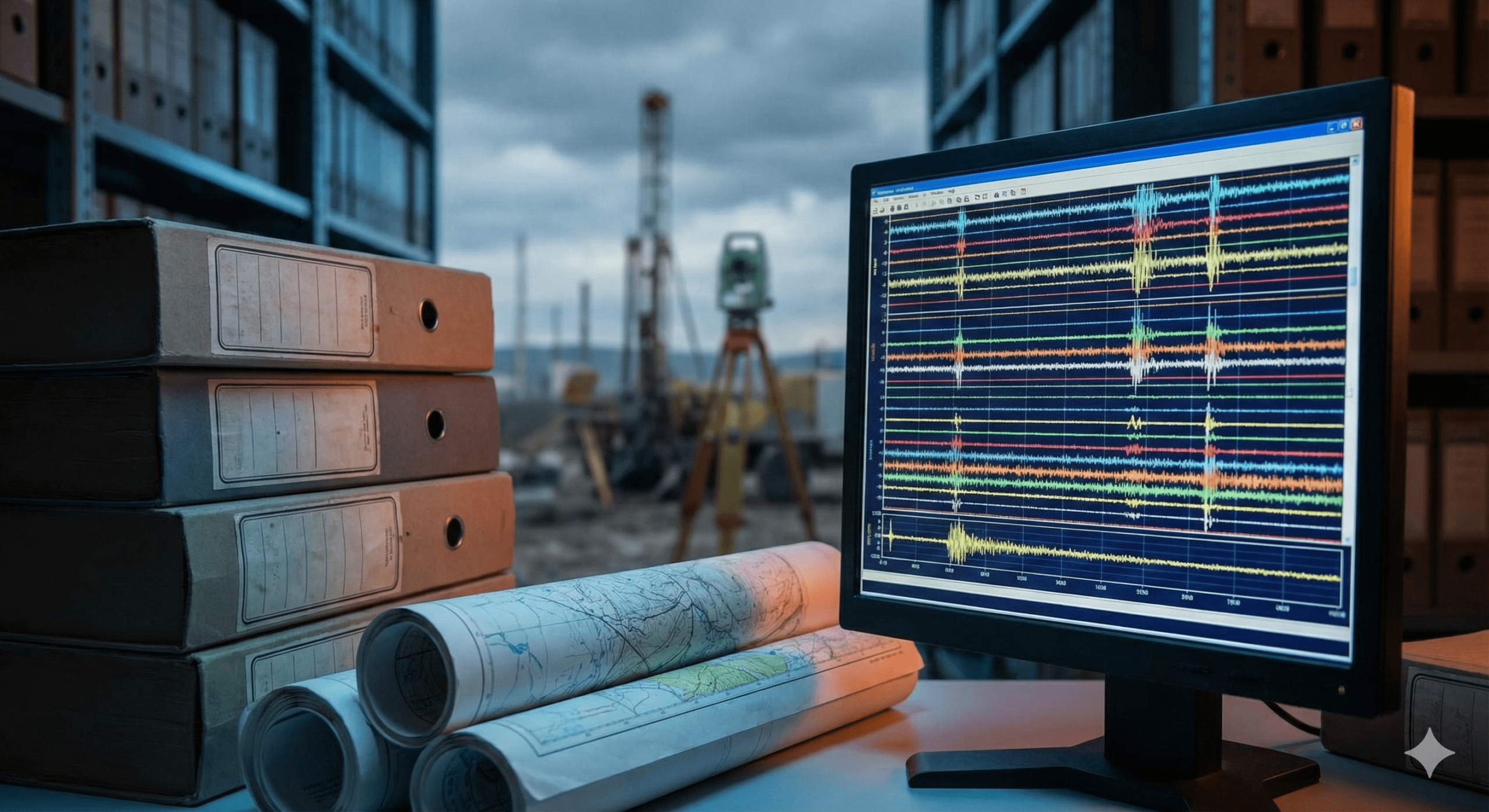
The Court of King’s Bench of Alberta has issued a ruling regarding the financial consequences of prolonged litigation, ordering Geophysical Service Incorporated to pay $405,000 in legal costs to Canadian Natural Resources Limited1. This decision, rendered by Justice J.C. Price in Calgary, follows the summary dismissal of a high-stakes lawsuit involving allegations of data theft and corporate misconduct. The ruling serves as a detailed examination of how Alberta courts calculate legal fees when a party persists in serious allegations that are ultimately found to be unsubstantiated.
The legal battle began years ago when Geophysical Service Incorporated, a company specializing in seismic data, initiated a claim against Canadian Natural Resources Limited, one of Canada’s largest energy producers. The core of the dispute involved the possession and use of seismic data, which is critical for oil and gas exploration. Geophysical Service Incorporated alleged that the energy company had engaged in the deliberate theft, concealment, and misuse of its proprietary data. These claims were valued at approximately $43 million, a figure based on expert opinions regarding the volume of data in the defendant’s possession.
A central element of the conflict involved what the court referred to as “Mystery Boxes” discovered in late 2020. These boxes contained seismic records that became the focal point of the litigation. During the proceedings, Canadian Natural Resources Limited submitted several affidavits that were later found to contain incorrect information regarding how the data was acquired and held. Geophysical Service Incorporated seized upon these inaccuracies, accusing the energy company’s employees and affiants of knowingly tendering false evidence and committing fraud.
In a previous decision issued in 2024, Justice Price granted a summary dismissal of the claims filed by Geophysical Service Incorporated. A summary dismissal occurs when a judge determines that a claim has no merit and does not need to proceed to a full trial. While the judge acknowledged that the energy company’s initial affidavits were incorrect, she concluded that they were the result of honest mistakes rather than fraudulent intent. Furthermore, the court found that Geophysical Service Incorporated failed to prove that the seismic data had actually been used by the defendant. Following that dismissal, the parties were unable to agree on the amount of legal costs to be paid, leading to this latest judicial intervention.
The subsequent legal arguments focused on the proper method for calculating the “reasonable and proper” costs the successful party is entitled to receive under the Alberta Rules of Court. Canadian Natural Resources Limited reported that it had incurred $618,224.58 in legal fees throughout the defense of the action. The company argued that it should be entitled to enhanced costs, seeking at least 75 percent of its total fees. The energy company justified this request by highlighting the complexity of the case, the $43 million at stake, and the fact that it had to defend against “unfounded and harmful” allegations of misconduct and theft.
Geophysical Service Incorporated opposed this request, arguing that the energy company should not be entitled to any costs at all. They contended that the entire litigation was prolonged by the energy company’s own errors in its initial affidavits. They maintained that their allegations were not unfounded but were based on a reasonable belief formed after receiving what they characterized as “false evidence.” They further argued that the legal costs should be limited to the standard amounts set out in Schedule C of the Rules of Court, which typically results in much lower recovery than the actual fees spent.
Justice Price began her analysis by rejecting the notion that the energy company was entitled to nothing. She noted that as the successful party in a summary dismissal, Canadian Natural Resources Limited was legally entitled to costs. The judge then addressed the conduct of the litigation, specifically the persistence of fraud allegations. The court noted that while the initial confusion caused by the mistaken affidavits was understandable, Geophysical Service Incorporated continued to pursue fraud claims even after explanations were provided and it became clear the claims were unsustainable.
The court also examined the impact of settlement offers made during the litigation. In January 2022, Canadian Natural Resources Limited made a “Calderbank” offer, which is an informal settlement proposal that carries potential cost consequences if rejected. The offer proposed a discontinuation of the lawsuit on a “without costs” basis, meaning each side would walk away and pay their own legal bills. Geophysical Service Incorporated rejected this, arguing it was a tactical move rather than a genuine compromise. However, Justice Price disagreed, ruling that by early 2022, the energy company had already incurred significant expenses and the offer represented a genuine attempt to end the dispute.
To reach a final dollar amount, the judge compared two different methodologies used in Alberta. The first was the McAllister approach, which often targets a 40 to 50 percent indemnification of actual fees in commercial matters. The second was the Schedule C approach, which uses a fixed grid of fees based on the complexity and dollar value of the case. The judge observed that under the McAllister approach, given the persistent fraud allegations, an enhancement to 60 percent of the fees might be appropriate, which would total over $370,000. Under the Schedule C approach, using a multiplier to account for the complexity of the case and doubling costs for the period after the rejected settlement offer, the total would range between $339,120 and $423,900.
Justice Price also dismissed the argument that the summary dismissal process itself had unnecessarily complicated or lengthened the proceedings. She noted that by successfully applying for summary dismissal, the energy company had actually shortened the litigation by avoiding a full-scale trial, which would have required even more time and legal expense. The judge found that the legal fees incurred were not disproportionate given that the lawsuit involved decades of records and a claim for tens of millions of dollars.
Ultimately, the court decided that the most appropriate way to resolve the dispute was to award a lump sum. This approach avoids the need for a line-by-line assessment of every legal bill by a review officer, which can often lead to further litigation. After considering the high stakes of the $43 million claim, the complexity of the seismic data issues, the genuine settlement offer that was rejected, and the unfounded allegations of theft and fraud, Justice Price settled on a final figure.
The court ordered Geophysical Service Incorporated to pay a total of $405,000. This amount is inclusive of the legal fees, the Goods and Services Tax, and the $32,778.58 in disbursements—out-of-pocket expenses such as expert fees and filing costs—incurred by the defendant. The ruling emphasizes that while parties are free to pursue complex commercial claims, they may face substantial financial penalties if they persist in making serious allegations of dishonesty that they cannot ultimately prove in court.
This decision was unsuccessfully appealed. You can read about that here.
Read more about business cases in Canada here.