Edit: This decision was appealed.
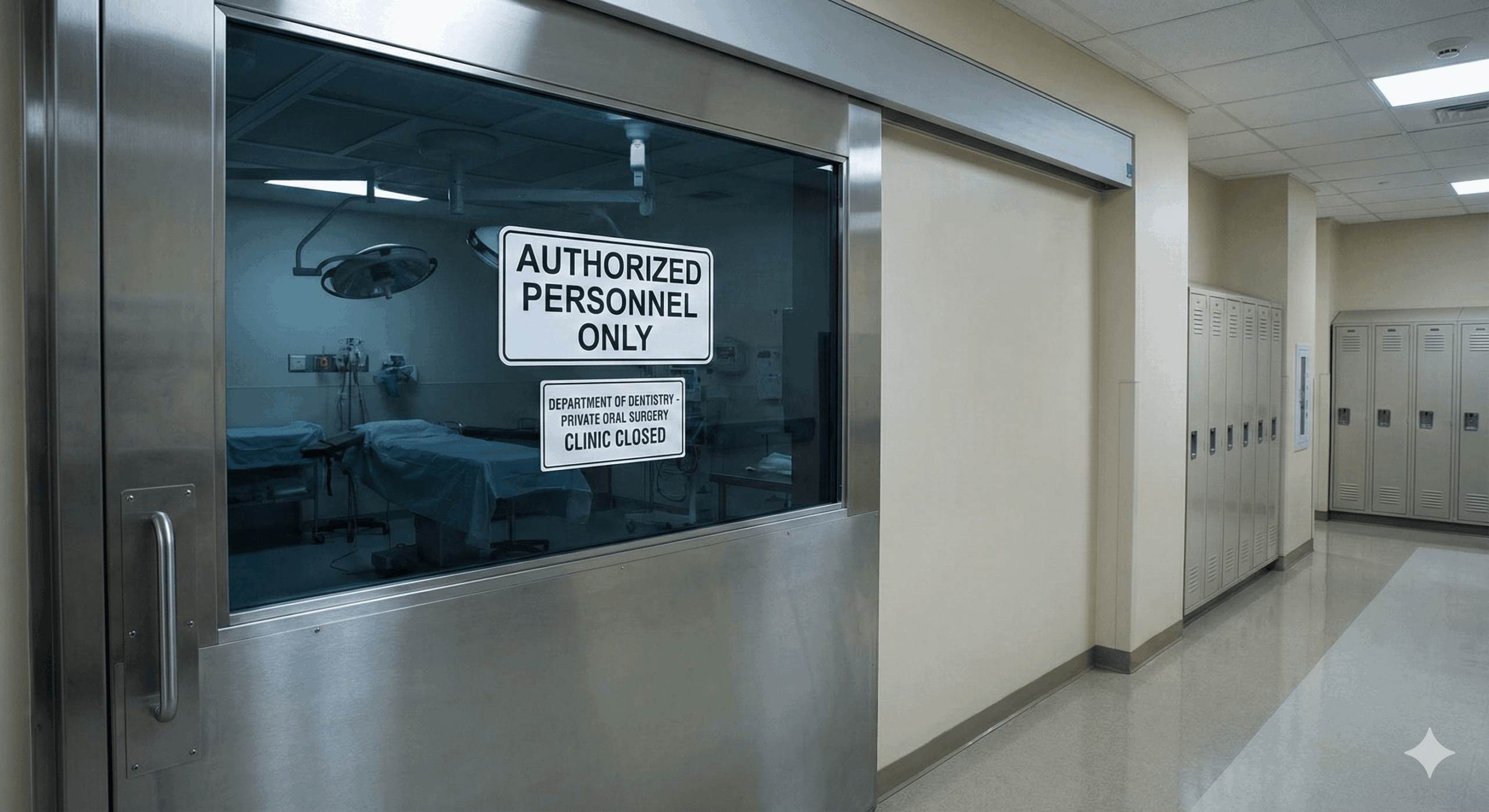
A recent decision from the Ontario Divisional Court has clarified the powers of hospital boards to restructure medical services and manage resources without the traditional requirements of procedural fairness usually afforded to medical staff1. The case centered on a group of seven oral and maxillofacial surgeons who practiced out of the Interface Centre for Oral and Maxillofacial Surgery in Southwestern Ontario. For years, these surgeons—Dr. William Abbott, Dr. William Frydman, Dr. Giorgio Aiello, Dr. Mitchell Kravitz, Dr. Keyvan Abbaszadeh, Dr. Michael Kirton, and Dr. Zachary Kerr—had enjoyed a unique arrangement at the London Health Sciences Centre. Despite being private practitioners, they were allocated approximately 300 hours of operating room time per year at the hospital to treat their private patients. This legacy arrangement allowed their patients to access hospital facilities for procedures that were often routine or required specific equipment not available in a private clinic setting.
The long standing relationship underwent a sudden shift on September 19, 2023, when the surgeons were notified that their access to the hospital’s operating rooms would be terminated effective October 1, 2023. While this deadline was later extended through January 31, 2024, the fundamental decision remained unchanged. The hospital advised the surgeons to refer any of their patients who required hospital-based care to the oral and maxillofacial surgeons who were directly on staff at the London Health Sciences Centre. Facing the loss of their hospital privileges and the ability to treat their private patients in a surgical setting, the seven surgeons launched an application for judicial review, arguing that the hospital had breached their rights to procedural fairness by failing to provide adequate notice or an opportunity to be heard before making such a significant decision.
The London Health Sciences Centre is a major teaching hospital and is governed by the Public Hospitals Act. As a recipient of provincial funding, the hospital is subject to a Hospital Service Accountability Agreement with Ontario Health. This agreement mandates that the hospital use its funding only for specific “Hospital Services” and requires the implementation of the Wait Time Information System. This system is designed to manage surgical waitlists across the province, ensuring that patients are prioritized based on clinical need and that resources are used equitably. During a review conducted by the hospital’s Strategic Redevelopment Committee, administrators determined that the practice of providing operating room time to private practice surgeons was no longer compliant with these provincial funding obligations.
The court heard that the arrangement with the private practice surgeons operated quite differently from other hospital departments. Patients of these private surgeons were able to gain access to an operating room without going through the Wait Time Information System. This essentially allowed those patients to bypass the standard provincial waitlist and prioritization process. Furthermore, the private practice surgeons utilized hospital staff, equipment, and supplies without reimbursing the hospital for these costs. Unlike hospital staff, these surgeons were not required to take on-call shifts, treat the hospital’s own patients, or participate in the academic and integrated systems of the institution. The hospital’s board ultimately concluded that this program constituted a distinct service that was no longer sustainable or appropriate under current health care planning standards.
The central legal question before the Divisional Court was whether the hospital board’s decision fell under Section 44 of the Public Hospitals Act. This specific section of the law allows a hospital board to cancel or substantially alter physician privileges without a hearing if the board determines that the hospital will “cease to provide a service.” The surgeons argued that the hospital was not actually ceasing a service, but was instead simply revoking their individual professional staff privileges. They contended that because the hospital would continue to perform oral surgery through its own staff, the “service” of oral surgery still existed, and therefore Section 44 should not apply to strip them of their right to a fair hearing.
The hospital countered that the specific “service” being ceased was the provision of hospital resources to private community clinics. They argued that the legacy program was a unique and separate offering that allowed community patients to jump the queue. The board maintained that by ending this specific program, they were making a strategic decision to align hospital operations with provincial mandates and ensure that scarce operating room resources were distributed fairly through the centralized waitlist system. Because this constituted the cessation of a specific service, the hospital argued that the legislation explicitly removed the common law requirement to hold a hearing or provide the surgeons with an opportunity to make submissions.
In its analysis, the Divisional Court agreed with the hospital. The justices noted that the term “service” is not explicitly defined in the Public Hospitals Act, but the context of the hospital’s operations was key. The court found that the program for private practice surgeons was indeed a distinct service because it operated outside the usual practices of the hospital, utilized resources without reimbursement, and bypassed the provincial wait time tracking system. The court determined that the board’s decision to end this practice was made in good faith to meet its obligations under the Hospital Service Accountability Agreement. Consequently, because the decision fell under Section 44, the hospital was not legally required to provide the surgeons with notice or a hearing.
The court’s decision highlighted the tension between longstanding professional arrangements and the modern requirements of a publicly funded health care system. While the surgeons had relied on this access for their practices for many years, the court found that the hospital board had the authority to manage its resources and mandates as it saw fit. The ruling emphasized that the Board of Directors has a broad mandate to run the hospital and ensure that its actions are consistent with provincial health care planning and funding agreements. Even though the hospital board admitted it did not consider the affidavits provided by the surgeons before making its final decision in December 2023, the court found this was not a legal error because the statutory framework of Section 44 displaced the need for such considerations.
Despite dismissing the surgeons’ application, the court expressed some dissatisfaction with how the London Health Sciences Centre initially handled the situation. The justices noted that the hospital’s conduct “provoked conflict” by failing to follow the correct process from the start. The initial decision in September was made by a committee rather than the board itself, and the original two-week notice period was described by the court as “unreasonably short” for ending a legacy program that had existed for decades. The court observed that these early procedural missteps were the primary reason the legal proceedings were initiated in the first place.
Because of the hospital’s initial handling of the matter, the court decided to reduce the amount of legal costs the surgeons were required to pay. While the parties had previously agreed that the successful party should receive 60,000 dollars in costs, the court exercised its discretion to award only 30,000 dollars to the hospital. The justices reasoned that while the hospital ultimately had the legal right to end the service, the way it began the process was flawed and contributed to the necessity of the litigation. The court found that the procedural problems were eventually cured by the formal board decisions made later in 2023 and the extension of the notice period, but the initial friction remained a factor in the cost award.
The final judgment confirms that Ontario hospitals have significant leeway to restructure or terminate specific programs and services to meet provincial standards, even if those changes result in the loss of privileges for long standing medical staff. By categorizing the access of private surgeons as a “service” under the Public Hospitals Act, the court reinforced the ability of hospital boards to make high-level administrative changes without being bogged down by the procedural requirements of individual physician hearings. This decision provides a clear precedent for other hospitals in Ontario that may be looking to phase out similar legacy arrangements in favor of more integrated and centrally managed surgical waitlist systems.
Read more Ontario legal news here.