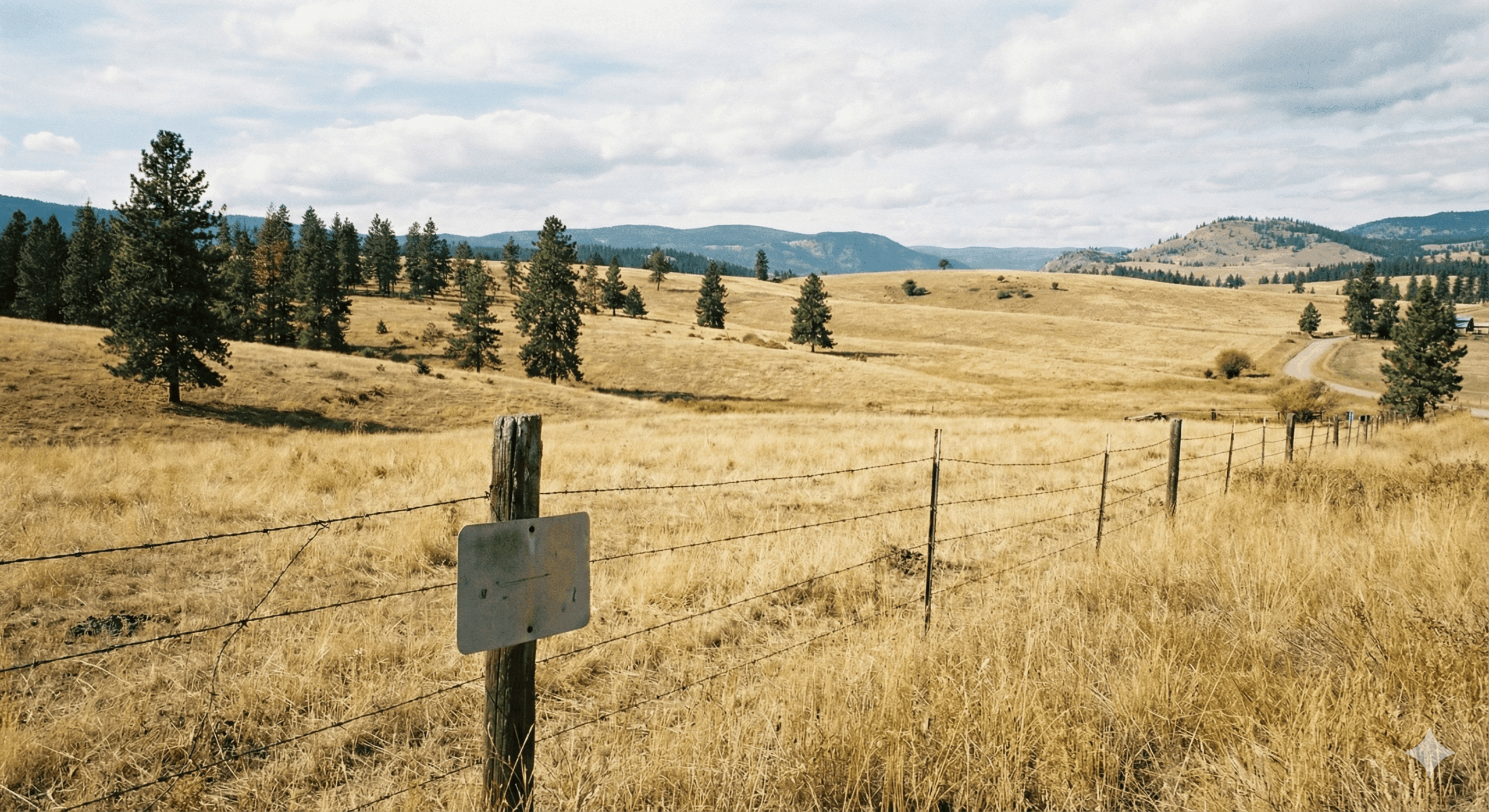
The history of ranching in the South Okanagan is often a story of family legacy, but a recent decision from the Supreme Court of British Columbia illustrates how those legacies can become entangled in complex legal disputes when corporate duties and personal interests collide1. At the heart of the matter is Sather Ranch, a commercial cattle operation near Penticton that dates back to 1939. What began as a labor of love for its founder, Palmer Sather, eventually became the subject of a intense legal battle between his son, Joseph Wayne Palmer Sather, and the company formed to carry on the ranching business. The dispute centered on a 160 acre parcel of land known as the Grazing Lands and whether Joseph Sather, acting as a director of the company, breached his fiduciary duties by purchasing the property for himself rather than for the corporation.
Sather Ranch was established by Palmer Sather when he was only eighteen years old. Over the decades, Palmer built the business while working as a fireman and engineer for the Canadian Pacific Railway, eventually retiring in 1982 to focus on the ranch. The operation was a family affair, involving Palmer’s brothers and his two children, Joseph and Carol. While Joseph eventually moved away to pursue a career in real estate in Calgary, he continued to assist with the ranch during his visits home. In 1995, a young man named Mike Street began working on the ranch, eventually becoming a protégé to Palmer and taking on the bulk of the physical labor as Palmer’s health began to decline. By 2009, Palmer had been diagnosed with early onset dementia, and the management of the ranch shifted toward Joseph and Mike Street.
In early 2013, with Palmer no longer able to manage his affairs, Joseph Sather caused the incorporation of Sather Ranch Ltd., or SRL. The company was owned by Joseph and Mike through their respective holding companies, with both men serving as the sole officers and directors. The evidence presented at trial suggested that the initial plan for SRL was to acquire the assets of the original ranch, keep the operation together, and eventually expand the herd. Correspondence from the time showed that Joseph viewed Mike as a key person and an adopted son who was essential to the ranch’s survival. Over the next few years, SRL acquired cattle, equipment, and eventually the Home Ranch property. However, the 160 acre Grazing Lands remained in Palmer’s personal name, managed by his daughter Carol acting under a power of attorney.
The Grazing Lands played a vital role in the annual cycle of the ranch. Each year, the cattle would graze on Crown range lands during the summer before being moved to the Grazing Lands for October and November. This movement was not just a matter of tradition but a legal necessity under the provincial Range Act. To maintain a grazing license, a rancher must demonstrate commensurability, which requires owning or leasing private lands sufficient to sustain the cattle when they are not on Crown range. For SRL, the Grazing Lands were a critical component of this requirement. Throughout early 2017, Joseph and Mike discussed plans for SRL to purchase the Grazing Lands from Palmer’s estate to ensure the long term viability of the business. Joseph even suggested that they obtain an appraisal and present an offer to his sister, Carol, hoping she might agree to vendor take back financing.
In April 2017, an appraisal valued the Grazing Lands at 115,000 dollars. Mike Street, acting for SRL, signed an offer to purchase the property for 120,000 dollars and delivered it to Joseph, who was supposed to negotiate the sale with Carol. However, the narrative took a sharp turn later that month. Joseph sent an email indicating that there was interest from Palmer’s grandchildren in keeping the land in the family. While he initially told Mike that the grandchildren had decided not to buy the land and that the sale to SRL could proceed, the situation remained in limbo for several weeks. The tension peaked on July 8, 2017, during a barbecue at Joseph’s home in Calgary. It was there that Joseph informed Mike that he intended to purchase the Grazing Lands in his own name rather than for the company.
The resulting argument between the two business partners effectively ended their professional relationship. Despite Mike’s objections, Joseph moved forward with the purchase. In August 2017, Carol, acting as Palmer’s power of attorney, signed the documents to transfer the Grazing Lands to Joseph for 120,000 dollars, the same price SRL had offered. Joseph later registered the land in his name and settled a trust for his children. Following the dispute, both men stopped providing financial support to the ranch. SRL soon ceased to be a viable business and was placed into receivership in July 2018. The receiver subsequently brought legal action against Joseph Sather, alleging that he had usurped a corporate opportunity that belonged to SRL.
During the summary trial, Joseph Sather argued that the purchase of the Grazing Lands was a family opportunity rather than a corporate one. He claimed that the lands were not essential to the ranching operation and that his sister, Carol, would never have agreed to sell the property to a company involving Mike Street. Joseph also pointed to hearsay evidence regarding a potential gravel deposit on the land that could be worth millions of dollars, suggesting that the property had significant value beyond its use for cattle. Justice Elwood, presiding over the case, found much of Joseph’s testimony to be lacking in credibility. The judge noted that Joseph’s claims about the land being unnecessary for the ranch contradicted decades of practice and the legal requirements of the Range Act. Furthermore, the court observed that Carol had previously sold the Home Ranch to SRL, which undermined the argument that she was fundamentally opposed to selling land to the company.
The legal analysis focused on the doctrine of corporate opportunity as established by the Supreme Court of Canada in the landmark Canaero decision. This doctrine holds that directors and officers are precluded from obtaining for themselves any property or business advantage that belongs to the company or for which the company has been negotiating. Justice Elwood applied several factors to determine if a breach had occurred, including the nature of the opportunity, its ripeness, and the director’s relationship to the information. The court found that SRL had a clear expectancy in the Grazing Lands based on its prior activities and its ongoing negotiations to purchase the property. The opportunity was deemed intimately associated with SRL’s line of business, as the company possessed the knowledge and equipment to utilize the land for its intended purpose.
Justice Elwood concluded that the opportunity to buy the Grazing Lands on favorable terms belonged to SRL. Even if the opportunity was not a sure thing, it was a real possibility that the company was actively pursuing. The court held that Joseph Sather’s duty was to advance the interests of the corporation rather than his own personal or family interests. By purchasing the property for himself using an appraisal that had been obtained for the company, Joseph put his self interest in direct conflict with his fiduciary duty to SRL. The judge remarked that Joseph ought not to have purchased the property without the full disclosure and approval of the company.
While the court found that a breach of fiduciary duty had occurred, the question of the appropriate remedy remained complex. The receiver sought an order to vest the Grazing Lands in SRL so they could be sold for the benefit of the company’s stakeholders. However, Justice Elwood noted several unique factors in the case. SRL had ceased its ranching operations shortly after the dispute, and the land’s value had skyrocketed, with tax assessments reaching over 1.5 million dollars by 2020. The court also considered that Joseph would have eventually inherited an interest in the land as a beneficiary of his father’s estate. Because a constructive trust is a proprietary remedy that must be just in all circumstances, the judge invited further submissions from the parties to determine a fair outcome.
The decision ultimately resulted in a formal declaration that Joseph Sather breached his fiduciary duty to Sather Ranch Ltd. when he acquired the Grazing Lands in his own name. The case serves as a detailed factual account of how the strict ethical standards required of corporate directors apply even in the context of long standing family businesses. While the history of Sather Ranch was rooted in family tradition, the legal obligations created by the incorporation of the business required a level of loyalty to the corporation that superseded personal family goals. The parties are now expected to return to court to argue the final financial and property consequences of the breach, as the receiver seeks to recover the value of the lands for the benefit of the company’s creditors and stakeholders.
Read more business cases here.